
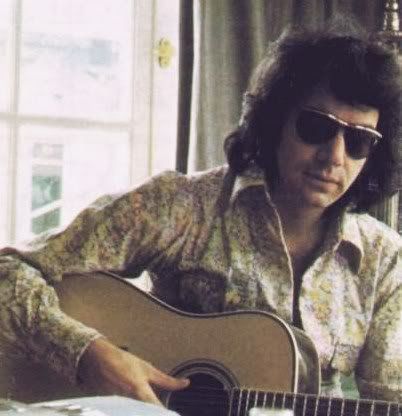
A tender goodbye dressed in simple words, Neil Diamond’s The Last Thing on My Mind reminds us that some of the deepest heartbreak arrives softly, without accusation, and stays with us because of that gentleness.
The Last Thing on My Mind occupies a special, often overlooked corner of Neil Diamond’s catalog. It was not one of the towering chart singles that built his broad public legend, and it did not make its name through a major Billboard Hot 100 run in the way songs like Sweet Caroline, Cracklin’ Rosie, or Song Sung Blue eventually would. That relative quiet, however, is exactly what gives the recording its lasting pull. For listeners willing to move beyond the anthems, this song reveals a more intimate side of Diamond: reflective, restrained, and emotionally precise.
The song itself was written by Tom Paxton in 1964, and long before many listeners associated it with any one singer, it had already entered the bloodstream of American folk and country music. Paxton’s writing gave the song unusual durability. It is a parting song, certainly, but not a bitter one. There is regret in it, and an awareness that something valuable has slipped away, yet the language refuses melodrama. That balance is difficult to achieve. Many breakup songs plead, accuse, or collapse into despair. The Last Thing on My Mind does something far more mature: it looks back with sadness, but also with clarity.
When Neil Diamond approaches the song, he does not try to overpower its folk origins. That matters. So much of Diamond’s fame rests on the emotional force of his voice, the way he could lift a chorus until it seemed built for a whole arena to sing back to him. Here, the effect is different. His phrasing feels closer to a conversation than a declaration. He sounds as if he understands that the song’s strength lies in what it withholds. The pain is there, but it is carried with dignity. The performance does not ask to be admired; it asks to be felt.
That is one reason the recording continues to resonate. In an age when so many songs rushed to make their point immediately, this one lingers in the quieter shades of feeling. It speaks to that familiar human moment when distance has already opened between two people, and both understand that no dramatic final scene will fix what has been lost. There is a particular loneliness in that realization. It is not the loneliness of chaos. It is the loneliness of acceptance. Neil Diamond captures that beautifully.
Another important part of the story is timing. Diamond emerged during a period when the borders between folk, pop, Brill Building songwriting, and more personal singer-songwriter expression were still porous. That musical world allowed a song like The Last Thing on My Mind to travel naturally from one voice to another. By the time Diamond recorded it, the song was already respected as a modern standard of sorts, a composition sturdy enough to survive different arrangements and different emotional colors. His version adds warmth and a touch of urban melancholy, placing the song in dialogue with the broader emotional world of his early work.
What makes the lyric endure is its honesty. The song does not pretend that love failed because of one villain or one catastrophic moment. Instead, it suggests something more haunting: that people can drift, misunderstand, or simply arrive too late at wisdom. That idea has always carried a deeper sting. Regret is often sharper when it comes without easy blame. In that sense, The Last Thing on My Mind is less about separation itself than about the painful knowledge that understanding sometimes arrives after the chance to repair things has already passed.
Neil Diamond was especially gifted at finding the emotional hinge in a song, the place where memory, yearning, and self-knowledge meet. In his biggest hits, that gift often came wrapped in soaring hooks. Here, it arrives in subtler form. He leans into the song’s reflective nature and lets the melody do its quiet work. The result is deeply moving because it feels lived-in. Nothing sounds forced. Nothing sounds decorative. It is a performance built on emotional trust.
For many listeners, that quality is what turns a lesser-known recording into a lasting companion. The songs we return to over the years are not always the ones that dominated the charts. Sometimes they are the ones that seem to understand us better as time passes. The Last Thing on My Mind belongs to that category. Its sadness does not grow stale; it deepens. What may once have sounded like a simple farewell begins, with the passing years, to feel like a meditation on timing, tenderness, and the fragile distance between love and loss.
It is also worth saying that the song’s modest chart profile in Diamond’s own discography should never be mistaken for minor artistic value. If anything, its lack of commercial overexposure has preserved its intimacy. One does not hear it as a cultural monument first. One hears it as a human confession. That is rare. And in the hands of a singer as instinctively expressive as Neil Diamond, the song becomes not just a cover of a respected composition, but a revealing portrait of the artist himself.
So when people speak of Neil Diamond, they often begin with the grand singalongs, the huge choruses, the records that filled radio and concert halls. Those songs deserve their place. But there is another Neil Diamond worth remembering too: the thoughtful interpreter, the singer who could sit with uncertainty and let silence speak. The Last Thing on My Mind stands as a graceful reminder of that side of him. It is not loud, and it was never meant to be. Its power comes from its calm, from its refusal to exaggerate, and from the way it tells a painful truth with almost unbearable kindness.
And perhaps that is why it still feels so moving. Some songs arrive like headlines. Others arrive like memories. The Last Thing on My Mind belongs to the second kind. In Neil Diamond’s voice, it feels like a letter never mailed, a thought returned to late at night, a sorrow softened by time but never fully erased. That is a small miracle in popular music, and it is worth hearing again.