
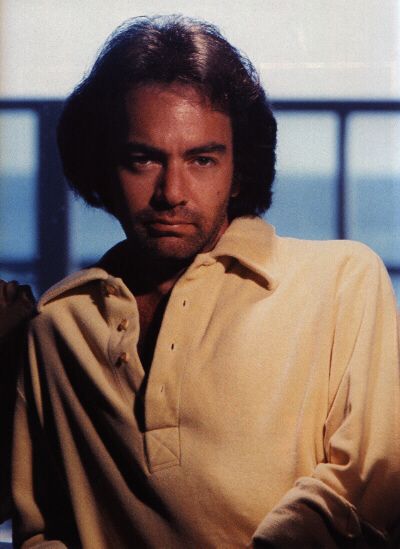
Do It captures Neil Diamond in a rarer emotional key: less grand proclamation, more instinctive push forward, as if the song is urging the heart to stop waiting and finally step into life.
Not every memorable Neil Diamond song arrived with the thunder of a major hit single. Some entered quietly, stayed with devoted listeners, and over time became even more revealing than the songs that dominated radio. Do It belongs to that second category. At the time of its release, it was not among the heavily celebrated chart giants that made Diamond a household name, and it is generally remembered more as a deep catalog piece than as a Billboard-defining milestone. Yet that very fact is part of its strength. It lets us hear the artist without the noise of overexposure, without the burden of legend, and what remains is a direct, urgent, deeply human performance.
What makes Do It so compelling is the way it speaks in motion. This is not a song built on hesitation, reflection, or elaborate storytelling. Instead, it carries the emotional charge of a decision being made in real time. In the world of Neil Diamond, so many songs balance tenderness with yearning, memory with desire, spectacle with confession. Here, the balance tilts toward action. The title itself is plain, almost blunt, but Diamond was often at his best when he used simple language to express something far bigger. With Do It, that simplicity becomes the whole point. The song sounds like a nudge, a dare, and a release all at once.
For listeners who know Diamond mainly through towering classics like “Sweet Caroline”, “Cracklin’ Rosie”, or “Song Sung Blue”, this track offers another side of his art. Those songs often came wrapped in communal feeling, singalong warmth, and broad emotional reach. Do It, by contrast, feels more immediate and more private. It suggests the moment before the leap, when emotion has already done its work and only courage remains. That is one reason the song still resonates. It is not asking for admiration. It is asking for commitment.
The deeper story behind Do It lies in how naturally it fits Diamond’s long-running gift for writing songs that sound conversational while carrying the emotional weight of theater. Even when he was not using ornate imagery, he understood rhythm as drama. He knew how to make a phrase feel as though it were leaning forward, pushing against stillness. In Do It, that instinct is everywhere. The song does not unfold like a diary entry; it lands like a command from the wiser part of oneself. There is no wasted motion in that idea. Diamond turns a short phrase into a philosophy: stop circling, stop postponing, trust what you feel, and act.
That emotional meaning may be the reason the song lingers so well with listeners who return to the deeper corners of his catalog. Do It is not merely about romance or impulse in the narrow sense. It can also be heard as a statement about life itself. There comes a point when overthinking becomes a form of standing still. Diamond, who spent decades singing about longing, faith, reinvention, and the complicated roads people travel, understood that truth better than most. A song like this becomes powerful because it refuses ornament. It goes straight to the essential struggle: how long do we wait before we finally move?
There is also something unmistakably characteristic of Neil Diamond in the way toughness and warmth sit side by side here. He never sang like a detached observer. Even in his most polished recordings, there was grain in the voice, effort in the phrasing, and a sense that every line had first been lived before it was performed. That quality gives Do It its credibility. The song would mean much less if it sounded slick or casual. Instead, Diamond gives it conviction. He makes the message feel earned.
From a historical point of view, songs like Do It help explain why Diamond’s catalog has endured far beyond the life span of radio trends. The chart record matters, of course, and his biggest singles remain part of the American songbook. But deep cuts are where an artist’s inner weather often lives. They reveal priorities that hit formulas can conceal. Do It shows Diamond’s attraction to momentum, emotional honesty, and plainspoken force. It reminds us that his music was never only about nostalgia or sentiment. There was always resolve in it, always a sense of somebody trying to push through uncertainty toward something real.
That is why this song deserves a second listen, and perhaps a more attentive one than it received the first time around. In a catalog filled with anthems, Do It stands as a leaner, tougher, and surprisingly intimate piece of work. It may not carry the chart mythology of Diamond’s most famous recordings, but it carries something just as valuable: a clear emotional pulse. And sometimes that is what lasts longest—the songs that do not simply remember life, but urge us to meet it.