
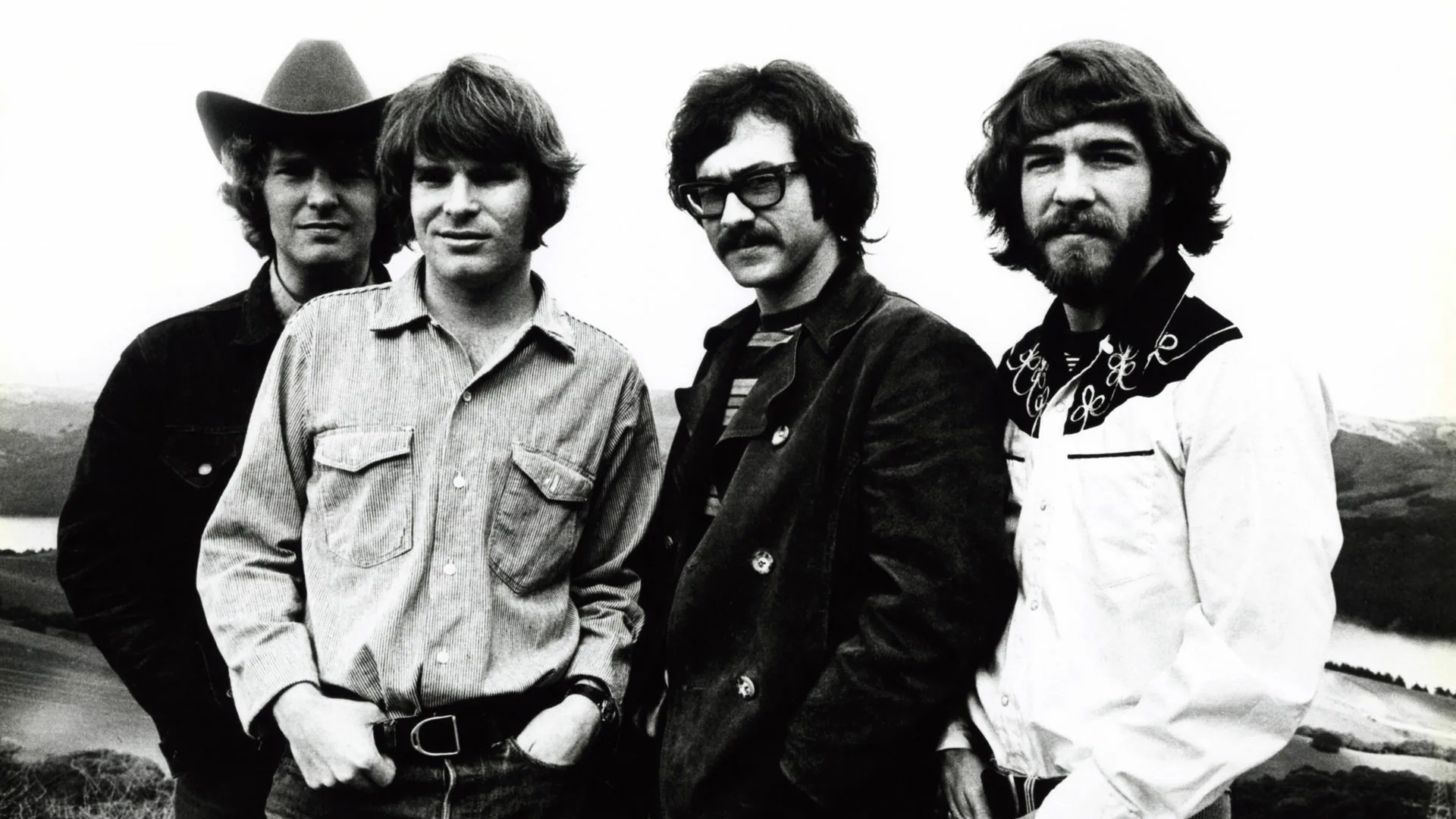
Effigy is one of Creedence Clearwater Revival‘s most unsettling statements: a slow, smoky allegory about power, public anger, and the uneasy feeling that a country no longer recognizes the face of authority.
Released in November 1969 as the closing track on Willy and the Poor Boys, Effigy came at a moment when Creedence Clearwater Revival seemed almost unstoppable. The band was everywhere on American radio, and John Fogerty was writing with rare clarity and force. But this song did not arrive as a hit single with an easy chart story of its own. Effigy was never a major standalone chart record in the way Down on the Corner, Fortunate Son, or Bad Moon Rising were. Instead, it lived inside an album that reached No. 3 on the Billboard 200, and that matters, because the song works best as a final chapter. It closes the record like a warning left in the air after the familiar hooks have faded.
That is part of what makes Effigy so memorable. It does not rush toward you. It gathers. It circles. Stretching past six minutes, it is longer and more ominous than much of the band’s best-known work, built less on singalong release than on atmosphere, repetition, and dread. Creedence Clearwater Revival had always known how to make simplicity feel powerful, but here that simplicity becomes almost ceremonial. The groove is steady, the guitars feel tense rather than celebratory, and Fogerty’s voice does not sound carefree or playful. It sounds watchful. The song moves like a crowd gathering at night, every verse tightening the mood.
Lyrically, Effigy remains one of Fogerty’s most vivid pieces of symbolic writing. The image of a figure on the palace lawn, watched by humble subjects in mixed emotion, is not subtle in feeling even if it is indirect in method. Fogerty does not name a politician in the lyric, and that is exactly why the song has lasted. He writes in images large enough to hold a whole era. In 1969, with the Vietnam War still hanging over the country, protest movements growing louder, and public trust in leadership visibly fraying, many listeners heard Effigy as one of the sharpest political statements in the CCR catalog. It has long been interpreted as a veiled attack on presidential power, often associated with the mood surrounding Richard Nixon and the wider American crisis of faith at the end of the 1960s.
What makes the song especially striking is that it is not written like a slogan. Effigy does not lecture. It dramatizes. It shows a public ritual and lets the listener feel the unease of it. There is anger in the song, certainly, but there is also sadness, fatigue, and a kind of moral exhaustion. That emotional blend is why it still lands so hard. Plenty of protest songs tell you exactly what they oppose. Effigy goes somewhere deeper. It asks what happens when power becomes theatrical, when leaders begin to feel remote, when ordinary people stand below the palace and no longer feel represented by what rises above them.
Placed at the end of Willy and the Poor Boys, the song gains another layer of meaning. Much of that album is built from earthy pleasures, working-class storytelling, and rootsy directness. There is humor in it, movement in it, and the rough joy that made Creedence Clearwater Revival such a singular American band. Then comes Effigy, and suddenly the horizon changes. The album no longer feels like a set of great songs alone; it feels like a portrait of the country itself, with celebration on one side and disillusion on the other. That closing choice was no accident. Fogerty understood sequencing, and he knew the last song on a record can linger like the final scene of a film. Effigy lingers exactly that way.
There is also something timeless in the way Creedence Clearwater Revival performs it. The band never sounds overdecorated, never chases grandeur for its own sake. CCR was always strongest when it trusted the weight of a groove and the authority of restraint. On Effigy, that restraint becomes eerie. The music stays grounded even as the meaning grows larger, and that balance keeps the song from becoming dated rhetoric. You can hear 1969 in it, certainly, but you can also hear every later moment when citizens have looked at public symbols and wondered whether those symbols still carried truth.
For listeners who came to Creedence Clearwater Revival through the hits, Effigy can feel like a revelation. It reminds us that John Fogerty was not only a writer of unforgettable choruses and swamp-rock propulsion. He was also an observer of national mood, capable of turning anxiety into song without draining it of poetry. That is why Effigy remains one of the most fascinating deep cuts in the band’s catalog. It captures a moment in American life, yet it never feels trapped inside its own time.
And perhaps that is the real reason the song still resonates. It understands that history is not only made in speeches, campaigns, and headlines. Sometimes history reveals itself in atmosphere: in the look of a crowd, in the distance between rulers and the ruled, in the strange silence that falls when people realize something has changed. Effigy gives that silence a rhythm. It gives suspicion a shape. More than half a century later, it still feels less like a relic than a low, persistent echo from the edge of the national conscience.