
A soft-spoken love song from The Partridge Family, It Means I’m In Love With You reminds us that sometimes the sweetest pop memories are the ones that never had to shout.
Not every unforgettable song from The Partridge Family arrived with the noise and chart thunder of a major single. Some songs stayed behind like a handwritten note folded inside an old jacket pocket, waiting for the right moment to be opened again. It Means I’m In Love With You is one of those recordings. Unlike the group’s biggest U.S. hits, it was not a defining Billboard Hot 100 smash in its own right, and that very fact has helped give it a different kind of life. It lives less as a public anthem and more as a private memory among listeners who have always felt that the group’s catalog held more warmth and sincerity than critics sometimes allowed.
That matters, because The Partridge Family have often been reduced to shorthand: a television phenomenon, a bubblegum-pop machine, a smiling family on a brightly lit set. But the records tell a fuller story. Beginning in 1970, the ABC series turned the group into a household name, while the recordings, issued on Bell Records, became a genuine commercial force. The act’s breakthrough hit, I Think I Love You, went to No. 1 on the Billboard Hot 100, proving that this was not merely a TV tie-in with a cute gimmick. Behind the scenes, producer Wes Farrell, top Los Angeles session players, and above all the instantly recognizable lead voice of David Cassidy created records with polish, lift, and emotional clarity. That same clarity is exactly what gives It Means I’m In Love With You its lasting charm.
The song’s emotional power lies in its simplicity. It does not try to dazzle with poetic mystery or oversized drama. Instead, it leans into the directness of young love, the kind that feels almost shy in the moment it finally becomes spoken aloud. Even the title itself is wonderfully plain. It Means I’m In Love With You sounds less like a performance than a realization, as if someone has been trying to understand their own heart and at last arrives at the truth in the gentlest words possible. That was one of the quiet strengths of the best Partridge Family recordings: they often took enormous feelings and made them feel human-sized.
Vocally, the song also benefits from what made David Cassidy such a compelling pop presence in the first place. He could sound bright, youthful, and radio-friendly, but there was often a trace of longing underneath the surface. That slight ache gave even the sweetest material an emotional afterglow. On a song like It Means I’m In Love With You, that quality becomes essential. He does not oversell it. He does not force drama where none is needed. He lets the melody do its work, and that restraint gives the song a sincerity that has aged far better than many people might expect from early-1970s television pop.
There is also something revealing about where this song sits within the larger Partridge Family story. Their most famous releases were built for instant connection: big hooks, sing-along choruses, bright arrangements, and a youthful optimism that fit the moment beautifully. But album-era songs and lesser-known cuts often showed another side of the group’s appeal. They captured the softer corners of that sound, where affection mattered more than excitement and tenderness mattered more than momentum. It Means I’m In Love With You belongs to that gentler tradition. It does not race to impress. It stays close, warm, and melodic, the kind of recording that feels better with time because it asks the listener to lean in rather than simply applaud.
Its meaning, then, is larger than the lyric alone. Yes, it is a love song, and an unashamedly sweet one. But it is also a reminder of an era when pop music could still be earnest without apology. There was no need for ironic distance, no need to disguise feeling behind attitude. In the world that The Partridge Family occupied, emotion could be direct, melodic, and open-hearted. That is part of why the song still lands. It carries the innocence of its time, yet it also speaks to something enduring: the vulnerable moment when affection stops being abstract and becomes a truth you can no longer hide from yourself.
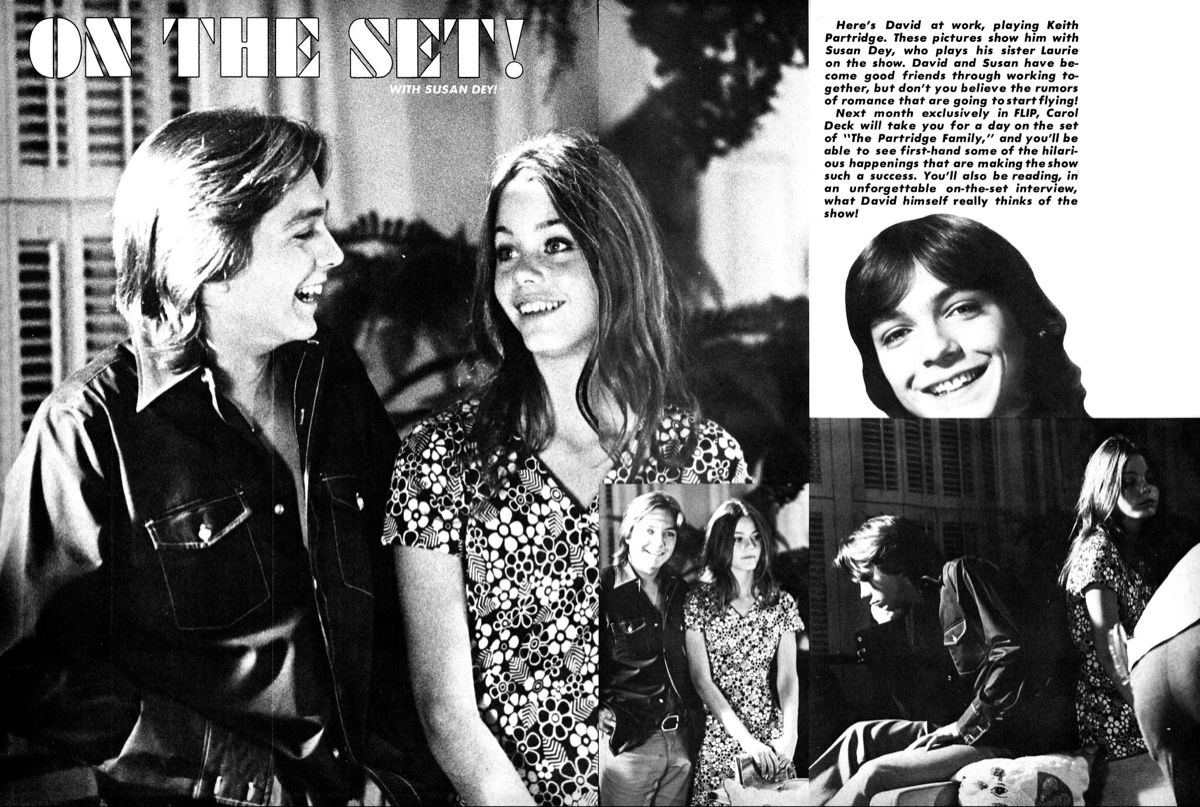
For longtime listeners, songs like this also bring back the whole atmosphere surrounding the group: afternoon television, transistor radios, glossy teen magazines, and the curious way fiction and reality blended together around David Cassidy. He was playing a role, yet his voice made the records feel personal. That paradox was part of the magic. The band on the screen was a creation, but the emotional response the music stirred was very real. It Means I’m In Love With You may not have commanded the same chart headlines as the biggest singles, but it endures precisely because it feels like a song discovered rather than assigned, cherished rather than merely consumed.
In the end, that may be the deepest reason this recording still matters. It shows that the legacy of The Partridge Family is not only about blockbuster hits or cultural visibility. It is also about the quieter songs that revealed their grace. It Means I’m In Love With You is one of those lovely reminders that beneath the bright pop packaging was a genuine gift for melody, warmth, and emotional plain-speaking. And sometimes, years later, that kind of honesty is what lingers longest of all.