
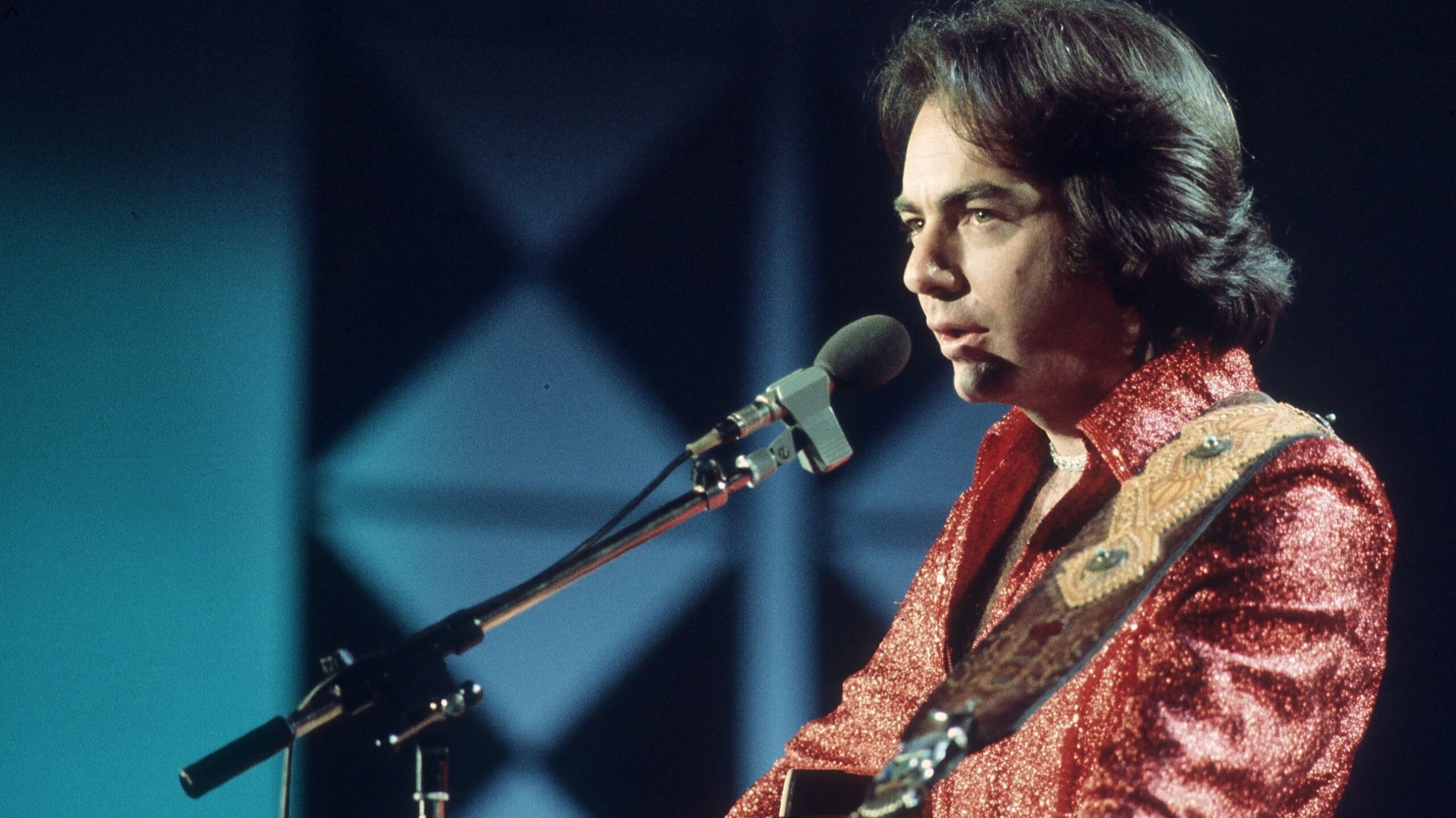
Coldwater Morning captures the ache of waking up to distance, memory, and the quiet resolve to keep moving when the heart still feels heavy.
Some Neil Diamond songs arrive like old friends the moment the title is spoken. Sweet Caroline, Cracklin’ Rosie, Song Sung Blue — they carry their own instant chorus of recognition. Coldwater Morning belongs to a different corner of his catalog. It was not one of his major chart singles, and it did not make a notable run on the Billboard Hot 100 as a standalone hit. Yet that very fact is part of what gives the song its lasting power. It feels less like a performance aimed at the crowd and more like a page from a private journal, set to music by a writer who understood loneliness, motion, and emotional weather better than most.
That is one of the enduring truths of Neil Diamond as a songwriter. Even when he was capable of writing grand, communal songs that filled arenas, he also had a remarkable gift for the inward glance. Coldwater Morning lives in that inward space. It carries the feeling of a day beginning before the spirit is fully ready for it — the kind of morning when the air seems sharper than usual, and every thought arrives with a little more weight. Diamond was especially skilled at taking simple images — roads, rooms, city streets, passing hours — and turning them into emotional landscapes. Here, the title itself does half the work. “Coldwater” is not just a description; it is a mood. It suggests discomfort, awakening, and the shock of reality settling in.
What makes the song resonate is the way it fits the broader emotional architecture of Diamond’s early work. This was a period when he was writing with increasing depth and confidence, moving beyond the bright immediacy of pop singles into material that felt more reflective, more literary, and sometimes more wounded. He knew how to write a melody that stayed with you, but he also knew how to let a song breathe. Coldwater Morning is remembered by devoted listeners precisely because it does not hurry toward easy release. Its emotional effect comes from atmosphere, pacing, and the feeling that Diamond is not merely singing a story but inhabiting it.
There is also something distinctly cinematic about the song’s emotional world. Many of Diamond’s finest album tracks feel as though they are taking place at the edge of dawn or in the middle of travel — when a person is between one place and another, between one certainty and the next. Coldwater Morning carries that same in-between quality. It sounds like the hour after disappointment, but before surrender. That is a difficult emotional balance to write convincingly, and Diamond does it with the assurance of someone who understood that mature songs do not need to shout to leave a mark.
The meaning of Coldwater Morning is not confined to one tidy interpretation, and that is another reason it lasts. On one level, it can be heard as a song about separation and emotional fatigue. On another, it feels like a reflection on endurance — on the quiet act of getting up, facing the day, and carrying what life has handed you without dramatic fanfare. That theme runs through much of Diamond’s best work. He often wrote about yearning, but he also wrote about persistence. His characters are rarely untouched by sorrow, yet they keep moving. In that sense, Coldwater Morning has the emotional honesty that marks his strongest songwriting: it acknowledges pain without becoming defeated by it.
It is also worth noting how songs like this deepen our understanding of Neil Diamond beyond the familiar radio staples. The hits made him a star, of course, but the deeper album cuts revealed the full range of his sensibility. They showed that beneath the commanding stage presence was a writer drawn to ambiguity, solitude, and the complicated textures of ordinary life. Coldwater Morning may not have enjoyed the chart life of his most famous singles, but it contributes to something just as important: the sense that Diamond’s catalog contains hidden rooms, and that some of the most revealing songs are found there.
For listeners returning to it now, that may be the real beauty of the song. It does not depend on nostalgia alone. It still speaks because the feelings inside it have not aged out of relevance. Everyone knows some version of a cold morning — the kind that asks you to gather yourself, remember who you are, and go forward anyway. Diamond turned that familiar human moment into music with grace, restraint, and unmistakable feeling. And that is why Coldwater Morning, though quieter than the giants of his catalog, continues to linger long after it ends.