
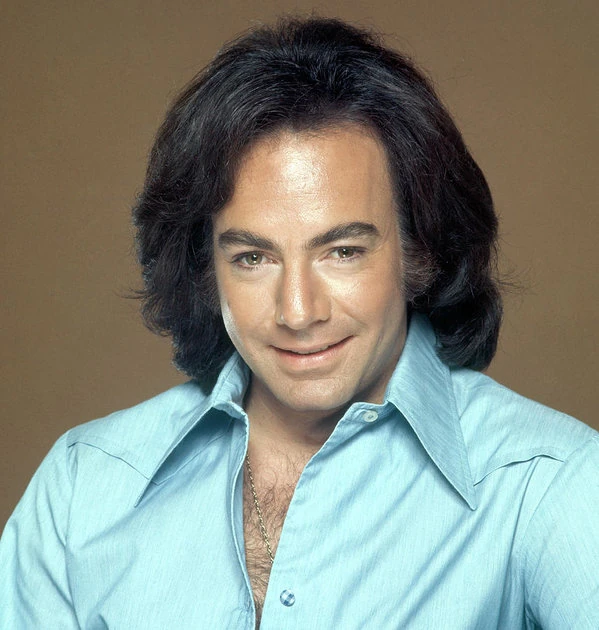
Midnight Train to Georgia lasts because it turns disappointment, devotion, and quiet sacrifice into something deeply human—and despite the old confusion, this timeless classic was never a Neil Diamond recording.
Let’s begin with the most important fact, because memory has a funny way of blending one great artist into another over time: Neil Diamond did not sing “Midnight Train to Georgia”. The song is indelibly associated with Gladys Knight & the Pips, who turned it into one of the defining records of the 1970s. Released in 1973 from the album Imagination, their version reached No. 1 on the Billboard Hot 100 and No. 1 on the Hot Soul Singles chart. It also earned a Grammy Award for Best R&B Vocal Performance by a Duo, Group or Chorus. Those are the hard facts. But the reason the song still breathes all these years later has less to do with statistics than with the ache in its heart.
The confusion with Neil Diamond is understandable in one sense. He belonged to the same broad golden era of emotionally direct songwriting, and his name often floats through conversations about classic radio, late-night playlists, and songs that seem to belong to everybody. But there is no recognized Neil Diamond original or hit version of “Midnight Train to Georgia”. The song’s true journey is even more interesting than the mix-up.
It was written by Jim Weatherly, a gifted songwriter with a remarkable ear for plainspoken emotion. The earliest version was not even called “Midnight Train to Georgia”. Weatherly first wrote it as “Midnight Plane to Houston”, reportedly inspired by a phone conversation involving Farrah Fawcett and Lee Majors. The image stayed with him: someone leaving Los Angeles and heading home, worn down by dreams that had not turned into reality. That single idea became the seed of a song about love that chooses loyalty over glamour.
Before Gladys Knight & the Pips recorded it, Cissy Houston cut the song and changed the title to “Midnite Train to Georgia”. That revision mattered. A train sounded earthier, sadder, more intimate somehow. It gave the song a deeper Southern pull, as if the journey itself had become slower, heavier, and more final. When Gladys Knight & the Pips took hold of it, they did not simply perform it—they inhabited it.
That 1973 recording remains a masterclass in emotional balance. Gladys Knight never oversings the story. She delivers it with restraint, dignity, and just enough ache to let the listener fill in the blanks. Around her, the Pips answer like a memory echoing down the tracks. Their backing vocals do not decorate the song; they deepen its emotional architecture. By the time the chorus arrives, the record feels less like a performance and more like a decision being made in real time.
The story itself is one of the most quietly devastating in popular music. A man leaves Los Angeles after failing to find the dream he chased. The woman who loves him chooses to go with him. That is the miracle of the song: it does not celebrate fame, independence, or conquest. It honors staying. It honors choosing a person over a place, a bond over ambition, a shared life over a shining illusion. In an age when so many songs tried to sound bigger than life, “Midnight Train to Georgia” became immortal by sounding true to life.
Its most unforgettable line lands with the force of lived wisdom: she would rather live in his world than live without him in hers. There is no grand speech in that sentiment, no showy poetry, no dramatic twist. And yet it carries the whole emotional weight of the song. Love here is not fantasy. It is not naive. It sees disappointment clearly and stays anyway. That is why the record continues to resonate across generations. It understands that some of life’s most meaningful choices are not triumphant in the public sense. They are simply faithful.
Musically, the record sits at a beautiful crossroads of soul, pop, and storytelling. The groove is elegant but never busy. The arrangement leaves space for the lyric to breathe. Nothing feels forced. Everything serves the song. That kind of discipline is part of what made so many records from that era endure: they trusted melody, interpretation, and emotional clarity more than noise.
So if the name Neil Diamond somehow drifts into the memory of “Midnight Train to Georgia”, it is worth gently setting the record straight. This was the triumph of Gladys Knight & the Pips, built on Jim Weatherly’s songwriting and shaped by a remarkable path from “Midnight Plane to Houston” to one of the great soul recordings ever made. And perhaps that lingering confusion tells us something touching too: songs from that era became part of people’s lives so completely that they sometimes slipped loose from labels and lived on as feeling.
Still, the truth matters. And the truth is beautiful enough on its own. “Midnight Train to Georgia” was not a Neil Diamond song. It was, and remains, a Gladys Knight & the Pips classic—one of those rare records that speaks softly, breaks your heart a little, and somehow leaves you comforted at the same time.