
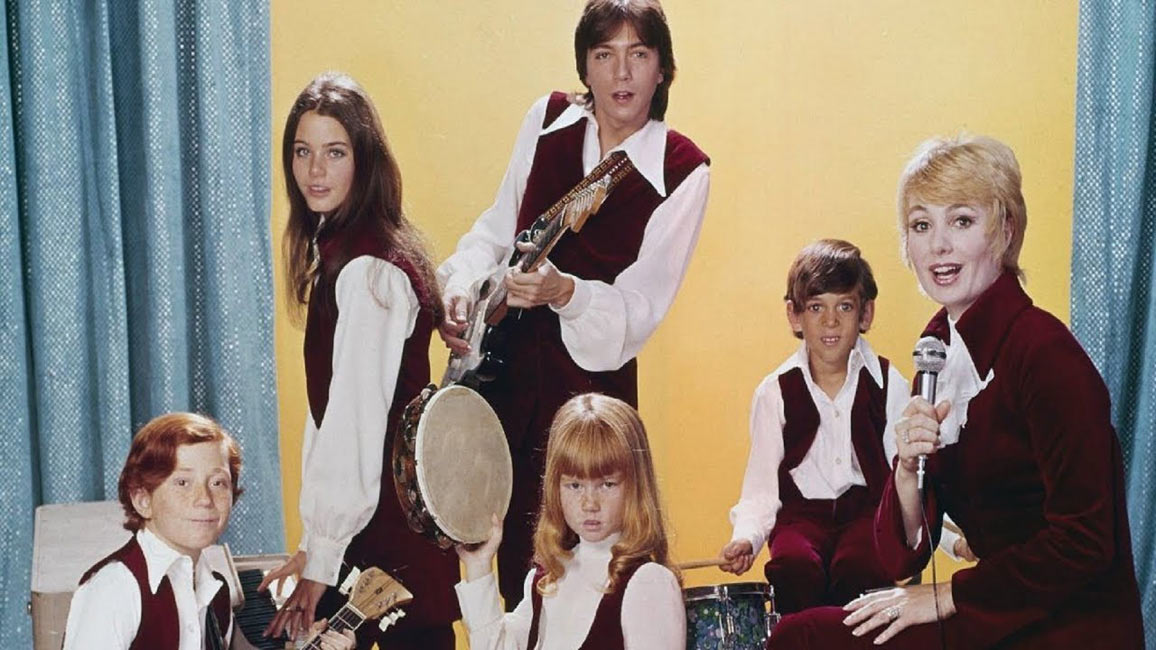
Maybe Someday lives in that fragile place between hope and heartache, where love is not gone, but still painfully out of reach.
There are songs that dominate the charts, and then there are songs that stay in the heart for quieter reasons. Maybe Someday by The Partridge Family belongs to the second kind. It was never one of the group’s signature blockbuster singles, and that matters. Unlike I Think I Love You, which reached No. 1 on the Billboard Hot 100 in 1970, or Doesn’t Somebody Want to Be Wanted, which climbed to No. 6, or I’ll Meet You Halfway, which reached No. 9, Maybe Someday did not receive a major standalone chart life of its own. It arrived instead as the kind of song devoted listeners had to find, hold onto, and return to on their own terms. In many ways, that has become part of its beauty.
That is also why the song feels so revealing. The big hits by The Partridge Family were bright, immediate, and built for the radio. They were expertly polished pop records from the early 1970s, made to catch the ear in seconds. But Maybe Someday moves differently. It does not rush to charm you. It unfolds with a gentler emotional pulse, carrying longing rather than celebration, patience rather than certainty. It feels like the sound of someone trying to keep hope alive when the heart already senses how difficult love can be.
At the center of that feeling is David Cassidy, whose voice gave the group much of its emotional identity. For many listeners, that is the real story behind The Partridge Family records. On television, the group was a cheerful family band. On record, however, the emotional weight often rested on Cassidy’s ability to sound youthful, sincere, and wounded all at once. In Maybe Someday, that gift becomes especially important. He does not oversing the sentiment. He lets the melody carry a kind of quiet uncertainty, and that restraint makes the song more touching. There is hope in the title, but there is no guarantee in the performance. That tension is exactly what gives the song its staying power.
Like much of the The Partridge Family catalog, the track emerged from a highly professional Los Angeles pop-recording system rather than from the television cast functioning as a road-tested band. Wes Farrell, the group’s producer and creative architect, helped shape the sound that made the act so commercially successful. Around that framework were elite session players and arrangers who understood how to make a record feel soft, immediate, and radio-friendly without losing emotional definition. That polished setting could sometimes cause critics to dismiss the group too quickly as “manufactured” pop. Yet songs like Maybe Someday remind us that craftsmanship and feeling are not enemies. A carefully built record can still hold genuine emotional truth.
And what is that truth here? In simple terms, Maybe Someday is about waiting for love to arrive in full, or waiting for a broken emotional distance to finally close. It is the language of suspended hope. Not the wild confidence of someone certain the future will work out, but the softer faith of someone who keeps believing because the alternative is too painful. That is a powerful theme, especially in early-1970s pop, where so many songs lived between teenage innocence and adult disappointment. Maybe Someday understands that emotional borderland very well.
There is something else the song captures beautifully: the way memory itself works. Many listeners who return to The Partridge Family after decades find that the lesser-known songs often strike harder than the obvious hits. The hit records bring back a time, a room, a radio, a season. But a song like Maybe Someday can feel more private than that. It slips past nostalgia as a cultural memory and becomes something more personal. It recalls the feelings that once lived behind the music: waiting for a letter, hoping a call would come, replaying one conversation in the mind, believing that tenderness might still be possible after disappointment. That is why the song can feel larger now than it may have seemed when first released.
Musically, it reflects one of the most underrated strengths of The Partridge Family: melody with emotional clarity. The arrangement supports the lyric without overwhelming it. The sweetness is there, certainly, but so is a shadow of ache. That balance was one of the reasons the group endured beyond novelty. Their best recordings did not simply offer bright pop surfaces; they carried emotional suggestions beneath them. In Maybe Someday, those suggestions are impossible to miss. The song is tender, but it is not naïve. It is romantic, but it knows the distance between wanting and receiving.
For listeners who only know The Partridge Family through the biggest hits, this song can come as a small revelation. It shows that the catalog had more emotional shading than the “bubblegum” label often implies. It also shows why David Cassidy connected so deeply with audiences. Beneath the fame, the posters, and the television phenomenon, he had a voice that could make uncertainty sound intimate. He could sing longing without making it theatrical. That quality matters in a song like this, where the emotion depends not on grand drama but on quiet persistence.
In the end, Maybe Someday remains moving precisely because it does not force its way into history. It waits there, almost modestly, until the right listener finds it again. And when that happens, the song reveals its true strength. It is not merely a forgotten track from a famous pop act. It is a gentle reminder that some songs do their finest work long after the charts have spoken. They stay alive in memory, in reflection, and in the tender places where hope still whispers the same two words: maybe someday.