
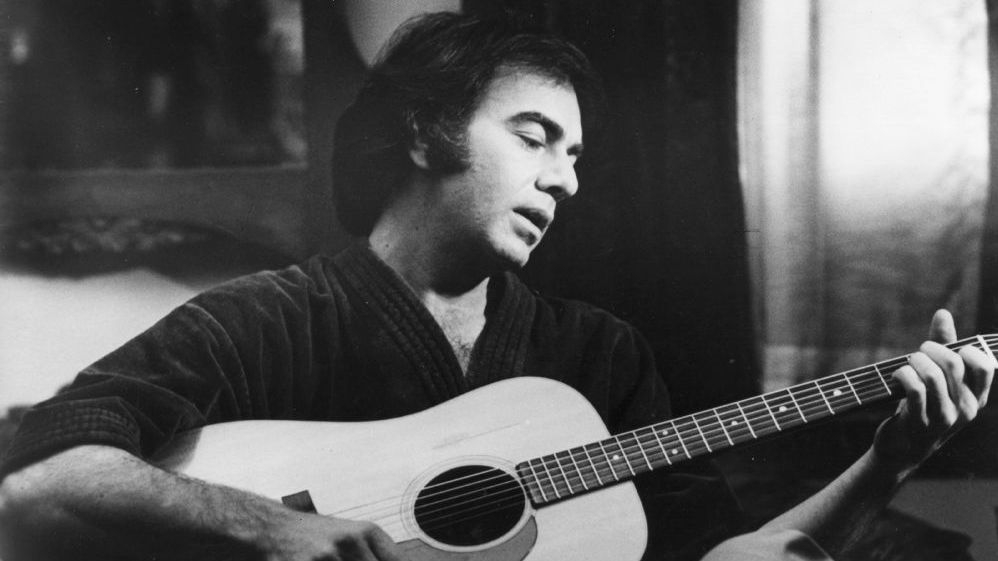
Neil Diamond gives Winter Wonderland a deeper kind of glow, turning a beloved seasonal standard into a song about comfort, companionship, and the quiet power of memory.
When Neil Diamond recorded Winter Wonderland for The Christmas Album in 1992, he did something that only a seasoned voice can do: he made a familiar song feel lived in. This was not a flashy reinvention, and it was not built around novelty. It was warmth, phrasing, presence, and instinct. His version was not released as a major standalone pop single, so it did not earn a separate Billboard Hot 100 chart peak of its own at the time. Instead, it lived where many great holiday performances live best: inside an album that returns year after year, becoming part of the season itself. In that sense, its success cannot be measured by one chart week alone. It became part of the December soundtrack for listeners who wanted something classic, elegant, and deeply human.
The song itself had already lived a long life before Neil Diamond ever stepped into the studio with it. Winter Wonderland was written in 1934 by composer Felix Bernard and lyricist Richard B. Smith. Smith wrote the lyric while battling illness, and there is something especially moving about that history. Out of hardship came one of the warmest winter songs in American popular music. Strictly speaking, it is not even a Christmas song. There is no mention of Christmas in the lyric at all. What it offers instead is snow, sleigh bells, laughter, imagination, and two people walking together through a bright winter scene. Perhaps that is exactly why it lasts. It is less about a date on the calendar than a feeling people recognize at once.
That distinction matters in Neil Diamond’s hands. He does not sing Winter Wonderland as a piece of decorative holiday cheer. He sings it as if he understands that beneath the cheerful surface lies something more enduring: the longing for closeness, the comfort of tradition, and the hope that simple moments still matter. His voice, always unmistakable, brings a grain and gravity to the melody that softens the song’s sparkle without dimming it. Where some versions lean toward lightness alone, Diamond gives the song a little weight. Not heaviness, but meaning.
That is one reason his rendition stands out. By the early 1990s, Neil Diamond was already a veteran artist with a catalog full of enormous songs and a voice associated with emotion, conviction, and grand melody. On The Christmas Album, he did not need to prove he could sing a standard. What he brought instead was personality. His reading of Winter Wonderland feels steady and assured, touched by orchestral holiday color but never buried under it. The arrangement supports the performance rather than overpowering it. You hear the season, certainly, but you also hear the singer at the center of it all, guiding the song like an old friend telling a story that still means something.
The beauty of Winter Wonderland has always been in its imagery. The meadow, the snowman, Parson Brown, the playful vow that ‘we can call him Parson Brown’—these details are light, almost childlike, yet they create a world. In many hands, that world stays charming but distant. In Neil Diamond’s version, it feels nearer. He makes the lyric sound less like a scene on a greeting card and more like a remembered walk, the kind that lingers because of who was there beside you. That is where the song’s meaning quietly expands. It is about weather on the surface, yes, but underneath it is about companionship. It is about turning cold air into warmth through shared presence.
There is also something fitting about Diamond singing a song that has survived so many musical eras. His best performances have always carried a bridge between showmanship and sincerity, between the public voice and the private feeling. Winter Wonderland needs exactly that balance. If sung too lightly, it disappears. If sung too heavily, it loses its grace. Diamond finds the middle path. He gives it lift, but he also gives it memory. The result is a recording that belongs comfortably beside older classic versions while still sounding distinctly his own.
And that may be the lasting reason listeners keep returning to it. Holiday music is full of performances that chase excitement, spectacle, or nostalgia in the broadest possible strokes. Neil Diamond’s Winter Wonderland works because it does something quieter. It trusts melody. It trusts language. It trusts the emotional intelligence of the listener. It understands that a winter standard can hold more than seasonal decoration; it can hold time itself. One December calls up another. One room recalls another. One voice brings back faces, windows lit against the dark, and the small rituals that made the year feel complete.
In the end, Winter Wonderland remains one of those songs that says more than it seems to say. In Neil Diamond’s recording, it becomes a celebration not just of winter but of continuity: the songs we keep, the albums we return to, the way a familiar voice can make an old season feel new again. That is why this version still glows. It is polished, yes, but never cold. It is festive, but never shallow. And for anyone who has ever measured the holidays not by noise but by feeling, that makes all the difference.