
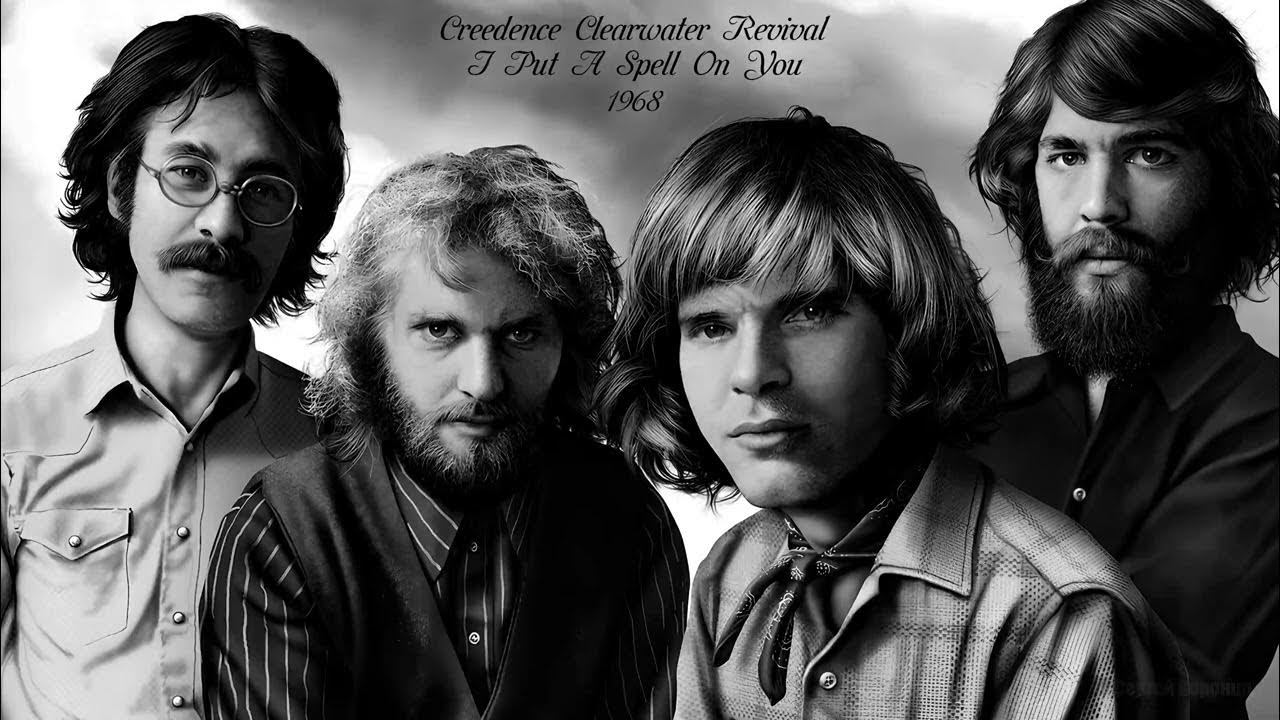
“Born to Move” is CCR’s muscular little manifesto: when the world looks tired and stuck, the cure isn’t an argument—it’s motion, rhythm, and the stubborn decision to keep your spirit loose.
When Creedence Clearwater Revival cut “Born to Move”, they weren’t aiming for a radio-friendly postcard. They were capturing a bodily truth—something you feel in your legs before you can explain it. The song opens Side Two of Pendulum as track 6 overall, running 5:39, and it arrives like a door flung open after a long, smoky night: come on, feet… teach yourself to move.
The most important “ranking” context, stated plainly, is that “Born to Move” was not released as a single, so it has no standalone Billboard Hot 100 peak. Its public footprint rides with its parent album. Pendulum was released in December 1970 (commonly dated December 9, 1970) on Fantasy Records, produced by John Fogerty, and it peaked at No. 5 on the Billboard 200. That top-five placement matters because it tells you CCR were still operating at full cultural volume—yet they used that power to stretch their sound rather than simply repeat the old formulas.
And Pendulum really was a pivot. Wikipedia’s album notes describe an internal band meeting before the sessions where Tom Fogerty, Stu Cook, and Doug Clifford asked for greater creative input, and the record’s making took longer than usual for CCR. Even the instrumentation hints at a band widening its palette—John Fogerty plays Hammond B-3 organ on several tracks, nudging the group closer to a deeper R&B pulse than the “three-chord swamp” caricature people sometimes lazily assign them. In that context, “Born to Move” feels like the moment CCR stop staring at the storm clouds and start telling the body to survive through movement.
The song’s backstory, then, is less a neat anecdote and more an atmosphere: late 1970, America exhausted and angry, CCR still a working machine—but the machine is now thinking about its own gears. And Fogerty’s lyric answers with something almost defiantly simple. Not optimism as a philosophy—optimism as a physical act. When the faces around you look “unhappy,” the song doesn’t offer a lecture. It offers a groove and an instruction: move anyway.
That’s why “Born to Move” lands with such a strange warmth for longtime listeners. It’s not one of the canonical CCR radio monuments—those belong to “Have You Ever Seen the Rain” / “Hey Tonight,” the album’s big double-hit single that reached the Billboard Hot 100 Top 10 (peaking at No. 8). But “Born to Move” has a different kind of staying power: it’s a life track. The one you put on when the day has tightened your shoulders and you need to shake the tension loose without turning it into a melodrama. The one that reminds you that joy can be a decision you make with your feet.
There’s also something quietly poignant about where it sits on the record. Side One of Pendulum carries weight—longer forms, darker textures—then Side Two begins with “Born to Move,” as if the album itself is exhaling. CCR were masters of sequencing like that: giving you the warning, then giving you the release. Not because the warning was false, but because a person can’t live on warnings alone.
So the meaning of “Born to Move” isn’t “dance music” in the shallow sense. It’s closer to a small creed: when life makes you heavy, you don’t have to wait for permission to feel lighter. You can “spread the news,” as the lyric suggests, not by broadcasting perfection—but by insisting on motion, insisting on aliveness. In the end, that’s the most CCR kind of hope there is: not pretty, not naive, but tough enough to keep walking—still moving—when the world gives you every reason to stop.