
“Lookin’ for a Reason” is the sound of a band—and a man—trying to justify one more mile down the road, even as the map is already tearing at the folds.
Creedence Clearwater Revival open their final studio chapter with “Lookin’ for a Reason,” and the choice feels almost painfully honest in hindsight. It’s track one on Mardi Gras, released April 11, 1972, and it’s written and sung by John Fogerty—a concise 3:28 that sets the tone like a weather report: cloudy, restless, and uneasy.
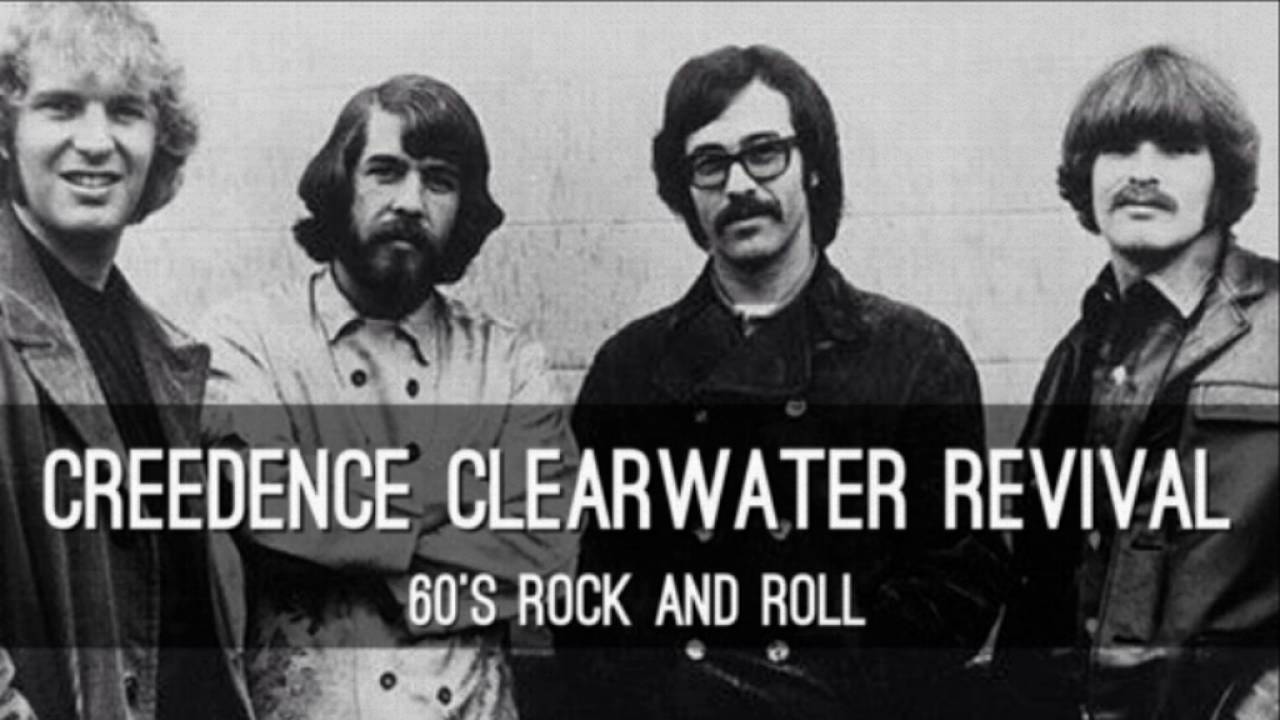
Put the essential history right at the top, because it shapes how the song lands. Mardi Gras is CCR’s seventh and final studio album, recorded after Tom Fogerty’s departure, and it’s the only Creedence studio record made as a trio. Even more crucial: unlike earlier CCR albums dominated by John’s writing and vision, Mardi Gras was built on a “democratic” split—songs written, sung, and co-produced by each remaining member (Fogerty, Stu Cook, Doug Clifford). That approach didn’t come from a peaceful round-table; it grew out of mounting personal and creative tension, the kind that can make “fairness” feel like a dare rather than a solution.
Commercially, the record still arrived with weight: Mardi Gras peaked at No. 12 on the Billboard 200—a strong showing for an album often described as weaker than the group’s earlier run, and one that nonetheless went gold in the U.S. But “Lookin’ for a Reason” itself was not promoted as a headline single from the album; the U.S. singles tied to the era were “Sweet Hitch-Hiker” and “Someday Never Comes.”
So what is “Lookin’ for a Reason” inside this context? Musically, it leans into CCR’s country-tinged side—plainspoken, front-porch direct, the rhythm moving like a steady vehicle on a familiar road. Yet emotionally, it feels less like the swagger of “Born on the Bayou” and more like a man talking himself through another day. The title phrase—lookin’ for a reason—doesn’t sound like ambition. It sounds like self-persuasion.
And that’s where the “story behind” becomes part of the lyric’s shadow. Accounts of the period describe a band fracturing under control battles and resentment—John’s dominance on the earlier records, the others’ desire for more creative say, and then the sudden, uncomfortable experiment of enforced equality on Mardi Gras. In interviews and retrospective reporting, Stu Cook has described the “democratic” setup as something John insisted on—essentially: this is how the next album will be, or I’m done. In that light, “Lookin’ for a Reason” can be heard not only as a relationship song or a spiritual question, but as the sound of a leader who knows he’s losing the room—searching for a justification that will make the compromise feel meaningful.
To be clear, that last reading is interpretation—no lyric needs to be a diary to be true. But great songs have a way of absorbing the air they were born into. Mardi Gras was “marred by personal and creative tensions,” and CCR would disband just months after its release, after a short tour. When you listen with that knowledge, the song’s calm begins to feel like the calm people use when they don’t want to start another argument—when they’re tired, when they’re trying to keep the wheel straight.
There’s also a quiet irony in the track’s position as the album opener. Openers usually promise expansion: here we go again. But “Lookin’ for a Reason” opens the end—a last doorway, not a new hallway. It’s Creedence still sounding like Creedence on the surface—Fogerty’s voice, the tight frame, the unpretentious drive—while underneath, you can sense the cost of holding a thing together by willpower alone.
In the end, “Lookin’ for a Reason” isn’t remembered as a chart trophy. It’s remembered as a mood: that moment when you realize the engine is still running, the song is still playing, the road is still there—yet you’re searching the horizon for a reason that feels true enough to follow.