
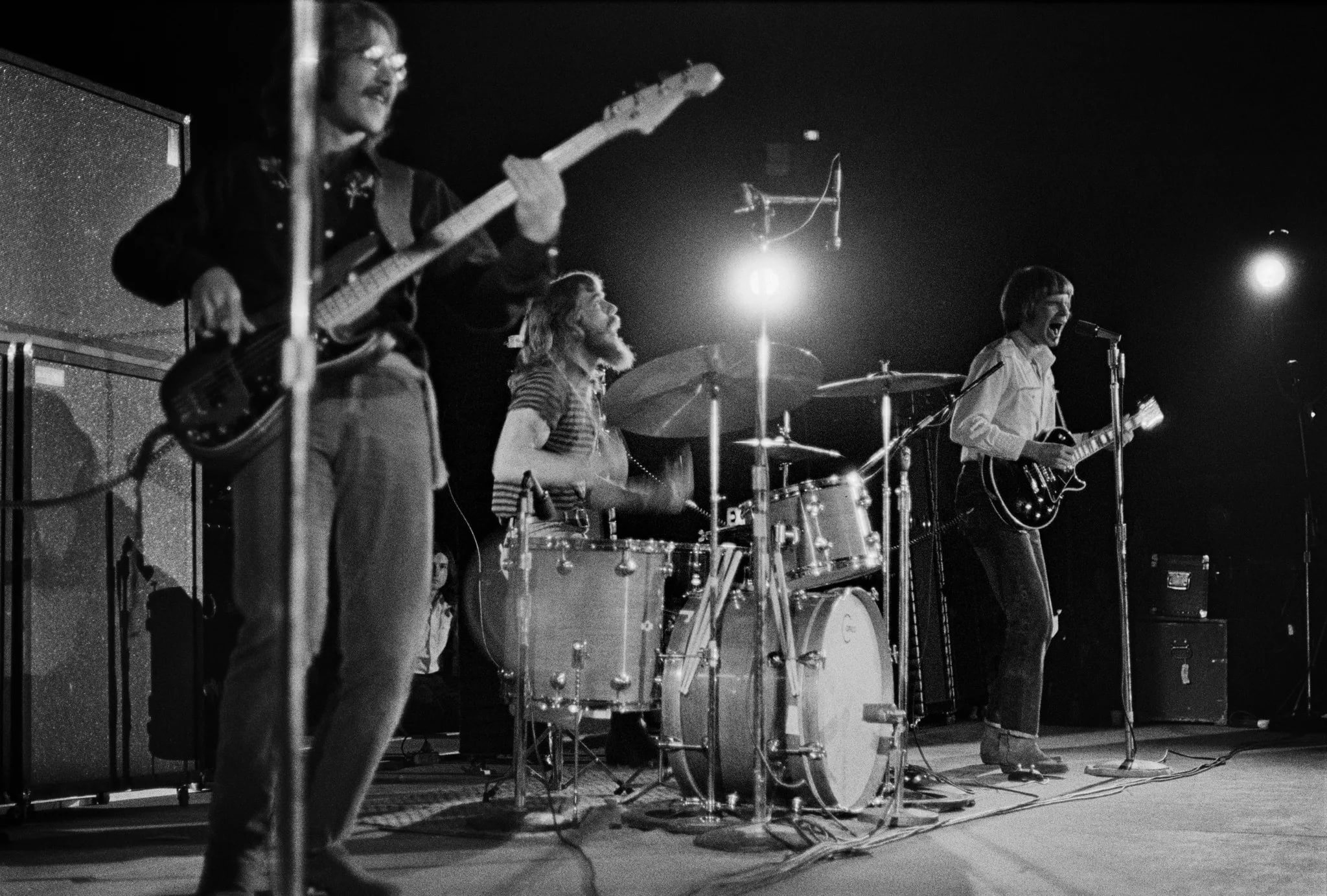
“What Are You Gonna Do” is Creedence Clearwater Revival sounding like a band at the end of its rope—still rolling forward on muscle memory, while the question in the title hangs in the air like a challenge no one can answer cleanly.
“What Are You Gonna Do” isn’t one of the CCR songs that barged into the world as a single and demanded a chart position. It has no standalone debut ranking, because it wasn’t issued as an A-side hit. Its story is more intimate—and, in its way, more revealing: it lives on Mardi Gras, released April 11, 1972, the seventh and final studio album by Creedence Clearwater Revival. That album, despite everything that was cracking behind the scenes, still performed commercially—peaking at No. 12 on the U.S. Billboard 200 and going Gold.
And “cracking” is the right word. Mardi Gras was recorded after guitarist Tom Fogerty had left, making it the band’s only studio album as a trio, and it famously spread writing and lead vocals across the remaining members rather than centering everything on John Fogerty. In that context, “What Are You Gonna Do” feels less like a random album cut and more like a candid snapshot of the group’s altered chemistry—CCR still sounding like CCR on the surface, but with different weight shifting under the floorboards.
The most telling detail is right in the credits. “What Are You Gonna Do” is credited as written and sung by Doug Clifford (yes—the drummer stepping forward to write and take lead vocal), with the album’s production shared among Doug Clifford, Stu Cook, and John Fogerty. That alone changes the emotional temperature. When Fogerty sings, the voice tends to arrive like a verdict—mythic, decisive, carved out of American dirt and radio static. Clifford’s presence is different: more plainspoken, more “in the room.” You don’t feel a narrator looming above the story; you feel a person living inside it.
So what does the song mean? The title is a knife disguised as a question. “What are you gonna do?” can be flirtation, it can be frustration, it can be the last line before a relationship turns into an argument you’ve had too many times. In the CCR universe—so often built on motion (trains, highways, rivers, running)—this phrase sounds like the moment when motion stops long enough for consequences to catch up. It’s the uneasy pause where bravado runs out, and the heart tries to decide whether it’s still fighting for love or just fighting out of habit.
That’s why the track belongs so naturally to Mardi Gras. The album’s backstory is steeped in strain, and the reception has long carried that history: reviews were famously mixed to harsh, and the record has often been treated as the band’s troubled coda rather than a true continuation of the classic run. Yet the very fact that the band could still cut tight, listenable rock in this state is part of the poignancy. “What Are You Gonna Do” doesn’t sound like a band that forgot how to groove. It sounds like a band trying to keep the groove alive while the larger structure is quietly failing.
And that’s the nostalgia that clings to it: not the nostalgia of a greatest-hits victory lap, but the nostalgia of hearing human beings at work—talented, tired, proud, imperfect—still making music anyway. If the earlier CCR classics feel like bright photographs, “What Are You Gonna Do” feels like the outtake you keep because it tells the truth. A little rougher. A little more exposed. And somehow, because of that, harder to forget.