
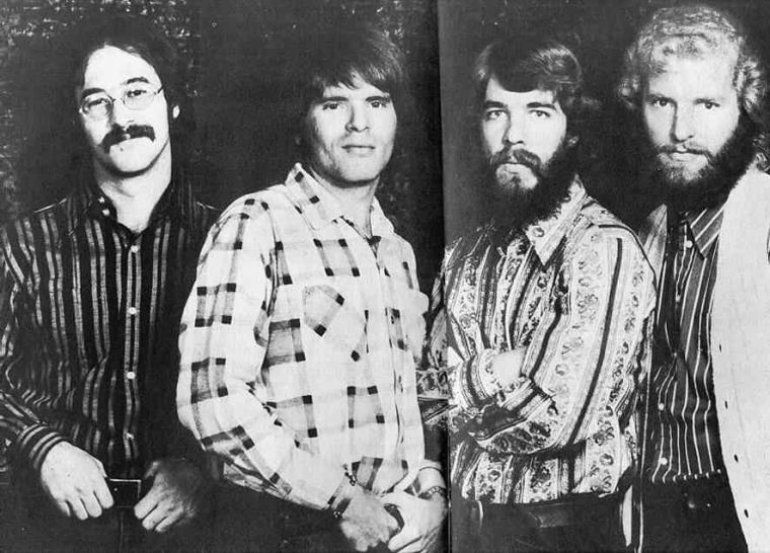
“Bad Moon Rising” turns catastrophe into a sing-along—an upbeat warning that trouble is already on the horizon, whether we choose to believe it or not.
When Creedence Clearwater Revival released “Bad Moon Rising” as a single on April 16, 1969, it arrived like a postcard from the edge of a storm: short, catchy, and impossible to ignore. Within weeks it was climbing radios across America, eventually peaking at No. 2 on the Billboard Hot 100 (with its high point dated June 28, 1969). Across the Atlantic, the same little two-minute jolt became even bigger—No. 1 on the UK Singles Chart, beginning its run at the top in mid-September 1969 and staying there for three weeks. Those rankings matter because they reveal the song’s peculiar magic: it didn’t sell gloom; it sold momentum. It made the end of the world feel like something you could hum on the way to work.
The record was the lead single from the album Green River, released in early August 1969 (commonly cited as August 7, 1969). And it carried a perfect pairing on the flip side: “Lodi”, the B-side that would later earn its own quiet afterlife as a fan favorite—a softer portrait of being stuck, broke, and watching the road leave without you. That contrast—apocalypse on one side, resignation on the other—felt very much like the late ’60s, when headlines could make your stomach drop, yet the everyday world still expected you to keep moving.
What’s astonishing is how John Fogerty built the song’s darkness from a source that wasn’t political speechmaking but imagery—cinematic weather, moral dread, an atmosphere you can almost see. He has said he wrote it after watching the 1941 film The Devil and Daniel Webster, especially a scene involving a violent hurricane and the uncanny feeling of nature turned against ordinary life. Out of that came the lyric’s parade of signs: storms, floods, “rage and ruin,” and that unforgettable line—I see a bad moon rising. Fogerty later described the song’s subject bluntly as an “apocalypse” visited upon us, and he also noted the strange “dichotomy” he discovered once the band started playing it: the words paint disaster, but the tune smiles while delivering the news.
That contradiction is the real engine of “Bad Moon Rising.” Musically, it’s bright and clipped, almost rockabilly in its bounce—music that doesn’t brood, doesn’t linger, doesn’t beg for permission. Lyrically, though, it’s a bulletin: don’t go around tonight… it’s bound to take your life. The brilliance is that it never tells you exactly what the “bad moon” is. It could be social unrest, private grief, the uneasy sense that history is shifting under your feet. That openness is why the song keeps fitting new decades. The “bad moon” can be whatever shadow someone is carrying—personal or collective—and the chorus still lands with the same uneasy cheer.
And then there’s the emotional trick the song plays. For all its warnings, “Bad Moon Rising” doesn’t sound defeated. It sounds alert. It’s the voice of someone who has learned—maybe the hard way—that ignoring the sky doesn’t change the weather. In that sense, the song isn’t merely ominous; it’s practical, almost tender in its insistence that you pay attention. In 1969, that tension—between a smiling surface and a troubled undercurrent—wasn’t just a songwriting choice. It was a way of living.
Half a century later, the song’s power still lives in that first paradox: Creedence Clearwater Revival made a pop hit out of dread, and somehow it feels less like panic than like recognition. You hear it and remember how quickly bright days can darken—yet the melody keeps walking forward, as if to say: Yes, the moon is bad. And yes, you’re still here, listening.