
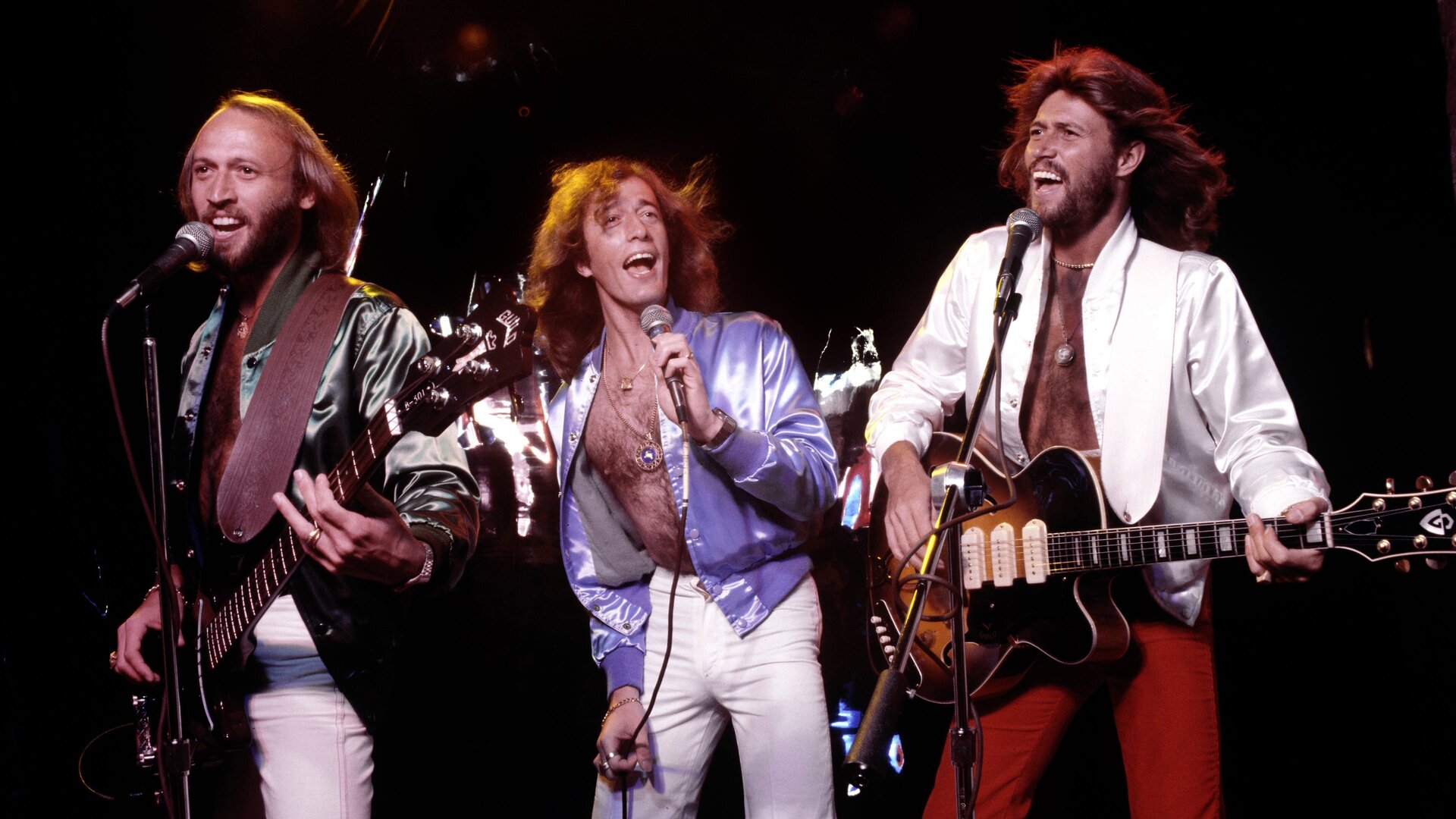
“Tragedy” turns heartbreak into a bright, unstoppable pulse—proof that even when love collapses, the body still remembers how to move, and the heart still insists on being heard.
For the Bee Gees, “Tragedy” is not a late-career victory lap—it’s a peak-era thunderclap, released in February 1979 as a single on RSO Records, backed with “Until,” and taken from the album Spirits Having Flown. It arrived with the kind of chart authority that doesn’t need mythology: in the UK, it first entered the singles chart on 17 February 1979, rose to No. 1, and held that summit for two weeks. Bảng In the United States, it reached No. 1 on the Billboard Hot 100 for two weeks, with Billboard’s chart history noting a debut date of February 10, 1979 and the No. 1 run beginning March 24, 1979.
Those dates matter because they capture the feeling of that moment: the Bee Gees weren’t merely popular—they were unavoidable. Yet what makes “Tragedy” endure isn’t its dominance. It’s the delicious contradiction at its core. The song is called “Tragedy,” and it sounds like the dance floor refusing to go dark.
It helps to remember where it sits on the map of their career. Spirits Having Flown was released in early February 1979 and recorded during 1978 at Criteria Studios in Miami, with production credited to the Bee Gees alongside Albhy Galuten and Karl Richardson—the team that helped translate their songwriting into that late-’70s blend of polish and muscle. By then, the Gibb brothers had already discovered how to make rhythm feel cinematic; “Tragedy” simply sharpens the blade. It’s built like a disaster movie: the verse sets the tension, the chorus detonates, and the whole thing surges forward as if it can’t bear to stay still long enough to hurt.
And then there’s the sound—the famous “explosion” at the climax, a moment that feels almost physical the first time you hear it, like the speakers briefly become a storm. What’s wonderful is that the effect wasn’t some distant Hollywood trick; it was studio play turned into signature. Producer/engineer recollections describe how they fed two ingredients into a then-new device (a “product generator”): a cluster of low piano notes held down hard, and Barry Gibb blasting air into a microphone—then blended the results until it “sounded like dynamite.” That detail tells you something tender about the Bee Gees at their most powerful: even at the top of the world, they were still chasing sounds like curious kids, still delighted by what a room full of wires could do.
So what is “Tragedy” actually about?
On the surface, it’s classic Bee Gees romantic collapse—love gone, the feeling gone, the narrator stranded in the emotional wreckage. But the genius is that the wreckage is rhythmic. The song doesn’t wallow; it spins. It takes the moment when your private life breaks apart and sets it under bright lights, as if to say: you can’t stop the pain, but you can decide what it turns into. Sometimes sorrow becomes silence. Sometimes it becomes a beat so steady you can lean on it.
That is why the lyric hits with such strange comfort. “Tragedy” doesn’t pretend heartbreak is noble. It’s messy, it’s dramatic, it’s embarrassing in its intensity. Yet the record gives that intensity a shape—tight, almost architectural—so the listener feels held rather than swallowed. The chorus is practically a chant, and in the best Bee Gees tradition, repetition isn’t laziness; it’s obsession rendered musical. When you’re hurting, your mind repeats. The song simply repeats in tune, turning panic into pattern.
There’s also something very “late-’70s” in the way the track blends disco propulsion with a kind of rock urgency—a style that makes the song feel bigger than romance, almost existential. This isn’t a quiet goodbye in a doorway. It’s a headline across the sky. And in that scale, the Bee Gees reveal one of their deepest gifts: they could make personal emotion feel communal, so a roomful of strangers could dance to the same ache without needing to explain it.
Decades later, the song’s afterlife proved how sturdy its bones are. In 1998, British pop group Steps covered “Tragedy” (paired as a double A-side with “Heartbeat”) and took it to No. 1 in the UK—a reminder that a great hook doesn’t belong to one generation; it simply waits for the next set of hands to lift it back into the air. Wikipedia
But for many listeners, the definitive “Tragedy” will always be the original: three brothers, a glittering groove, and a chorus that dares to be both devastated and alive. You don’t play “Tragedy” because you want to feel sad. You play it because you remember that sadness has volume, and sometimes the most honest way to survive it is to let it become music—loud enough to fill the room, steady enough to carry you through.