
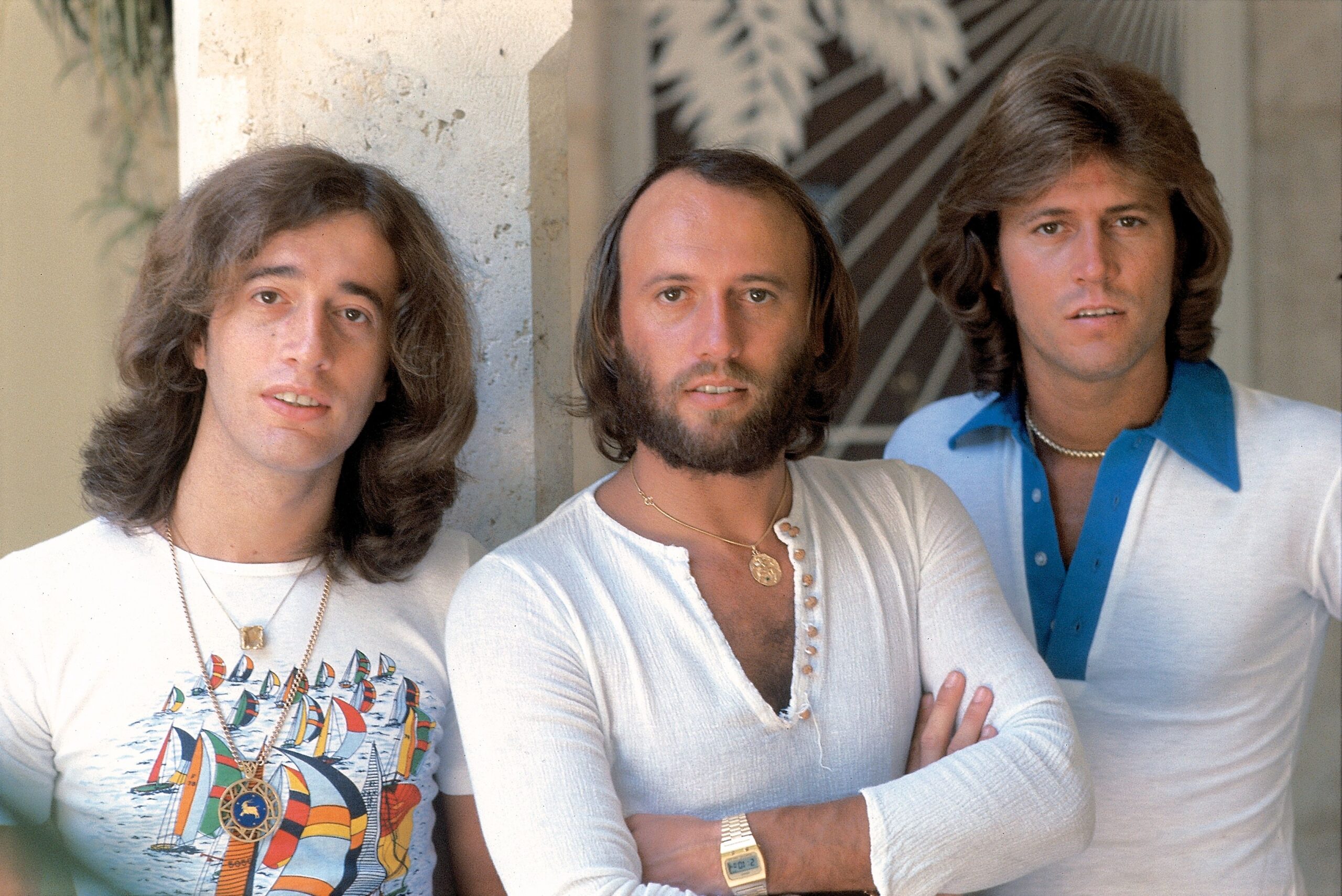
“To Love Somebody” is the heartbreak of loving in full daylight – knowing your devotion is real, even if it may never be returned.
If there’s a single record that captures the Bee Gees before the era of mirrored dancefloors—when their power lived in songcraft more than spectacle—it is “To Love Somebody.” Released on 30 June 1967, backed with “Close Another Door,” it arrived as the second international single from Bee Gees’ 1st, with Barry Gibb and Robin Gibb credited as writers and Robert Stigwood / Ossie Byrne as producers. In the U.S., the song’s first footprint on the Billboard Hot 100 was a modest No. 79 debut (chart date July 15, 1967)—the kind of entry that doesn’t yet hint at longevity, only possibility. In the UK, it first charted on 18 July 1967 at No. 50, ultimately peaking at No. 41 during a five-week run. And across the Atlantic, where soul-influenced pop felt right at home, it climbed as high as No. 17 on the U.S. Hot 100.
The story behind “To Love Somebody” is part ambition, part fate. At Stigwood’s request, the Gibbs wrote it in a soulful style—something in the emotional neighborhood of American R&B—for Otis Redding. Redding admired their work, and the idea was beautifully straightforward: give one of the greatest soul voices alive a song that already sounded like it belonged to him. But history cut in sharply: Redding died later that year, before he could record it. In later reflections, Barry Gibb also offered a more intimate angle—saying the song, while played for Otis, was written “for Robert” (Stigwood) in the sense of deep admiration rather than romance: a young songwriter recognizing the force of the man guiding his career.
That tension—between public purpose and private feeling—seems to echo in the lyric itself. “You don’t know what it’s like / to love somebody / the way I love you.” It’s not a threat. It’s not a clever line. It’s a plain-spoken ache, the kind that doesn’t need ornament because it has already taken over the room. What makes the song enduring is how it refuses to glamorize suffering. The narrator isn’t proud of his devotion; he’s simply caught in it. Love here is not the bright, winning kind that pop songs often promise. It’s love as a one-way current—powerful, persistent, and strangely quiet about its own pain.
Musically, this is where the early Bee Gees reveal their secret weapon: they could write with the discipline of craftsmen and still sound like they were confessing something they’d never said out loud. Recorded in April 1967, their performance leans into “blue-eyed soul” phrasing—pleading but controlled—while the arrangement (with Bill Shepherd’s orchestral touch often noted in the personnel) wraps the band in a cinematic haze without burying the vocal. It’s a careful balance: the rhythm section keeps the song moving like a heartbeat you can’t slow down, while the strings and harmonies behave like memory—soft, swelling, impossible to argue with.
There’s also a bittersweet cultural footnote: “To Love Somebody” didn’t initially land in Britain the way it did in America. Even the band later remarked on that disconnect—how the UK response felt muted for a record that fellow musicians admired. But perhaps that’s part of the song’s character. It has never been only about charts; it’s about how a melody can outlive its first reception. The proof is in how widely it’s been adopted—covered, reinterpreted, carried from one era to another—because the emotional core is so clean it can survive any costume.
In the end, “To Love Somebody” is not merely an early highlight in the Bee Gees catalogue; it’s a portrait of devotion stripped of pride. It’s the sound of someone standing at the edge of a relationship, looking in—not demanding entry, not declaring victory, just telling the truth as simply as possible. And that simplicity is why, decades later, the song still feels like it’s speaking directly to the listener: because some feelings don’t age. They just learn new voices.