
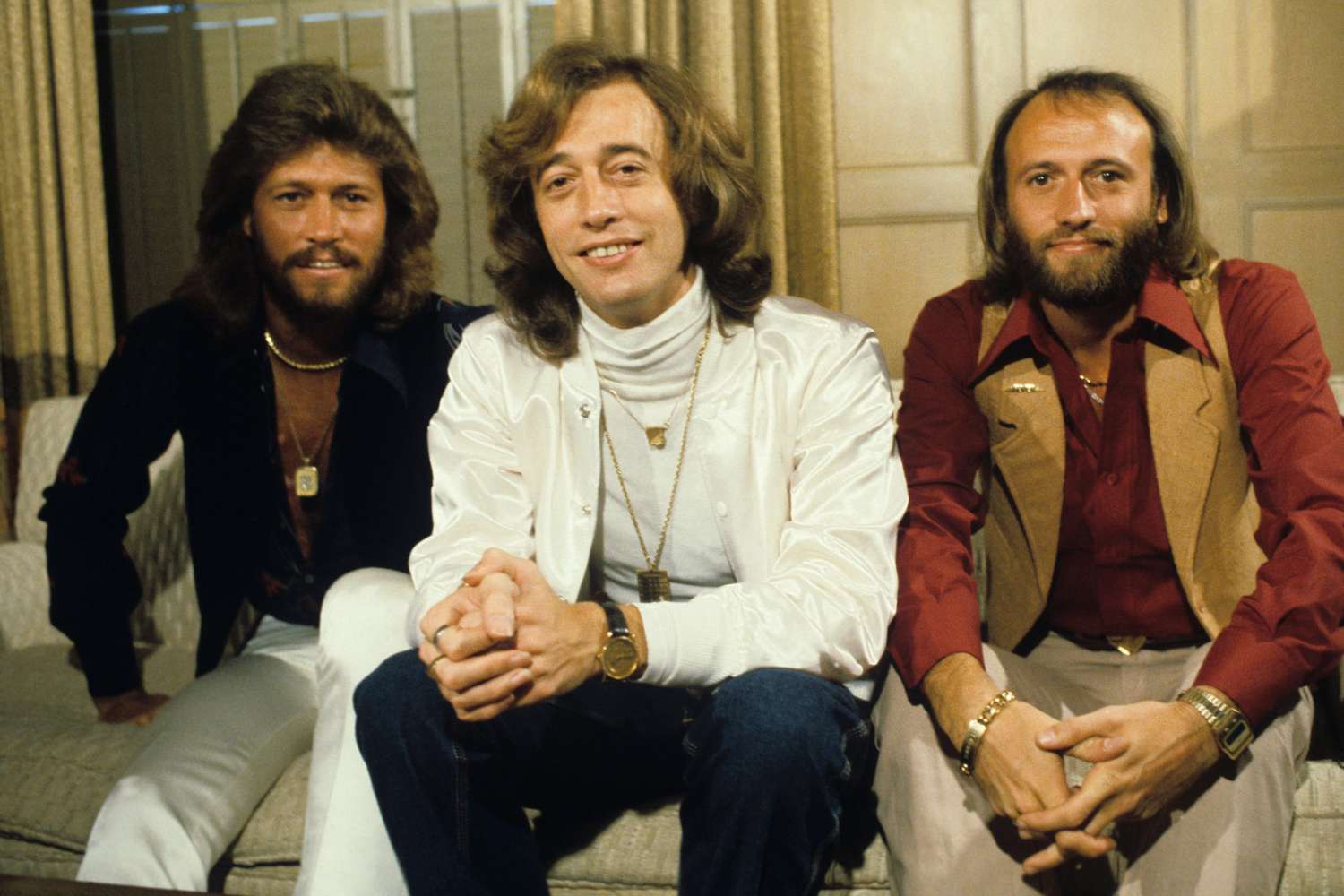
“I Can Bring Love” is the Bee Gees at their most quietly persuasive—no grand spectacle, just a small, steady promise that tenderness can still be carried into a weary room.
There’s a particular kind of Bee Gees song that doesn’t arrive with the dramatic sweep of an A-side, doesn’t demand the listener’s attention with fireworks, and yet somehow lingers longer than the louder tracks. “I Can Bring Love” is built in that spirit: modest in length, intimate in tone, and almost stubbornly sincere—like a handwritten note slipped into your pocket when you weren’t looking.
The song was released in October 1972 on the Bee Gees’ tenth studio album, To Whom It May Concern, a record that itself felt like a reflective pause in their career—an album shaped by uncertainty and transition. On the track list, “I Can Bring Love” sits on Side One and runs just over two minutes (about 2:06), with Barry Gibb credited as the sole writer and also the lead vocalist. That alone tells you something: it’s a Barry song, direct and personal, not dressed up as a group statement but offered almost as an individual vow.
Now the chart truth—because you asked for accuracy, and accuracy matters when we’re talking about musical memory. “I Can Bring Love” was not released as a single, so it didn’t have a standalone “debut position” on the singles charts. Instead, its public arrival came through the album’s performance. And To Whom It May Concern did chart: it reached No. 35 on the Billboard 200, a respectable showing that nonetheless reflected the Bee Gees’ early-’70s identity drift—still admired, still craft-driven, but searching for where the culture’s spotlight had moved.
That atmosphere of searching is actually part of the song’s emotional backstory. The album’s official Bee Gees site notes that the title To Whom It May Concern came from the band’s uncertainty about who their audience was at the time. In that light, “I Can Bring Love” feels less like a performance aimed at “the market” and more like a human offering aimed at whoever is listening—whoever still needs gentle music in the middle of a complicated life.
Even the way the song was assembled adds to its quiet poignancy. Wikipedia’s recording history notes that some tracks were older ideas “finished or rewritten,” and it specifically points to “I Can Bring Love” as an example—revisited and reshaped for this album. Recording resumed in April 1972, and “I Can Bring Love” is mentioned as a song Barry had done on a fan club recording from 1971, now brought properly into the studio world—with veteran drummer Clem Cattini involved in those April sessions. In other words: it began as something almost private, then was carefully carried into the official Bee Gees canon. That journey—private to public—fits the lyric’s implied gesture perfectly: love offered not as a headline, but as something you bring with you, quietly, like a coat.
And that’s the meaning that makes the song endure. “I Can Bring Love” isn’t about conquering anyone, or proving anything. It’s about showing up with the one thing that might still matter when glamour and certainty have failed. In 1972, the Bee Gees were still in their richly melodic, melancholy-leaning era—beautiful harmonies, refined craft, and a sense that the world could be loud while the heart remained private. “I Can Bring Love” is a small emblem of that emotional philosophy: not an anthem, but a reassurance. Not a promise of perfection, but a promise of presence.
If you listen to it with the lights low, it doesn’t feel like a “deep cut.” It feels like a companion—brief, warm, and honest. And sometimes that’s exactly what lasts: not the songs that shout their greatness, but the ones that simply say, in the plainest language, I can bring love—and let you decide what that means in your own life.