
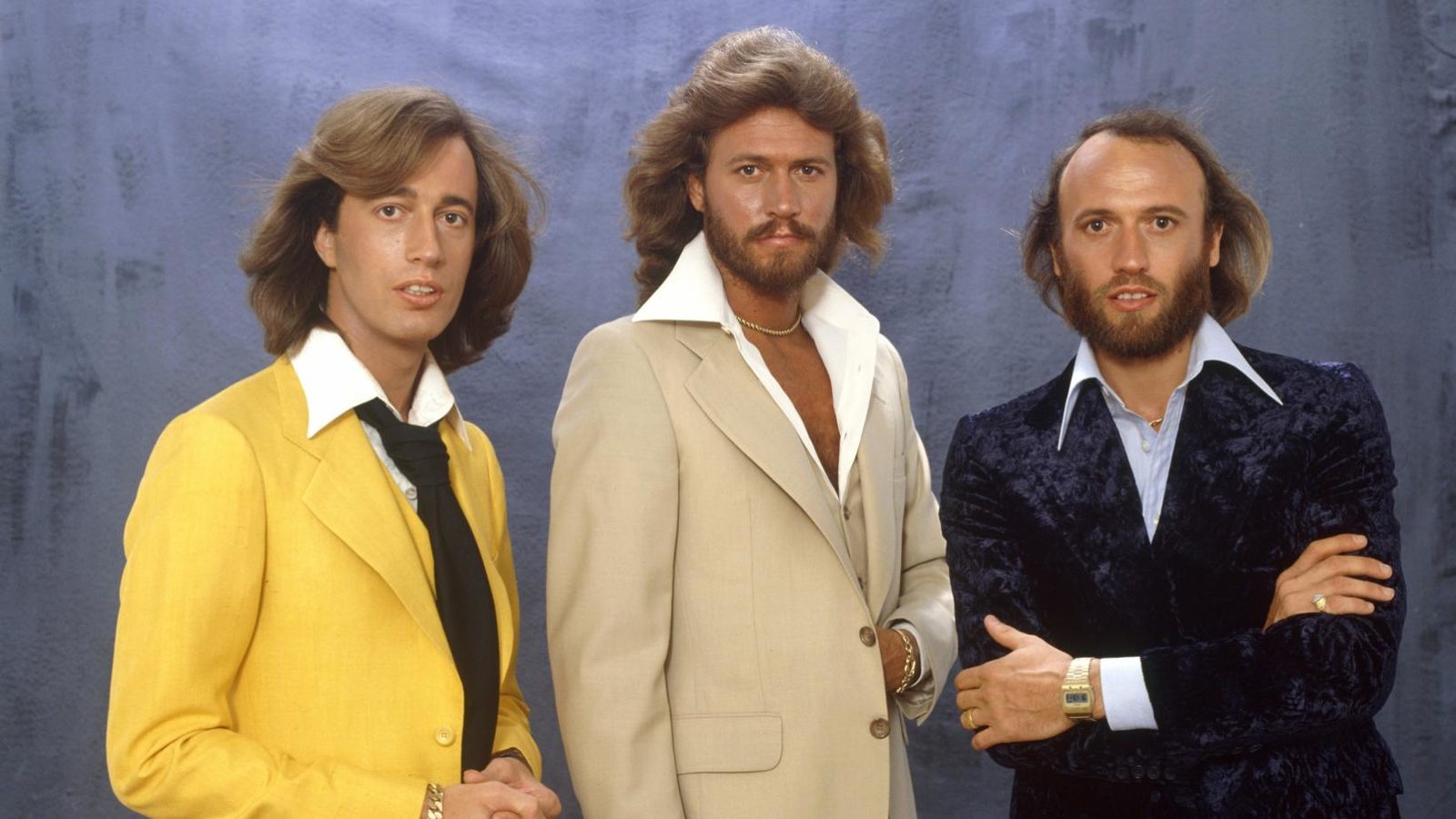
A bright, Motown-tinged secret whispered in public—proof that some loves survive best in the shadows, where the heart can keep its own tempo.
Released on February 18, 1991, “Secret Love” by the Bee Gees arrived as the lead single from their 19th studio album High Civilization—a late-career moment that didn’t beg for permission or forgiveness. It charted strongly across Europe, most notably reaching No. 5 on the UK Singles Chart, with its first UK chart date on March 2, 1991 and an 11-week run. In Germany, it peaked at No. 2 (chart entry March 18, 1991), confirming that the Bee Gees’ post-’80s revival still had real force where listeners followed melody more than fashion.
And yet there’s a fascinating footnote to its “success story”: “Secret Love” was not released as a single in the United States. It’s one of those quirks that makes the song feel even more like its title—something widely loved, widely heard, but never quite “official” everywhere at once.
The track is credited—cleanly, decisively—to the brothers themselves: written by Barry Gibb, Robin Gibb, and Maurice Gibb, and produced by the three of them as well. That matters, because “Secret Love” doesn’t sound like a committee decision. It sounds like a family signature—those unmistakable melodic turns, the bittersweet lift in the chorus, the feeling that even the happiest groove is carrying a private bruise.
What makes “Secret Love” especially charming is its stylistic wink backward. Contemporary descriptions note its Supremes-style sheen, and it’s often compared to the sleek Motown-flavored pulse of Diana Ross’s “Chain Reaction”—a hit the Bee Gees themselves wrote a few years earlier. It’s as if they were saying: we remember the old magic—and we can still summon it, but in our own voice, at our own age, with our own weather in the eyes.
That weather is the song’s emotional engine. The words don’t treat secrecy as glamour; they treat it as necessity. A “secret love” is sweet, yes—but it’s also tense, watchful, always listening for footsteps. The lyric suggests a romance lived under surveillance: “naked eyes” everywhere, nowhere to run, everything to lose. In the Bee Gees’ hands, that kind of tension becomes musical: the beat keeps moving—neat, buoyant—while the sentiment carries the ache of a love that must be carefully handled, like a candle protected from wind.
For listeners who follow the story behind the era, “Secret Love” also sits inside a broader attempt at reinvention. High Civilization was released in the UK on March 25, 1991, and it was heavily promoted in Europe—especially Germany, where the band’s profile remained strong. The album itself reached No. 24 on the UK Albums Chart, and the campaign led into a 1991 European tour spanning 23 cities—a reminder that the Bee Gees, even in the early ’90s, were still a live force with history behind them and new music to defend.
Even the single formats tell a small story. The standard single paired “Secret Love” with “True Confessions,” and some editions added “Human Sacrifice”—B-sides that feel like extra pages from the same diary, offered to anyone willing to listen past the chorus.
So what does “Secret Love” mean, in the deeper way songs mean something long after their release week?
It’s a portrait of devotion that refuses to be simple. It acknowledges the thrill—two people against the world—but it also admits the cost: the constant calculation, the quiet fear, the strange loneliness of loving someone openly in your heart while living carefully everywhere else. And perhaps that is why the song landed so well in 1991 Europe: it’s bright enough to dance to, but it carries the kind of emotional complication that grown-up listeners recognize instantly.
In the end, “Secret Love” isn’t just a late-era Bee Gees single with a proud UK No. 5 peak. It’s a reminder of one of their oldest gifts: turning private feeling into public melody—making even a hidden romance feel, for three minutes and thirty-nine seconds, like something the whole world can hum along to.