
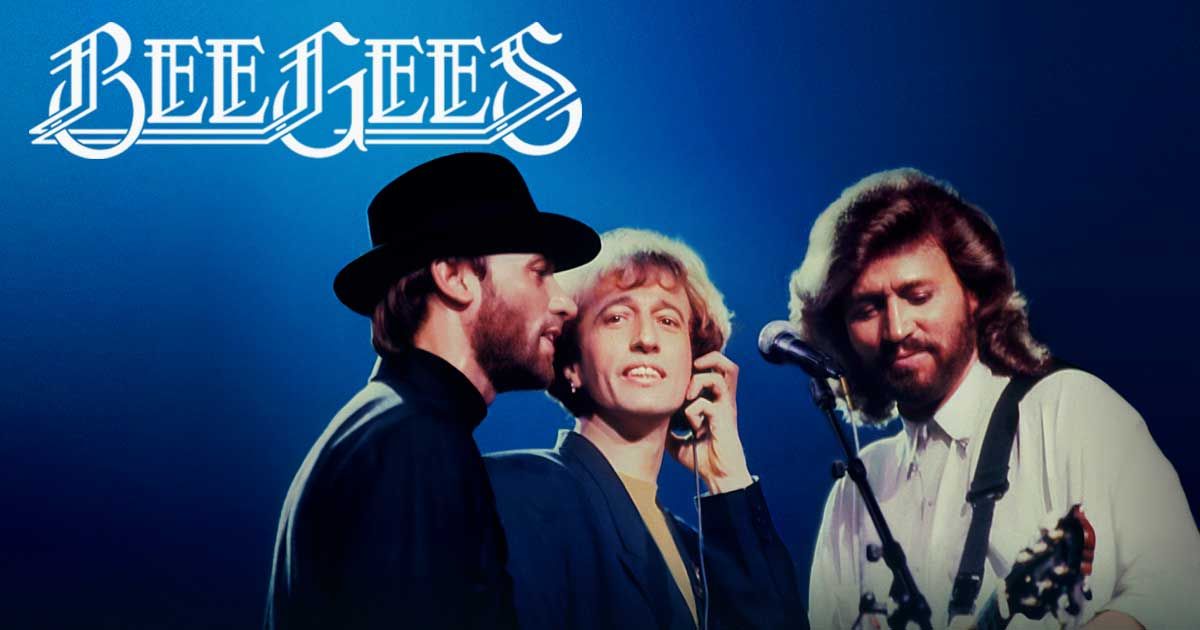
“Heartbreaker” is the Bee Gees’ bittersweet reminder that love can sound beautiful even while it’s breaking you—an elegant pop torch-song where the melody smiles and the lyric quietly bleeds.
The most important thing to know upfront is that “Heartbreaker” is a Bee Gees-written classic that first conquered the world through Dionne Warwick—and only later returned in the Bee Gees’ own voice. The song was written by Barry, Robin, and Maurice Gibb and released as Dionne Warwick’s single in September 1982, produced by Gibb–Galuten–Richardson, with Barry Gibb’s backing vocal audible on the chorus. That original release became one of Warwick’s signature successes: No. 10 on the Billboard Hot 100 in the U.S. (January 1983), No. 1 on Adult Contemporary, and No. 2 on the UK Singles Chart (November 1982).
Yet for many longtime Bee Gees listeners, the deeper ache comes from what happened afterward. Maurice Gibb later said he wished they had kept the song for themselves—an admission that feels like a little tragedy in itself, as if the brothers recognized they’d written a masterpiece and then watched it leave the house without them. The Bee Gees’ own studio version (with Barry on lead vocal) was recorded in 1994, originally intended for an unreleased project called Love Songs, and ultimately released in 2001 on the career-spanning compilation Their Greatest Hits: The Record. A live version also surfaced from their Las Vegas show on One Night Only (1998).
That two-life history—first a global hit for someone else, then reclaimed by its creators—makes “Heartbreaker” feel unusually poignant. It’s not just a song about being hurt. It’s a song that has been hurt and healed in public, carried across decades like a letter that kept getting forwarded until it finally returned to the sender.
The meaning sits in the title, plain as a bruise: heartbreaker. Not the romanticized kind you brag about surviving, but the quiet, personal kind that changes your inner weather. The lyric moves through that familiar landscape—devotion turning to doubt, tenderness turning to pain—yet the melody insists on beauty, as if the heart, even when it’s failing, still wants to sing. Warwick’s original performance made that contrast irresistible: poised, controlled, almost regal—yet emotionally exposed. And when the Bee Gees later sang it themselves, the song gained another layer: the sound of the writers stepping back into their own scene, finally speaking the words in the accents that first imagined them.
There’s also something unmistakably “Gibb” about the construction: the way the chorus lifts like a confession you can’t hold back, the way the harmony implies that heartbreak is never solitary—there are always echoes, memories, and ghosts singing along. Even the production credit in 1982 matters here, because Gibb–Galuten–Richardson were shaping an era of sleek, emotionally direct pop, and “Heartbreaker” is one of their clearest portraits: polished on the surface, trembling underneath.
If you’re listening today, it can feel like a song from a time when radio still made room for grown-up sorrow—when a three- or four-minute single could carry a full emotional story, and the singer didn’t have to wink at the pain to make it acceptable. “Heartbreaker” doesn’t wink. It simply walks into the room, sits down, and tells the truth in a voice steady enough to survive saying it.
And that’s why this song endures: because it understands a hard human paradox. Love is supposed to be a shelter, yet it’s often the sharpest weather we ever stand in. “Heartbreaker” doesn’t promise you’ll be fine. It promises that what you felt was real—and that even years later, hearing it again can still press the same tender spot, like touching an old photograph and realizing your hands remember more than your mind admits.