
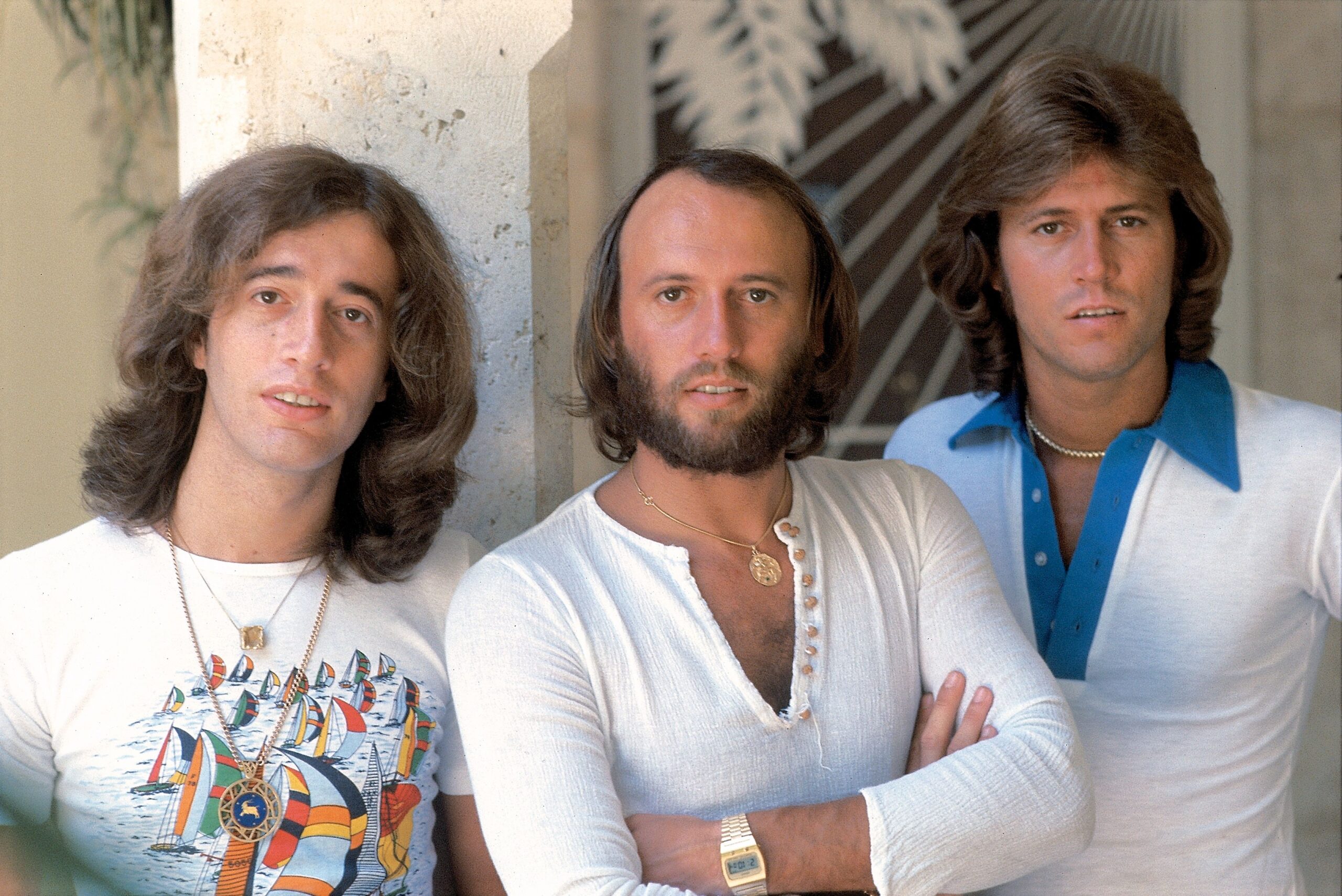
“Spirits (Having Flown)” feels like the Bee Gees turning fame into wind—lifting their worries off the ground for five minutes, and inviting us to rise with them.
Some songs announce themselves with thunder. “Spirits (Having Flown)” arrives differently—like a warm night breeze off the water, like a familiar voice calling you outside when the room has grown too small. It sits on the 1979 album Spirits Having Flown (released February 5, 1979)—the record that carried the group beyond the glare of Saturday Night Fever and into a more expansive, worldly pop sound. Yet the twist is that the track wasn’t pushed as a single at the time of the album’s main campaign; instead, it was held back and then issued in the UK in December 1979 to help promote the compilation Greatest (released in late October 1979).
That timing shaped its chart story—and the chart story is worth stating plainly up front. On the UK Official Singles Chart, “Spirits (Having Flown)” first appeared on January 5, 1980, debuting at No. 61, and went on to peak at No. 16 on January 26, 1980, spending 7 weeks on the chart in total. It’s also often noted that it was the Bee Gees’ last UK Top 40 hit until 1987—a small historical hinge that makes the record feel like the end of an era even as it sings about motion and escape. And if you’re wondering why the American chart tale feels quieter: sources summarizing the single’s international performance indicate it did not chart in the US as a Hot 100 single release.
But numbers only tell you when the song arrived, not what it carries. The meaning of “Spirits (Having Flown)” lives in its buoyancy—its refusal to stay pinned down by gravity, routine, or the expectations that had begun to harden around the Bee Gees’ name in the late ’70s. Musically, it’s described as a Caribbean-flavored R&B track, with Barry Gibb leading the verses in his natural voice before Robin and Maurice join him in that unmistakable blend—bright, airy, almost weightless—on the chorus. Even the details feel like little clues to its intention: the album version includes a count-in that was omitted from the single version, as if the song wanted to glide in without showing you the mechanics of takeoff.
The “story behind” the track is inseparable from the world that made it. Spirits Having Flown was recorded at Criteria Studios in Miami across March–November 1978, produced by the Bee Gees with Albhy Galuten and Karl Richardson—the same creative machine that could build radio perfection and still leave room for small, human details. On this song, one of those details is particularly lovely: the flute parts were played by Herbie Mann, whose tone adds a sunlit, seaside shimmer—an instrument choice that subtly reinforces the title’s promise of distance, travel, and a mind drifting free. The UK single’s B-side was “Wind of Change” (from Main Course), a pairing that feels almost like a private note to longtime listeners: yes, we’ve moved forward—but we remember where we came from.
Emotionally, “Spirits (Having Flown)” is not a diary entry; it’s an atmosphere. It suggests a moment when the self loosens its grip—when the day’s heaviness slips off your shoulders and you remember that the heart has its own kind of passport. There’s a gentle defiance in that: not the loud kind, but the kind that saves you. In late 1979 and early 1980, the Bee Gees were navigating both enormous success and the tightening box of public perception. This song, released as a later single, feels like a quiet insistence that they were always more than a single label—always capable of color, rhythm, and a certain soft spiritual lift.
And maybe that’s why it still lands the way it does. “Spirits (Having Flown)” doesn’t beg you to remember the past—it simply opens a window and lets the past walk in on its own, carrying salt air and harmony, reminding you how it feels when music doesn’t just entertain you, but lightens you.