
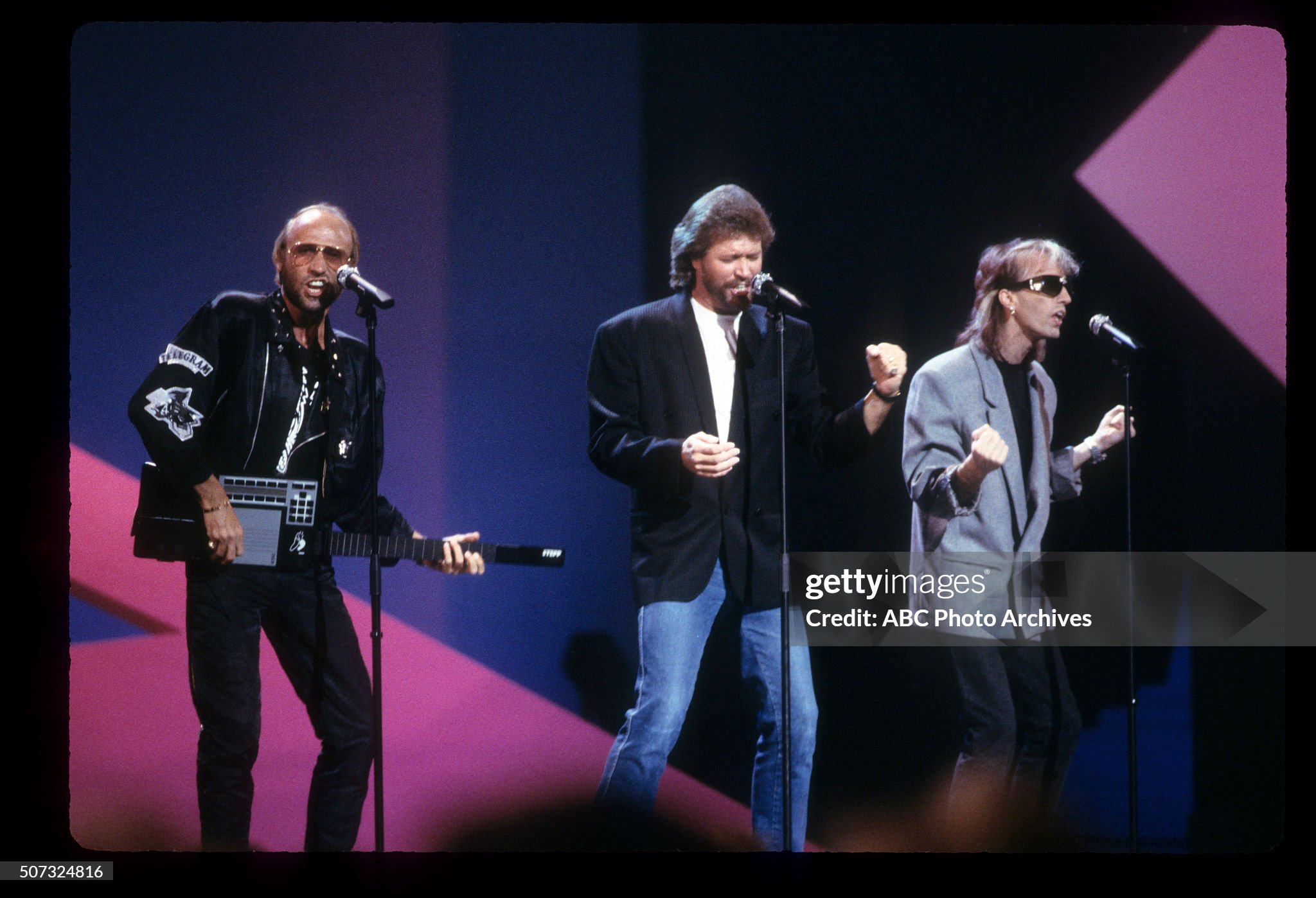
Children Of The World is the sound of a band stepping out of the shadows and into a new kind of light—where joy becomes survival, and the dancefloor feels like home.
Released on September 13, 1976, Children Of The World arrived at exactly the moment the Bee Gees needed a reinvention that didn’t feel like a costume. It peaked at No. 8 on the U.S. Billboard 200, climbed to No. 3 in Canada, and later earned Platinum certifications in both the United States and Canada—a commercial comeback that reads, in hindsight, like the first confident footstep toward the coming disco era.
But the record’s deeper story isn’t just about charts. It’s about permission—permission to sound modern, to sound physical, to let rhythm carry as much emotion as melody.
The backstage reality was complicated. Their manager, Robert Stigwood, had ended a U.S. distribution arrangement with Atlantic Records, and that meant the group could no longer work with Arif Mardin, who had produced their prior two albums. In an early attempt to steady the ship, they briefly recruited Richard Perry, but the partnership dissolved within weeks over musical direction. So the brothers took the wheel themselves—producing the album with engineer/co-producer Karl Richardson and the young arranger/musical adviser Albhy Galuten, the first major chapter of what became the famed “Gibb–Galuten–Richardson” team.
That’s the “how.” The “why” lives in the sound.
Recorded at Criteria Studios and Le Studio between January and May 1976, the album is tight, bright, and insistently alive—like the band is refusing to be quietly filed away as yesterday’s news. And it starts with a mission statement disguised as a single: “You Should Be Dancing”. That song didn’t merely succeed; it announced a new identity, reaching No. 1 on the U.S. Billboard Hot 100 and No. 5 in the UK—and it’s often remembered as the moment Barry’s falsetto stepped forward and stayed there, not as a gimmick, but as a signature.
From there, the album reveals its craft in small, human ways. “Love So Right” is the great soft landing—lush, aching, and proof that rhythm doesn’t have to erase tenderness. It reached No. 3 in the U.S., while “Boogie Child” pushed the other way, hitting No. 12 with a sly, streetwise swagger. Even the official Bee Gees discography page frames the record as “immensely upbeat and listenable,” noting those singles—and quoting Rolling Stone critic Joe McEwen calling “You Should Be Dancing” an “impossibly propulsive” track.
And then there is the title itself: Children Of The World. It sounds idealistic—almost like a banner you’d carry at a festival. Yet the album doesn’t feel naïve. If anything, it feels like grown men rediscovering the childlike faith that music can still change the temperature in a room. The “children” here aren’t just the young; they’re all of us when a song finds the tender spot we forgot we had. The record’s pulse suggests a quiet philosophy: when the world turns heavy, you don’t always fight it with speeches. Sometimes you fight it by moving—by keeping your spirit in motion.
That’s why this album matters beyond its hitmaking. It’s widely seen as a “prologue” to the band’s full-blown disco coronation with Saturday Night Fever a year later, but Children Of The World is more intimate than that destiny implies. It’s the sound of a group choosing forward motion when it would have been easy to retreat into past glories. It holds the tension between escape and return: escape into the modern beat, return to what they always did best—harmonies that feel like hands clasping in the dark.
If you ever wondered why the Bee Gees’ mid-’70s transformation feels so natural, start here. Children Of The World doesn’t “turn into” disco—it simply reveals that the Bee Gees had always been chasing the same thing: a way to make emotion undeniable. In 1976, they found it in the shimmer of rhythm, the lift of falsetto, and the strange, comforting idea that—no matter where you’re standing—there’s a chorus big enough to gather everyone in.