
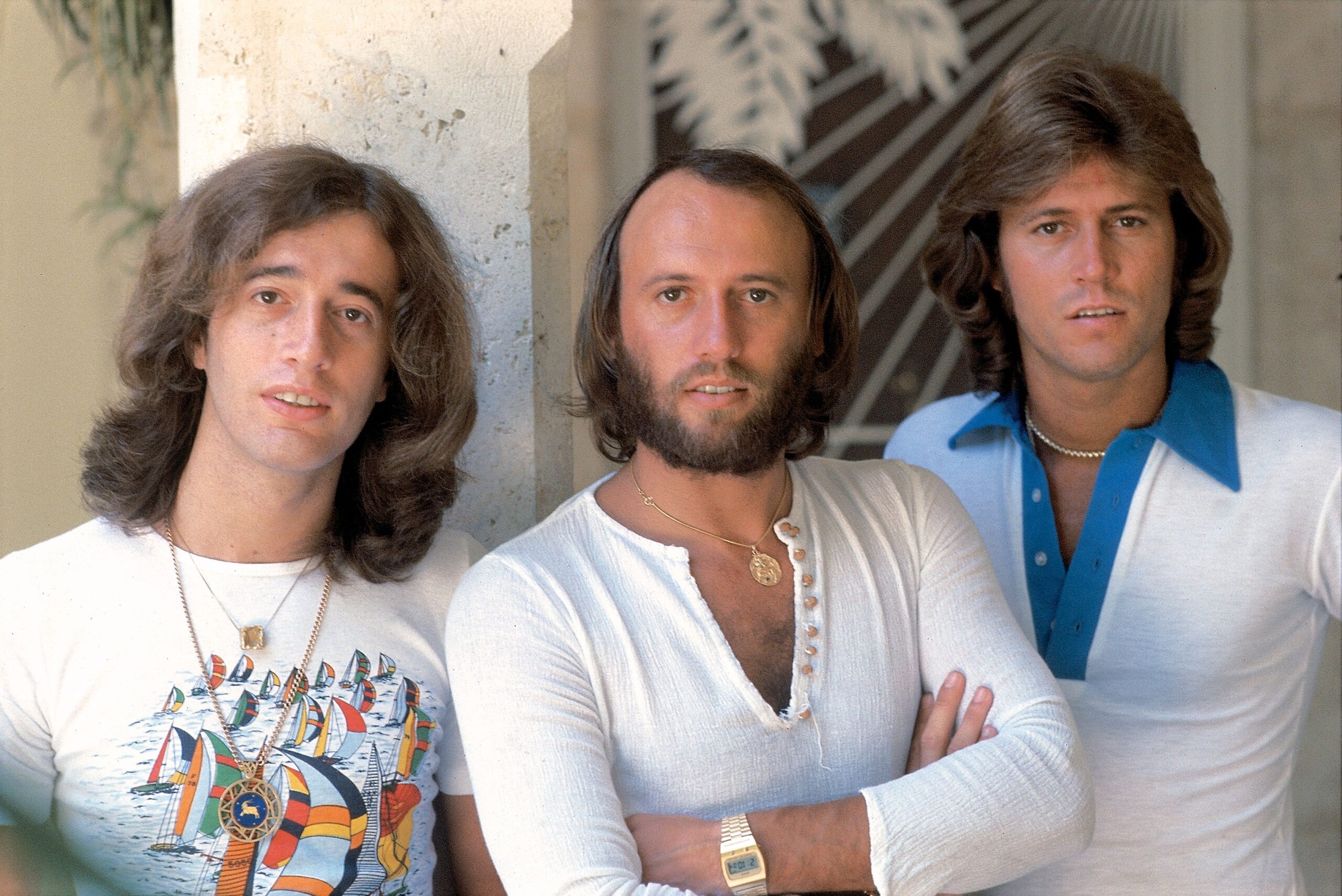
“Night Fever” is more than a disco classic—it is the sound of evening turning into possibility, a song that made escape, style, and longing feel as natural as breathing.
Released as a single in early 1978 from the landmark Saturday Night Fever soundtrack, “Night Fever” by the Bee Gees quickly became one of the signature songs of its era. It spent eight weeks at No. 1 on the Billboard Hot 100, reached No. 1 in the UK Singles Chart, and went on to become Billboard‘s year-end No. 1 single for 1978 in the United States. Those are towering numbers, but they only tell part of the story. The deeper truth is that this record did not simply ride the disco wave—it helped define what that wave felt like from the inside.
Written by Barry Gibb, Robin Gibb, and Maurice Gibb, and produced by the Bee Gees with Albhy Galuten and Karl Richardson, “Night Fever” arrived at a moment when the group had already reshaped their career with a brighter, more rhythmic sound. Yet even among the extraordinary run that included “Stayin’ Alive”, “How Deep Is Your Love”, and “You Should Be Dancing”, this song occupies a special place. It is smoother than a strut, more polished than a club anthem, and somehow both intimate and grand at the same time.
The story behind the song is tied closely to the making of Saturday Night Fever. When the Bee Gees were asked to write material for a film project backed by Robert Stigwood, they were not composing to a finished set of iconic scenes that audiences would later memorize. They were helping create a mood, an atmosphere, a whole emotional climate. That may be why “Night Fever” feels so complete on its own. It was never just background music for a dance floor. It was part of the emotional architecture of the film’s world—the anticipation, the release, the glow of nighttime, and the quiet hope that for a few hours, life might become larger than it looked in daylight.
Listen closely, and the genius of the record reveals itself in layers. The rhythm section moves with a controlled, elegant pulse rather than sheer force. The strings do not overwhelm; they shimmer. The guitar and keyboards create motion without clutter. Then comes that voice—Barry Gibb‘s falsetto, sleek and urgent, floating above the groove like city lights reflected on glass. Around him, the harmonies of Robin and Maurice give the song its warmth and depth. The result is a recording that feels luxurious without ever losing its human center.
Lyrically, “Night Fever” is not complicated in a literal sense, and that is part of its brilliance. It does not lecture, and it does not need a heavy narrative. Instead, it captures a state of being. This is a song about surrendering to the hour when restraint loosens and possibility takes over. There is romance in it, but not in a sentimental way. There is confidence in it, but not arrogance. Above all, there is the feeling of stepping into the night and believing that music might carry you somewhere better—if only for one evening. That emotional balance is why the song has lasted so long. It gives people glamour, yes, but it also gives them relief.
In the cultural imagination, “Night Fever” became inseparable from the aura of Saturday Night Fever. The film turned disco into a global image, but the song gave that image elegance. It suggested that the dance floor was not merely a place to move; it was a place to become. For many listeners, that remains the song’s true meaning. It is about transformation without grand speeches. You hear the opening bars, and the ordinary room changes shape. The week falls away. Memory steps in. The night begins again.
That is also why the record still sounds so satisfying decades later. Some period hits remain trapped inside their time, preserved like photographs. “Night Fever” does something rarer: it still breathes. The arrangement is so carefully built, and the melody so naturally inviting, that it continues to feel alive well beyond its original chart run. Even listeners who lived through the late 1970s and remember the song’s first ascent often return to it not simply for nostalgia, but for craft. This was popular music made with precision, instinct, and extraordinary taste.
The 2007 remastered LP version offers another reason the song endures. A good remaster does not rewrite history; it lets history speak with greater clarity. On this edition, the bass feels rounder, the percussion crisper, and the airy sheen of the arrangement comes through with renewed detail. What stands out most, however, is how modern the record still sounds in structure and flow. Strip away the era-specific associations, and you are left with impeccable songwriting and studio discipline.
Perhaps that is the final reason “Night Fever” continues to mean so much. Beneath the satin surface and the famous soundtrack legacy, it is a song about yearning for lift—for motion, beauty, connection, and a brief escape from whatever weighs on the day. The Bee Gees understood that popular music is often at its most powerful when it turns emotion into atmosphere. Here, they did exactly that. They did not merely write a hit for a film. They created one of the great evening songs in modern pop: graceful, gleaming, and forever ready to begin again the moment the needle drops.