
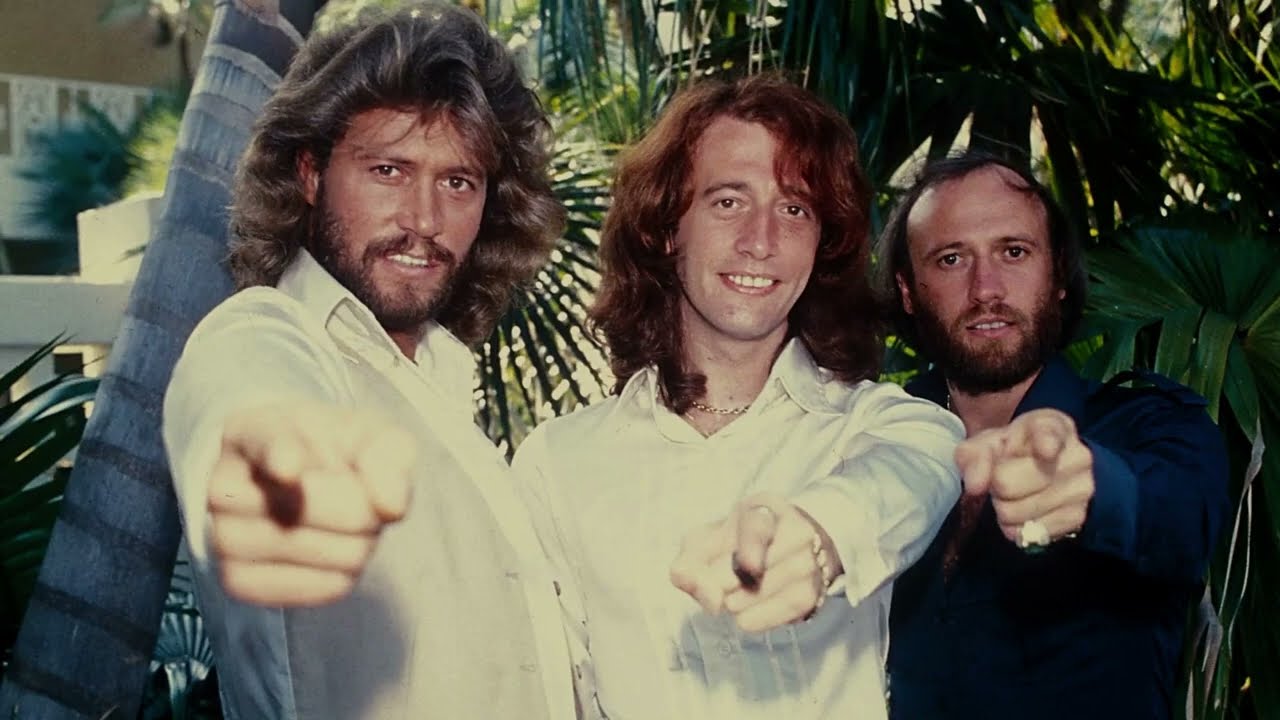
A Fevered Pulse of the Disco Era, Where Rhythm and Rebellion Dance as One
When “Boogie Child” spun onto turntables in December 1976, it arrived as part of the Bee Gees’ dynamic reinvention—their unapologetic embrace of the dancefloor’s glittering pulse. Released as a single from the album Children of the World, the track reached the U.S. Top 20 on Billboard’s Hot 100 chart, peaking at No. 12 in early 1977. It stood as a declaration that Bee Gees—the trio once synonymous with lush orchestral pop and bittersweet balladry—had fully surrendered to a new kind of groove, one steeped in syncopation, sensuality, and the electric thrum of urban nightlife.
By the mid-1970s, disco had become more than a genre—it was a fever, an assertion of liberation through sound and motion. The Bee Gees, led by brothers Barry, Robin, and Maurice Gibb, were among its most skillful architects. “Boogie Child” emerged during a crucial transition period, bridging their soulful experimentation on Main Course (1975) with the slick, feverish confidence that would ignite Saturday Night Fever (1977). The song’s rhythm section—anchored by Blue Weaver’s keyboards and driven by a taut funk bass line—pulses like neon blood. It captures a city night alive with promise and peril, where movement becomes both escape and revelation.
Lyrically, “Boogie Child” revels in dualities: innocence versus experience, control versus abandon. The titular “child” is less a literal figure than an embodiment of youthful release—a spirit unburdened by restraint, dancing against the gravity of conformity. The lyrics are teasingly minimalist, almost hypnotic in their repetition; they function not as narrative but incantation, inviting the listener into a trance state where language dissolves into rhythm. Barry Gibb’s falsetto—already becoming his signature weapon—slides between silk and flame, evoking both erotic confidence and ecstatic surrender. This vocal transformation was not mere style; it symbolized a redefinition of masculinity in popular music: vulnerability rendered powerful through desire.
Musically, “Boogie Child” sits at a crossroads between funk’s muscularity and disco’s polished sheen. The guitar stabs recall Curtis Mayfield’s percussive phrasing; the horn arrangements echo Earth, Wind & Fire’s celestial swagger. Yet there remains something distinctively Bee Gees about it—a melodic sophistication undergirding even its most primal beats. Their harmonies shimmer like chrome beneath the mirror ball’s fractured light, balancing grit with grace.
In retrospect, “Boogie Child” feels like an essential hinge moment—not just in the Bee Gees’ catalog but in the evolution of late-’70s pop itself. It captured an age intoxicated by rhythm yet shadowed by yearning; an era learning to dance away its doubts beneath artificial stars. More than four decades later, that fever still flickers within its grooves—a testament to three brothers who learned that sometimes the deepest truths are found not in silence or sorrow but in motion itself.