
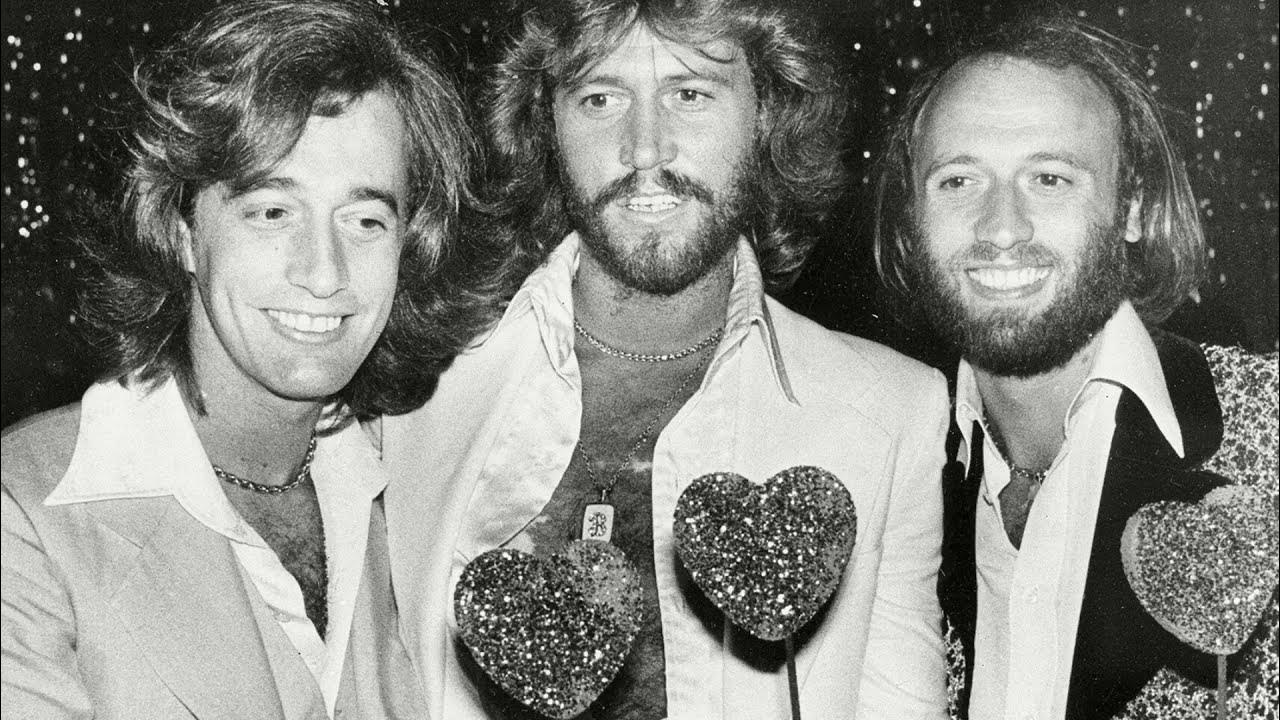
“Immortality (Live – At The MGM Grand)” is a rare moment where pop spectacle turns intimate—three brothers and one guest voice singing as if time itself were listening.
The phrase live at the MGM Grand already carries a certain weight, but with “Immortality” it feels almost literal. This performance comes from the Bee Gees’ legendary November 14, 1997 concert at the MGM Grand Garden Arena, the show that later became the One Night Only live album. The live album itself was released in September 1998, and “Immortality” sits there like a candle placed among hit-parade fireworks—quiet, steady, and strangely moving.
Here’s the crucial truth that makes this song feel different from a typical concert ballad: “Immortality” was written by the Gibb brothers—Barry, Robin, and Maurice—but it entered the world first through Céline Dion, recorded for her album Let’s Talk About Love (released November 14, 1997, the very same date as the MGM Grand concert). The timing feels almost poetic: on the night her album reached the world, she stepped onto the Bee Gees’ stage and sang their new song with them—like a living handoff between generations of pop royalty.
Behind the scenes, “Immortality” had already lived a quiet life before the spotlights found it. The Bee Gees wrote it in 1996, originally intended for the Saturday Night Fever project, and Walter Afanasieff produced Dion’s recording. Dion recorded the track in June 1997, and the Bee Gees added their backing vocals on August 18, 1997—with Dion present for the session that would also be used for video footage. All that care is audible in the live version: the song isn’t built to “show off.” It’s built to hold still—to let a melody carry the kind of promise you can’t prove, only feel.
If you’re looking for chart facts, the “live at MGM” performance is best understood through the studio single’s public life. Dion’s “Immortality” (featuring the Bee Gees) was released as a single on June 5, 1998 outside the United States, and it became especially strong across Europe—reaching No. 2 in Germany and Austria, and No. 5 in the UK. Those numbers matter, but they don’t fully explain why this MGM Grand rendition lands so deeply. Charts measure how many people heard a song; they don’t measure how many people recognized themselves in it.
Because the meaning of “Immortality” isn’t really about living forever in some glossy, heroic way. It’s about a more private immortality: the way love can outlast the moment that created it. In the lyric’s world, devotion becomes a kind of shelter from time—this almost childlike insistence that if two people truly belong to each other, the years can’t erase them. And hearing that idea in a live arena, with thousands watching, is exactly the paradox that makes it powerful: a huge room falls into the hush of a very personal vow.
That’s why the MGM Grand performance is so unforgettable. It isn’t only Céline singing beautifully, or the Bee Gees harmonies doing their miraculous, feather-light weaving. It’s the feeling that the song has found its proper setting: a stage where past and present meet. By 1997, the Bee Gees were no longer chasing relevance—they were reclaiming legacy. And “Immortality,” placed in the middle of a triumphal live document, becomes something tenderer than a comeback: it becomes an offering.
In the end, “Immortality (Live – At The MGM Grand)” doesn’t convince you that love is easy. It convinces you that love is worth singing about as if it matters—because, when the night is quiet and the lights go down, that’s the only kind of immortality most of us ever truly touch.