
The Quiet Strength of Commitment in a World of Imperfect Love
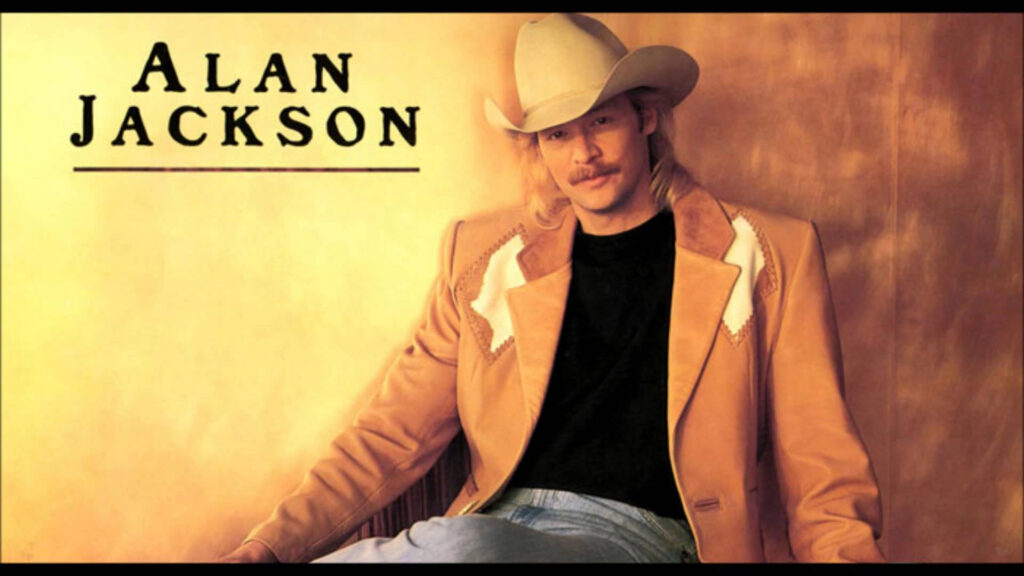
When Alan Jackson released “I’ll Try” in late 1995, it found a tender home on his compilation album The Greatest Hits Collection, and soon rose to become a No. 1 hit on the Billboard Hot Country Singles & Tracks chart in early 1996. It was one of those songs that reminded listeners why Jackson had long since transcended the confines of country radio to become something larger—a chronicler of ordinary life, whose truth-telling came not through grandeur, but through humility. In a decade when mainstream country often polished its emotions to a gleaming sheen, “I’ll Try” offered something quietly revolutionary: honesty wrapped in simplicity, the courage to admit that love is not perfect, but worth the effort anyway.
Behind the song lies an intimate self-portrait. Written solely by Jackson, “I’ll Try” captures his gift for plainspoken lyricism—the kind that never shouts its wisdom, but instead allows it to breathe through small details and unvarnished emotion. Unlike so many love songs that pledge eternal perfection, this one begins from a place of realism. It’s not a promise of flawless devotion; it’s a humble confession that even with the best intentions, love demands work, patience, and forgiveness. Jackson’s narrator doesn’t pretend to have mastered the art of romance—he simply offers his willingness to keep trying. That humility is what makes the song’s core sentiment so disarmingly powerful: it transforms imperfection into grace.
Musically, “I’ll Try” reflects Jackson’s classic neotraditionalist aesthetic—a finely balanced blend of steel guitar sighs and acoustic warmth, anchored by his unmistakably steady baritone. The arrangement is sparse but resonant, designed not to overwhelm the listener but to cradle the emotional weight of the lyric. Every note seems to hover gently around his voice, as if giving space for the vulnerability at its center. This restraint is precisely what gives the song its enduring potency; it sounds like an intimate conversation rather than a performance.
Thematically, “I’ll Try” belongs to a lineage of country songs that find beauty in effort rather than perfection—a lineage stretching from Harlan Howard’s “Busted” realism to Don Williams’ calm acceptance. Yet Jackson refines that tradition for a more modern sensibility: he writes from within marriage, not courtship; from within experience, not fantasy. The song’s truth is domestic and enduring—it speaks to every couple who has ever discovered that love’s longevity depends less on grand gestures than on small acts of persistence.
Nearly three decades after its release, “I’ll Try” still resonates because it articulates something fundamental about human connection: that love survives through intention more than certainty. In Jackson’s hands, “trying” becomes an act of devotion itself—a quiet rebellion against cynicism, a reminder that sincerity still has music left to make in this weary world.