
A wedding isn’t only a celebration—it’s a vow made in the trembling space between certainty and fear, where love agrees to become a life.
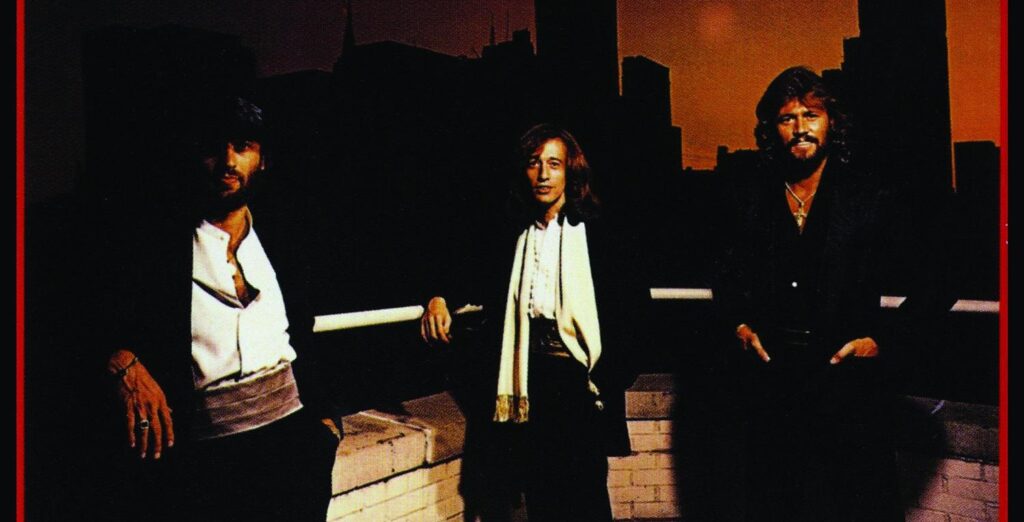
“Wedding Day” sits in a tender, late chapter of the Bee Gees story—quietly radiant, deliberately unhurried—because it belongs to their final studio album, This Is Where I Came In, released on April 2, 2001. The song itself was recorded earlier, in October 1999, during the long, careful gestation of that album’s sessions. Those dates matter, not as trivia, but as atmosphere: this is music made by men who had already lived through every phase of fame—arrival, domination, backlash, rediscovery—and were now writing as craftsmen who didn’t need to prove anything to the room.
Because “Wedding Day” was not released as the album’s main single, it doesn’t have the familiar “debut at No. X, peak at No. Y” story on the pop singles charts. The title track—also named “This Is Where I Came In”—was the era’s principal single, reaching No. 18 in the UK. So if you’re looking for where “Wedding Day” placed in the public world at the time, the honest answer is: it lived inside the album’s wider reception. And that reception was strong—This Is Where I Came In peaked at No. 6 in the UK and No. 16 in the US.
That’s the “headline” position of the song: not as a chart weapon, but as a deep-album love song carried along by a record that listeners welcomed as both a return and a farewell.
The album’s own background notes describe its mood as a kind of reset—“a return to the original Bee Gees formula” while also sounding like a new beginning. In that spirit, “Wedding Day” stands with the album’s more openly romantic tracks—songs the band themselves grouped as continuing their long-running devotion to love songs. And if you’ve followed the brothers across decades, you can hear the difference between early love songs (bright with discovery) and late love songs (bright with understanding). This one belongs to the second kind: a love song written by men who know that promises are easy to sing and harder to keep—yet still worth making.
There’s also a small, telling footnote that gives “Wedding Day” a kind of afterlife beyond the record shelf: the song was featured in an episode titled “Wedding Day” of the NBC drama Providence, which is the kind of synchronicity that feels almost fated—title meeting title, song meeting story. It suggests the track’s emotional clarity translated easily: even without knowing the Bee Gees’ history, you can feel what the song is trying to hold.
And what it’s trying to hold, at its core, is the strange duality of weddings themselves. A wedding is public—flowers, guests, music, photographs—but the vow is private, made deep inside the self where no one can clap for you. “Wedding Day” feels written for that private interior room. It doesn’t behave like a cinematic procession; it behaves like a late-night moment after the guests are gone, when the house finally quiets and you realize what you’ve done: you’ve promised your future to another person, not as an abstract romance, but as daily weather—good mornings, bad moods, the long ordinary stretches where love becomes less like fire and more like shelter.
In the Bee Gees’ hands, that idea has extra poignancy. Their entire career is, in a way, a meditation on devotion—devotion to melody, to harmony, to the craft of making heartbreak singable. And here, near the end of their studio journey, devotion is not just a lyrical theme; it’s embodied by the fact that three brothers were still making records together, still blending voices like a single instrument. Knowing that this was their last full studio statement adds an ache you can’t fully separate from the listening experience. The song is about committing to a life—while the album itself quietly feels like a commitment to legacy, to closing the book with grace.
So when “Wedding Day” plays, it can feel like more than romance. It can feel like time speaking softly: Choose what you will stand by. Choose what you will keep. Not in the sentimental sense, but in the practical, adult sense—the kind of love that doesn’t ask to be worshiped, only honored.
That’s why this track often grows on you. It doesn’t chase you down the street. It waits—like certain memories do—until you’re ready to hear it as it’s meant to be heard: not as a fantasy of perfect love, but as a portrait of love that has decided to stay.