
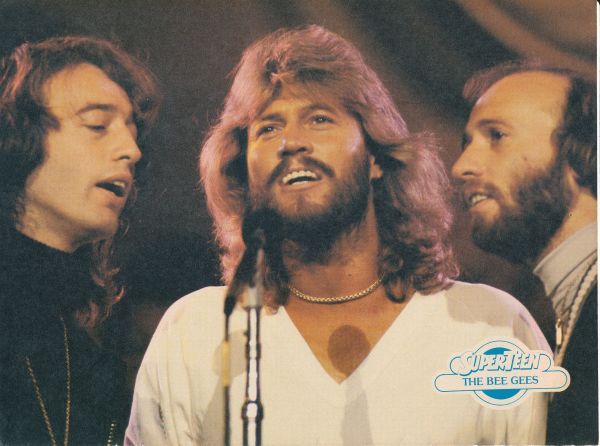
“Still Waters (Run Deep)” is the Bee Gees’ late-career reminder that the quietest love can be the most dangerous—because it hides its longing, its regret, and its devotion under a calm surface.
“Still Waters (Run Deep)” arrived as the third and final single from the Bee Gees’ 21st studio album Still Waters, released in the UK on October 27, 1997, with “Love Never Dies” as the B-side. Its chart story at release is modest in numbers but weighty in meaning: it peaked at No. 18 on the UK Singles Chart and reached No. 57 on the U.S. Billboard Hot 100—notably the Bee Gees’ most recent appearance on that American pop chart.
That last detail carries a quiet sting, the sort only time can supply. By 1997, the Bee Gees weren’t fighting for relevance in the usual way; they were fighting for space—space on playlists, on radio rotations, inside a pop culture that was sprinting toward a new millennium. Yet they answered with a song that moves like a slow current, refusing to be hurried. It’s almost as if the brothers were saying: we don’t have to shout; we’ve learned how to haunt.
The song’s home, Still Waters, was released on March 10, 1997 in the UK (and May 6, 1997 in the U.S.), and it became one of their most successful albums in years—reaching No. 2 in the UK and No. 11 in the U.S. This matters because it frames “Still Waters (Run Deep)” not as an isolated late-period single, but as part of a genuine resurgence: a season when the Bee Gees were being celebrated for lifetime achievement, enjoying renewed visibility, and proving that their melodic instincts hadn’t dulled—only deepened.
There’s also a production story worth placing near the top. While the album itself involved multiple high-profile producers, “Still Waters (Run Deep)” is specifically associated with Hugh Padgham as producer, and the single was also issued in a version remixed toward a more contemporary R&B/hip-hop feel compared with the album cut. That choice tells you a lot about the Bee Gees’ late-’90s mindset: they weren’t trying to erase their identity, but they were willing to change the lighting—to let their harmonies sit inside a newer rhythmic frame without losing their unmistakable emotional handwriting.
And what is that handwriting here? It’s the Bee Gees’ lifelong fascination with the hidden life of love—love that doesn’t always announce itself, love that sometimes survives by staying quiet. The title phrase “still waters run deep” is a proverb for people who don’t perform their feelings—yet feel them intensely. In the song, that idea becomes romantic and slightly ominous: calmness as camouflage, composure as a mask, restraint as proof that the heart is holding something too powerful to spill. The Bee Gees always understood this paradox: that tenderness can be fierce, and that understatement can be a form of intensity.
The visual side reinforced the mood. A music video was made to promote the single, directed by Jake Nava, setting the brothers in a nocturnal city landscape under bridges, while a love story unfolds in parallel—darkness, distance, and then the soft suggestion of dawn. And onstage, the song had its moment too: the Bee Gees performed it on November 14, 1997 in Las Vegas during their One Night Only event—an important timestamp, because One Night Only became a major late-career celebration, a night when their catalogue felt not merely remembered, but newly claimed.
So when you return to “Still Waters (Run Deep)” now, it doesn’t feel like a “late single” at all. It feels like a mature statement from three brothers who had already ridden every wave—Beat-era beginnings, worldwide pop dominance, disco backlash, quiet rebuilding—and still believed in the emotional authority of a well-made song. The chorus doesn’t beg. It doesn’t posture. It simply flows—like memory itself—proving that some feelings don’t fade loudly. They fade slowly, and in that slowness, they become permanent.