
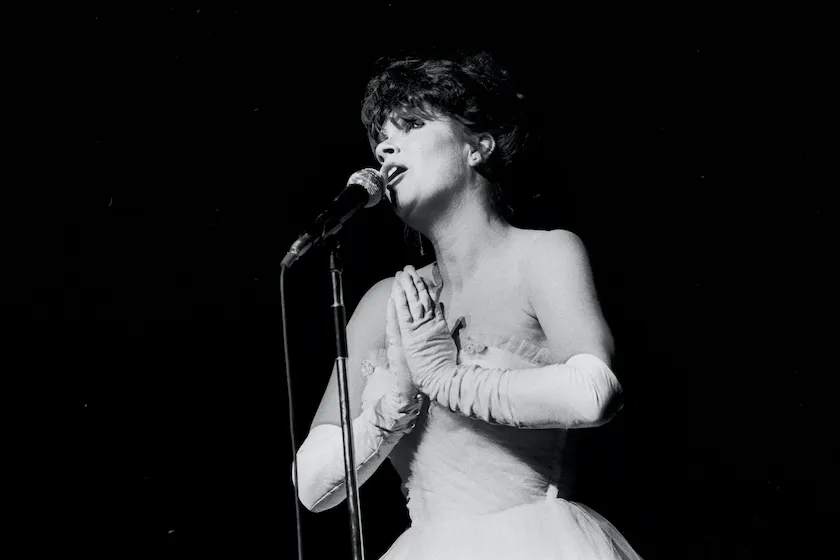
“Sail Away” is Linda Ronstadt singing a beautiful melody that carries a dark truth—an invitation that sounds like hope, while the listener slowly realizes it’s bait.
“Sail Away” sits on Linda Ronstadt’s 1973 album Don’t Cry Now (released October 1, 1973 on Asylum Records)—and it arrives with the quiet force of a song that doesn’t want to be comfortable. In terms of “debut chart position,” the album made its first Billboard footprint at No. 177 on the Billboard 200 (October 20, 1973), later rising to a peak of No. 45 and staying on the chart for 56 weeks. The track itself was not released as a major charting pop single, so its public “arrival” is best measured through the album’s entry—an early step on the long road that would soon lead to her mid-’70s dominance.
The story behind Ronstadt choosing this song is as revealing as the song’s twist. “Sail Away” was written by Randy Newman and first released in 1972 as the title track of his album Sail Away. Newman’s song is famously satirical, voiced by an “unreliable narrator” who speaks with a salesman’s charm. A contemporary Rolling Stone review captured its cruel irony in a single sentence, describing it as the American dream pitched “as it might have been presented to black Africa in slave running days.” That’s the heart of it: an invitation to a “promised land” that’s actually a trap, dressed up in pleasant music and pretty promises.
Now place that lyric inside Don’t Cry Now, an album shaped by transition—new label, new expectations, and the subtle pressure of having to “become” the artist the world sensed she could be. Ronstadt began the album with producers John Boylan and J.D. Souther, but the sessions stretched out, delayed in part by touring commitments, until the project needed fresh energy and a collaborator who would treat her as a true partner. That’s when she brought in Peter Asher—highly recommended through the James Taylor circle—to co-produce two tracks: “Sail Away” and “I Believe in You.” In hindsight, it’s a small hinge in her career: Asher would become a crucial presence in her rise, but here you can already hear the shift—toward detail, toward intention, toward recordings that feel emotionally “placed,” not merely performed.
What does “Sail Away” mean when Linda Ronstadt sings it? That’s the lingering question, because she doesn’t wink at the listener. She gives the song a kind of luminous seriousness—almost as if she’s honoring the seduction so we can better feel the betrayal beneath it. This is where Newman’s writing is so devastating: the surface is warm, even welcoming, while the subtext is violence and exploitation. Ronstadt’s gift—always—was making a lyric feel lived-in. On “Sail Away,” that gift becomes complicated in the best way: her sincerity throws the lyric’s moral darkness into sharper relief. The song becomes less like a clever satire and more like a parable about persuasion—how easily a sweet melody can escort a terrible idea into the heart.
Not every critic hears it as a perfect fit, and that disagreement is part of the track’s mystique. One retrospective appraisal of Don’t Cry Now argues the song feels like “the only slight misstep” on an otherwise cohesive album—precisely because its tone sits oddly alongside the record’s more intimate country-rock heartbreak. And yet, that very “oddness” can be heard as bravery: the album is full of emotional realism—pride, regret, endurance—and “Sail Away” widens the lens from private pain to a more unsettling American story. It’s the sound of an artist willing to sing something that doesn’t resolve neatly.
In the end, “Sail Away” endures in Ronstadt’s catalog because it isn’t just pretty—it’s haunted. It reminds us that some invitations are designed to flatter, some promises are designed to hurry us past our doubts, and some songs—especially when sung beautifully—ask us to listen twice: once for the melody, and again for the truth hiding underneath.