
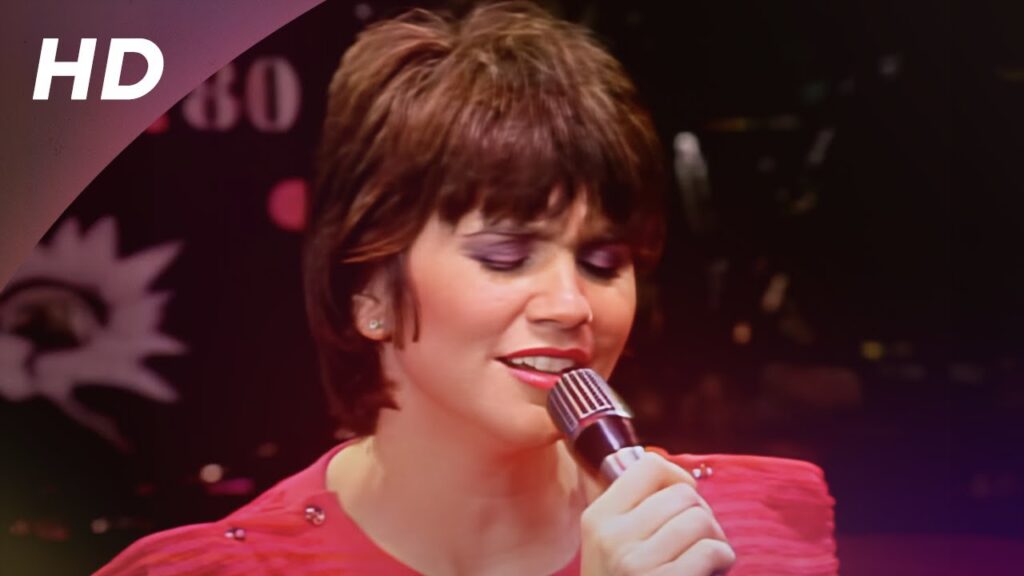
“Cry Like a Rainstorm” is Linda Ronstadt giving sorrow its full weather—letting tears fall hard and honest, until the heart finally has room to breathe again.
If the album title Cry Like a Rainstorm, Howl Like the Wind sounds cinematic, the song “Cry Like a Rainstorm” is where that cinema turns personal—less skyline, more close-up. Ronstadt recorded it for the 1989 comeback-to-pop statement that carried her name back into the Billboard 200 Top 10. The album was released on October 2, 1989, produced by Peter Asher, and it ultimately peaked at No. 7 in the U.S.—a quietly significant achievement in an era that was quickly changing its radio accents.
Its “arrival” on the chart wasn’t instant thunder; it was more like cloud cover rolling in, then lifting. The album’s Billboard 200 debut position is documented as No. 72 (chart date: 1989-10-21). That debut matters here because “Cry Like a Rainstorm” itself was not the radio spearhead—this project’s official singles were “Don’t Know Much” and “All My Life,” both duets with Aaron Neville. In other words, this track lived slightly away from the spotlight, the way certain truths do: not marketed as a headline, but essential to the album’s emotional climate.
The song’s authorship is part of its character. “Cry Like a Rainstorm” was written by Eric Kaz (and it appears as track 2 on the album, running 3:36). Kaz had first recorded the song back in the early ’70s—a detail that gives Ronstadt’s choice a subtle poignancy, as if she’s rescuing a bruised confession from an earlier decade and letting it speak again in a new voice.
And what a voice to deliver it. Ronstadt had always been celebrated for power—how she could cut through rock guitars, how she could lift a chorus without breaking it. But the deeper magic, especially in her late ’80s work, is control: the way she lets feeling bloom without forcing it into melodrama. On “Cry Like a Rainstorm,” she sings like someone who has learned that composure is not the same as healing. The title alone suggests a kind of permission: don’t drizzle, don’t apologize for the intensity—let it come down. Grief, disappointment, longing, the fatigue of carrying on… all of it deserves its full weather.
The production tells the same story in sound. This album was recorded at Skywalker Ranch in Marin County, and it leans into “big” sonics without losing intimacy—lush arrangements, orchestral weight, and room for silence where it counts. On “Cry Like a Rainstorm,” the credits point to something especially evocative: the presence of the Oakland Interfaith Gospel Choir (and choir arrangements/conducting credited to Terrance Kelly on tracks that include this one). A gospel choir, even when used delicately, changes the emotional architecture. It doesn’t just support the lead vocal—it turns private pain into shared human experience, like a roomful of people quietly agreeing: yes, this is what it feels like.
That sense of community is important because the album around it is, famously, full of duets—especially with Aaron Neville—and two of those duets earned Grammy wins for Best Pop Vocal Performance by a Duo or Group (for “Don’t Know Much” at the 32nd GRAMMY Awards, and “All My Life” at the 33rd). “Cry Like a Rainstorm” sits beside those celebrated moments like a quieter sibling: not decorated with trophies, but arguably just as necessary. It’s where the album stops smiling for the camera and stares out the window a little longer than is comfortable.
That’s the song’s meaning in the end: “Cry Like a Rainstorm” isn’t simply about sadness—it’s about release. It suggests that there’s a dignity in feeling things fully, in letting the storm do its work rather than pretending the sky is always clear. Ronstadt doesn’t romanticize pain; she gives it a shape, a beginning and an end, and then she leaves you with the strange calm that follows honest crying—the sense that the air has changed, and you can finally breathe the way you meant to all along.