
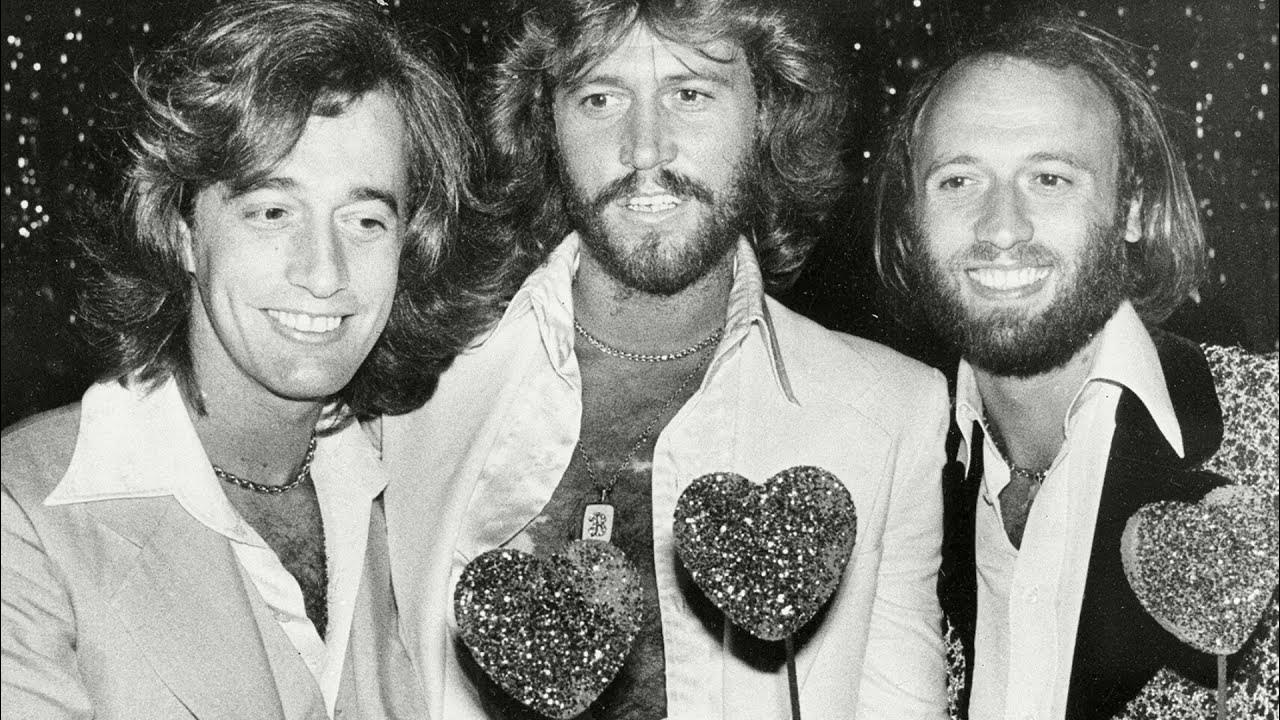
“Edison” is the Bee Gees’ soft little hymn to invention—an affectionate glance at the man who “gave us light,” and a reminder that progress can feel strangely tender when it’s sung like a lullaby.
In the Bee Gees’ story, “Edison” is not a hit single that stormed radio and demanded a chart statistic. It is something more curious—and, in its own quiet way, more intimate: an album track tucked into their most ambitious late-’60s statement, Odessa, released in March 1969 as the group’s first double album, recorded in both New York and London. Within that sprawling crimson-felt package, “Edison” appears on Side Two, running 3:07, with lead vocals by Robin and Barry—a pairing that already tells you the song is meant to feel personal rather than purely decorative.
Because it was never positioned as an A-side, there is no “debut week” to pin to the Hot 100. Its “ranking” is the album’s aura: Odessa as a bold, sometimes fragile monument to the Bee Gees at a crossroads—rich harmonies, cinematic arrangements, and that late-’60s sense that pop could be literature if you dressed it in enough velvet. The official Bee Gees discography page calls Odessa their most ambitious ’60s release, and you can hear that ambition even in a small track like “Edison.”
The songwriting credit is also a small window into Bee Gees history. While some track listings historically emphasized Barry and Robin, widely used discographical references list “Edison” among the songs credited to Barry, Robin, and Maurice Gibb—a reminder of how often the brothers’ writing identities overlapped, even when one or two voices led the narrative. However you file the paperwork, the sound is unmistakably theirs: earnest melody, devotional harmonies, and a lyric that treats the modern world like a miracle you can hold in your hands.
And the lyric’s subject—Thomas Edison—is handled in a way that only the Bee Gees could manage in 1969: not as a textbook portrait, but as a warm, almost childlike gratitude. The song nods to the everyday wonders Edison helped popularize—electric light, recorded sound, the small comforts of technology that quietly reshape ordinary life. In most pop songs, the “hero” is romantic, mythical, or heartbreakingly flawed. Here, the hero is an inventor—yet the feeling is still romantic in its own way. It’s romance with the idea that darkness can be pushed back, that a room can be made readable, that music itself can be captured and returned to you later—like a voice preserved inside time.
That’s the deeper meaning of “Edison.” It isn’t merely praising innovation; it’s mourning the world before it, and celebrating the world after it, all at once. When you listen closely, you can sense the Bee Gees’ late-’60s tension between innocence and modernity: the belief that progress is beautiful, and the fear that progress can also make life feel less human. “Edison” resolves that tension by choosing wonder. It says—quietly, almost stubbornly—that modern life does not have to be cold. Light can be warmth. A “cylinder” can be pleasure. A scientific name can become a chorus you hum while the evening settles in.
There’s something especially nostalgic about hearing this on Odessa, an album created during a precarious period for the group—big ideas, shifting internal dynamics, the sense of a band stretching toward something grand enough to outlast the decade. In that context, “Edison” feels like a brief clearing in the clouds: a small, sincere song that doesn’t compete for grandeur. It simply opens its hands and offers thanks.
And maybe that is why it still matters. “Edison” doesn’t try to be timeless by being universal in the abstract; it becomes timeless by being specific and gentle. It reminds you that the modern world—so loud, so fast, so complicated—was once a series of humble miracles: a bulb glowing in a quiet room, a voice returning from a machine, a night made less frightening because somebody, somewhere, figured out how to bring the light.