
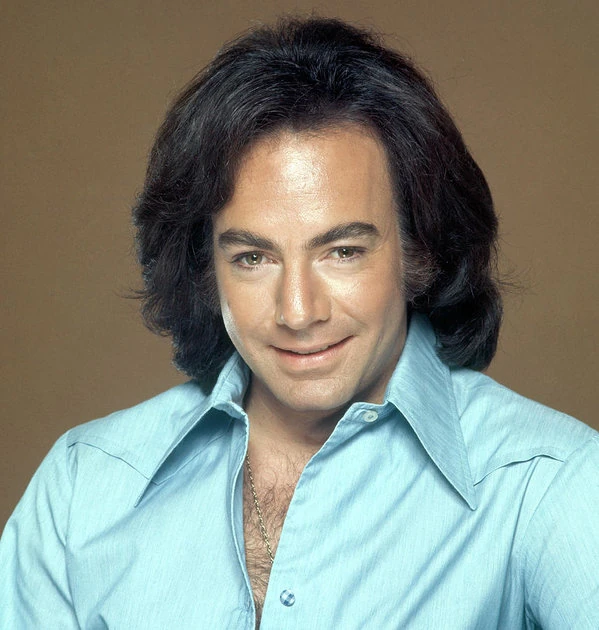
“Thank the Lord for the Night Time” turns dusk into a doorway—where the day’s weight falls away, and desire, music, and second winds finally get their say.
The essential facts land like the first backbeat: Neil Diamond’s “Thank the Lord for the Night Time” entered the Billboard Hot 100 at No. 86 (debut chart date July 15, 1967) and climbed to a peak of No. 13, spending 9 weeks on the chart. Released in 1967 on Bang Records with “The Long Way Home” as its B-side, the single carried the stamp of a very specific pop-rock workshop: written by Neil Diamond, produced by Jeff Barry and Ellie Greenwich—the same hit-making engine that helped sharpen the sound of his Bang-era singles into something radio couldn’t ignore. The song also closed out Diamond’s 1967 album Just for You, an LP that later peaked at No. 80 on the Billboard 200.
But charts only tell you where a song went—not why it still feels like a place you can return to.
By mid-1967, Diamond was living in that thrilling, exhausting double-life so many Brill Building survivors recognize: one foot in the writer’s room, the other under the stage lights. He’d already become known not just as a performer, but as a songwriter whose work could outrun him into the world—most famously with “I’m a Believer” (written by Diamond) becoming a blockbuster for The Monkees. And behind the scenes, Barry and Greenwich were instrumental in bringing him to Bang, helping frame his early recordings with a tight, punchy pop sensibility that emphasized rhythm—handclaps, drive, momentum—so the singer’s urgency had something muscular to ride on.
That’s exactly what you hear in “Thank the Lord for the Night Time.” It doesn’t saunter. It pushes. The drums and accents feel like streetlights blinking on in sequence, one after another, until the whole city seems to hum. Even contemporary trade reviews noticed that physicality—Billboard highlighting the track’s strong dance pulse behind Diamond’s vocal, and Cash Box describing it in breathless, percussive terms—because the record clearly wanted bodies moving, not merely heads nodding.
Yet what makes the song linger is how it sanctifies the night without making it sinful. There’s no cynicism in its celebration—no wink that says, “You know what I really mean.” Instead, it’s closer to gratitude, almost prayerful in its simplicity: daytime is obligation, but nighttime is permission. Permission to feel the heartbeat you muted all afternoon. Permission to speak in a softer voice—or a bolder one. Permission to stop performing competence and start performing truth.
In Diamond’s early catalog, you can trace a recurring fascination with timing: the moment you can’t hold back anymore, the moment you have to declare something, the moment the world finally matches your private intensity. “Thank the Lord for the Night Time” is built around that hinge. It’s a song about release, but not the messy kind—more like opening a window in a crowded room. The melody has that Bang-era snap, but the emotion underneath is something older and more elemental: the relief of being allowed to become yourself again when the sun stops watching.
And there’s a delicious irony to its place on Just for You. As the album’s closing track, it feels like the final word after a long day’s worth of stories—an after-hours benediction, a neon sign that says the night shift of the heart is now open. The record didn’t need to be Diamond’s biggest chart statement to become a signature of a certain mid-’60s feeling: that youthful insistence that the real life begins after dinner, after the phone calls, after the last polite conversation fades down the hallway.
Even the song’s year-end footnote is telling. It placed at No. 100 on Billboard’s year-end Top 100 singles list for 1967—not the top of the mountain, but still in the photograph, still part of the year’s soundtrack, still proof that a groove and a plainspoken hook could elbow their way into memory.
If you listen now, decades later, the record doesn’t ask you to pretend time hasn’t passed. It asks something gentler: remember how it felt when night wasn’t an ending, but a beginning. Remember the first time you realized you could step outside yourself—into music, into love, into possibility—and feel, for a few minutes, like gratitude had a beat you could dance to. That’s the lasting gift of “Thank the Lord for the Night Time”: it doesn’t just praise the dark. It praises what the dark gives back.