
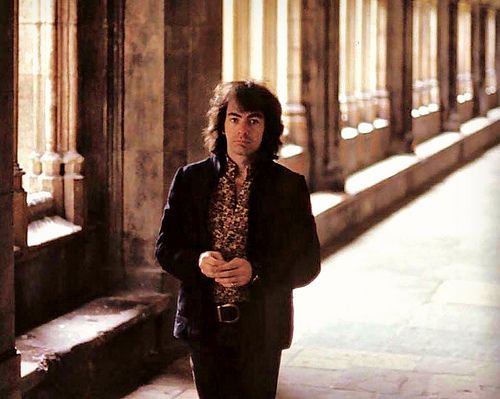
“Crunchy Granola Suite” is Neil Diamond turning California’s new “health-and-harmony” craze into a joyful little sermon—half wink, half revelation—about finding peace in the middle of modern noise.
Released in 1971 and issued on the album Stones (album release date November 5, 1971), “Crunchy Granola Suite” came into the world with a grin and a guitar riff you can spot from across the room. In the U.S., it wasn’t credited as a standalone Hot 100 hit so much as part of the paired single listing “Stones / Crunchy Granola Suite,” which debuted at No. 76 on the Billboard Hot 100 dated November 13, 1971 and peaked at No. 14. In the U.K., the song’s commercial footprint was smaller—“Stones” entered the Official Singles Chart and shows a peak position of No. 33 (Dec. 5, 1971 chart week). Those numbers matter, but what matters more is why people kept the song close: it feels like a bright window thrown open at the start of the ’70s, when self-improvement, counterculture, and a certain sunny West Coast idealism were all drifting into the same living room.
The phrase “Crunchy Granola” itself is a snapshot of that era—health food, macrobiotics, sandals, seekers, the whole scene. And Diamond didn’t just observe it; he admitted he was struck by it. In liner notes he later wrote for a 1996 compilation, he described being newly in California and impressed by the “health food consciousness,” even joking that he thought “Crunchy Granola Suite” might change people’s eating habits. That’s the essential backstory: the song isn’t a cheap parody from a distance. It’s an amused love letter from someone standing inside the glow, trying it on, laughing at himself while he’s at it.
Critics and writers have long read the lyric as a playful portrait of a person shedding hang-ups by embracing the stereotypical “granola” lifestyle—less therapy-speak, less numbing out, more fresh air and good intentions. Music scholar James Perone describes it as a story of a man who once wrestled with all kinds of inner knots, now finding solace in that new, wholesome California template. But the song doesn’t feel preachy—because Diamond’s tone is too mischievous for that. Even when he urges you toward the joke-commandments (“drop your shrink,” “stop your drinking”), the delivery isn’t judgment. It’s relief. It’s the sound of someone discovering that sometimes the world does offer a simpler door out of the maze—if only for the length of a three-minute record.
And then there’s the second life of “Crunchy Granola Suite”—the one that turned it from a clever studio cut into a ritual. On the live album Hot August Night, Diamond famously opens with “Prologue / Crunchy Granola Suite,” transforming the song into a curtain-raiser, a communal spark before the bigger stories arrive. That opening arrangement mattered enough to earn industry notice: “Prologue / Crunchy Granola Suite” received a Grammy nomination for Best Instrumental Arrangement (credited to conductor/arranger Lee Holdridge). In other words, what begins as a slightly goofy cultural postcard becomes—on stage—an engineered piece of excitement, a way to lift a crowd to its feet with rhythm, brass, and that unmistakable Diamond momentum.
What’s the deeper meaning, when the jokes fade? Oddly, it’s the tenderness underneath the satire. “Crunchy Granola Suite” is really about hunger—hunger to feel better, to live cleaner, to believe that a change in habits might lead to a change in spirit. It’s an early-’70s fantasy, yes—but also a timeless one. The world gets loud, the mind gets crowded, and somebody comes along offering a recipe: eat differently, think differently, breathe differently, and maybe the pain will loosen its grip. Diamond doesn’t promise a miracle. He gives you a tune you can carry, a bright pocket of faith that feels almost childlike in its optimism.
That’s why the song still lands today: not because it’s “about granola,” but because it’s about the small human hope that we can remake ourselves—lightly, imperfectly, with laughter—and that somewhere in the middle of the noise, a simple riff and a simple chorus can make you feel, for a moment, wonderfully unburdened.