
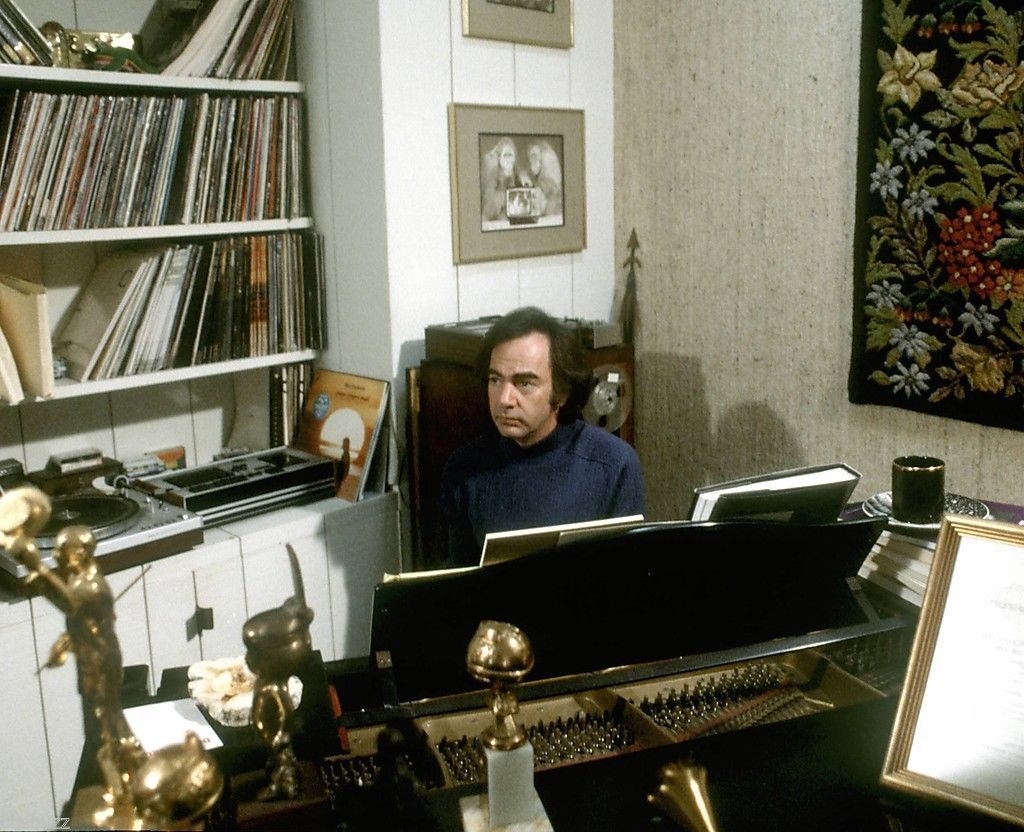
“In Better Days” is Neil Diamond looking back with clear eyes—mourning how love once felt effortless, while quietly admitting that memory can be both comfort and ache.
“In Better Days” sits at the emotional center of Melody Road (released October 21, 2014), Neil Diamond’s first full album of new songs in six years and a late-career statement built on reflection rather than noise. On the album’s official track list, “In Better Days” is track 6, running 3:30, and it’s credited to Neil Diamond himself. In “ranking at release” terms, the song was not promoted as a charting single, so it doesn’t have its own Hot 100 debut. Its commercial “arrival” is the album’s—and Melody Road made a very loud entrance: it debuted at No. 3 on the Billboard 200, selling about 78,000 copies in its first week. In the UK, the album’s peak is documented at No. 4 on the Official Albums Chart.
Those numbers matter, but what matters more is the mood: “In Better Days” is Diamond doing what he has always done best—turning a private reckoning into a song that feels like it belongs to anyone who has ever tried to make sense of a love that slipped away without a clear explanation. The lyric opens not with blame, but with a question that stings precisely because it’s so plain: why do we promise forever so easily, and then—somehow—fail to recognize the moment when “forever” begins to crack? One widely circulated lyric excerpt frames it with quiet disbelief, asking why lovers sing “loving songs” and then “move along” not knowing why. You can feel Diamond’s old gift at work here: the ability to speak in sentences that sound almost conversational, yet land like philosophy because the melody makes them glow.
There’s a particular kind of sadness in the title phrase—“In Better Days.” It doesn’t say “in the past,” which would be factual. It says “better,” which is judgment, and therefore confession. The song isn’t only remembering a time gone by; it’s acknowledging that the present, for all its maturity and clarity, carries a deficit—less ease, less innocence, fewer untroubled mornings. That single word turns nostalgia into something heavier: not merely remembrance, but a measurement of what was lost.
And still, Diamond doesn’t write this as a tragic collapse. He writes it like a man studying the ruins with tenderness, as if he’s finally brave enough to admit what he didn’t understand while he was still living inside the bright hours. That emotional twist is crucial: the song implies that part of the pain of looking back is realizing how much you had—and how little you recognized it at the time. In this way, “In Better Days” quietly joins the long Diamond tradition of songs where the real drama isn’t the breakup itself, but the afterlife of the breakup: the mind replaying scenes, the heart trying to locate the exact turning point, the soul bargaining with memory for one more clear answer.
Placed within Melody Road, the track also acts like a hinge. The album as a whole was received as a mature work—richly arranged, reflective, and rooted in Diamond’s enduring faith in romance and balladry. “In Better Days” embodies that maturity: it doesn’t chase the old roar; it trusts the quiet. It’s the sound of an artist late in the journey, still writing about love—not because it’s easy, but because it remains the one subject that keeps revealing new truths as the years accumulate.
If you listen closely, you’ll notice how the song’s ache is balanced by something almost merciful: it doesn’t demand punishment, only understanding. It doesn’t ask you to pick sides; it asks you to remember. And that, perhaps, is why Neil Diamond can sing a line about “better days” without sounding bitter. The song feels less like regret and more like a soft, human acknowledgment: that love can be real even when it doesn’t last, and that memory—however painful—can still be a kind of grace.