
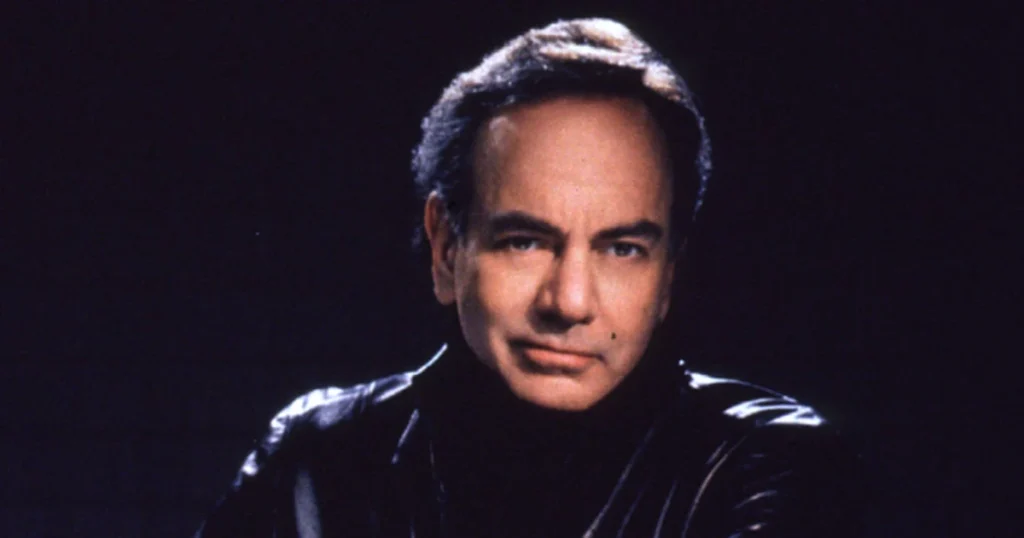
“If I Don’t See You Again” is Neil Diamond’s long, slow exhale—love spoken as a last letter, tender enough to bless the past, brave enough to accept the ending.
Neil Diamond placed “If I Don’t See You Again” right at the front of Home Before Dark—track 1, running about 7:13—as if he wanted the listener to meet him immediately in the most vulnerable room of the house. The album was released May 6, 2008, produced by Rick Rubin, and recorded between October 2007 and February 2008. And the “ranking at launch” was not subtle: Home Before Dark debuted at No. 1 on the Billboard 200, becoming Diamond’s first chart-topping album in the U.S., with a first-week start reported at 146,000. It also topped the national albums charts in the UK and New Zealand, giving this late-career chapter the kind of headline usually reserved for younger artists still chasing their first crown.
Against that triumphant backdrop, “If I Don’t See You Again” doesn’t sound like victory music. It sounds like a man standing very still, watching a door close, and deciding to speak gently while he still can.
The song’s power starts with its patience. Seven minutes is a long time in pop terms—especially in 2008—and Diamond uses that length not for show, but for emotional breathing room. The lyric moves like a quiet conversation you don’t rush because you know you may never get another chance. It carries the weight of two people who have “made it through,” who have already survived storms together, and who now face the most ordinary heartbreak of all: everything has got to end. (Even the phrasing is plain, almost matter-of-fact—like someone trying not to cry by keeping the words simple.)
It helps to remember what kind of creative season Diamond was in. Home Before Dark was his second album with Rick Rubin after 12 Songs, and in the lead-up to its release Diamond described it as a deeper, more painful writing experience—calling it “maybe the most difficult album I’ve ever written, and maybe my best.” That’s not marketing fluff; it’s the mood you hear in “If I Don’t See You Again.” The song doesn’t try to impress you with cleverness. It tries to be true—and truth, when it’s spoken softly, can feel almost unbearable.
This is also a fully authored Diamond piece: he wrote the song himself, and it first appeared on this 2008 release. So you’re not listening to a standard he borrowed to fit a vibe. You’re listening to the songwriter who built his career on direct address—“I am,” “I said,” “hello again,” the whole catalog of hearts speaking in plain English—returning to that directness with fewer defenses left to hide behind.
As a standalone single, the story is quieter. Discography listings show “If I Don’t See You Again” among Diamond’s 2008 singles, but it’s marked as not charting—a small detail that feels oddly appropriate. This isn’t a song designed to “debut.” It’s designed to remain—to become the track someone chooses late at night, long after the radio has moved on, when the heart needs company more than it needs a hook.
And that is the song’s meaning, really: it treats love as something worth honoring even when it’s ending. There’s no cheap villain, no triumphant “I’m better off without you.” Instead, Diamond sings like a man who remembers what it took to keep going—how easy it would have been to give up on life, how impossible it felt to give up on this person. The emotional posture is not bitterness. It’s gratitude mixed with surrender: the painful maturity of acknowledging that some relationships don’t fail because they were false; they end because time changes the shape of people.
It’s hard not to hear the meta-story, too. In 2008, Diamond became the oldest artist at that time to score a first-time No. 1 album on the Billboard 200—an achievement widely noted in coverage of the album’s chart run. And what does he open that historic, late-life No. 1 with? Not a party anthem. Not a greatest-hits victory lap. He opens with a song that accepts mortality—of love, of moments, of the “curtain” descending—like he’s saying: this is what matters now.
So when you listen to “If I Don’t See You Again,” try hearing it the way it seems to have been written: as a blessing spoken at the edge of goodbye. A song that doesn’t pretend endings are clean, but still insists on dignity. And in that insistence—quiet, human, unguarded—Neil Diamond gives you something rare: a farewell that feels less like a collapse, and more like a hand held a little longer before it finally lets go.