
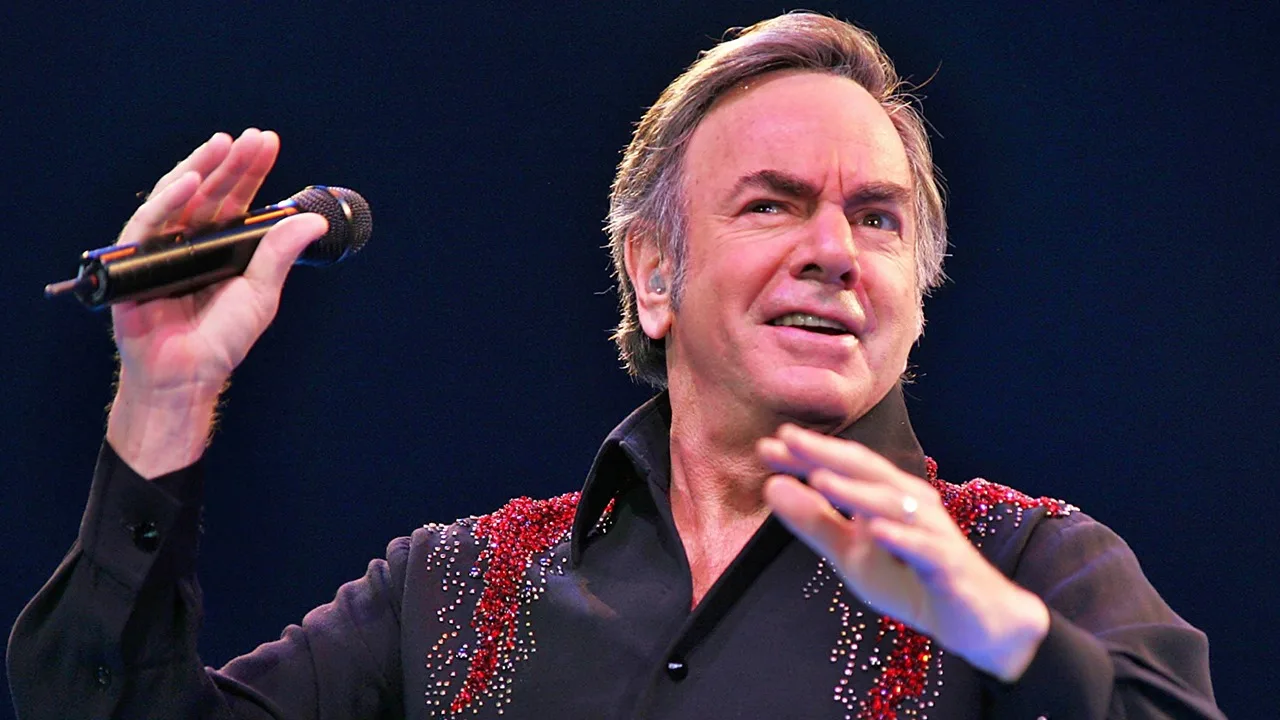
A quiet confession of resilience—“I’ve Been This Way Before” feels like a hand on the shoulder, reminding you that survival often looks like returning to yourself.
When Neil Diamond released “I’ve Been This Way Before” as a single from his album Serenade, it didn’t arrive with the swagger of a chant-along anthem. It came in more like dusk—soft, reflective, and certain of what it wanted to say. And the charts, telling their own kind of truth, confirmed that listeners understood that mood. In the U.S., the song reached No. 34 on the Billboard Hot 100, while climbing all the way to No. 1 on Billboard’s Easy Listening (Adult Contemporary) chart—Diamond’s third chart-topper on that format.
The timing around it matters. Serenade was released on September 27, 1974, a period when Diamond—already a household name—was leaning into a warmer, more orchestrated kind of adult pop, guided by producer Tom Catalano. Although you’ll sometimes see “Released: 1974” attached to the single, its Hot 100 chart activity sits firmly in early 1975, reflecting how singles often moved on radio and into stores with a lag after an album’s release. One week-by-week chart archive shows the song entering the Hot 100 in February 1975, climbing through the month.
What makes “I’ve Been This Way Before” linger isn’t just its performance numbers—it’s the emotional posture of the song. The title alone is a thesis: not “I’m over it,” not “I’m healed,” but something more honest and human—I recognize this road. There’s comfort in that recognition, even when the landscape is painful. Diamond sings as if he’s looking straight at an old bruise and describing it without drama, the way we do when we’ve finally stopped pretending certain seasons didn’t happen.
Musically, the track behaves like a slow-opening curtain. It’s credited as a soft rock ballad, built to let the vocal do the heavy lifting, and Diamond’s voice here carries that familiar combination of grain and glow—tender, but not fragile. You can almost feel the arrangement “breathe,” giving him space for those lines that sound less like performance and more like a private admission set to melody. Contemporary trade reviews caught that same sense of substance: Billboard highlighted the song’s lyrical strength (relative to his recent releases), while Cash Box praised its moody build from a simple opening into something richer and more orchestral.
As a piece of storytelling, “I’ve Been This Way Before” is classic Diamond—not in the sense of spectacle, but in the sense of emotional plainness sharpened into poetry. The “story behind” it isn’t a tabloid anecdote or a studio trick; it’s the recognizable Diamond theme of endurance. He wrote it himself, and you can hear an artist speaking from inside his own vocabulary: longing that doesn’t beg, regret that doesn’t wallow, strength that doesn’t brag. The B-side, “Reggae Strut,” is a fascinating contrast—proof that the same era could hold both experimentation and intimacy—but it’s the A-side that kept finding its way into people’s daily lives, the kind of song that plays softly and somehow says exactly what you couldn’t.
If you want the meaning in one breath, it’s this: “I’ve Been This Way Before” treats repetition not as failure, but as evidence of being alive. We circle back to old feelings, old mistakes, old hopes—sometimes with shame, sometimes with wisdom. Diamond doesn’t scold that cycle; he dignifies it. And that’s why the song fit the Adult Contemporary audience so naturally, rising to No. 1 there: it speaks the language of lived experience, where the biggest dramas are often internal, and the bravest thing you can say is simply, I know this place… and I’m still here.