
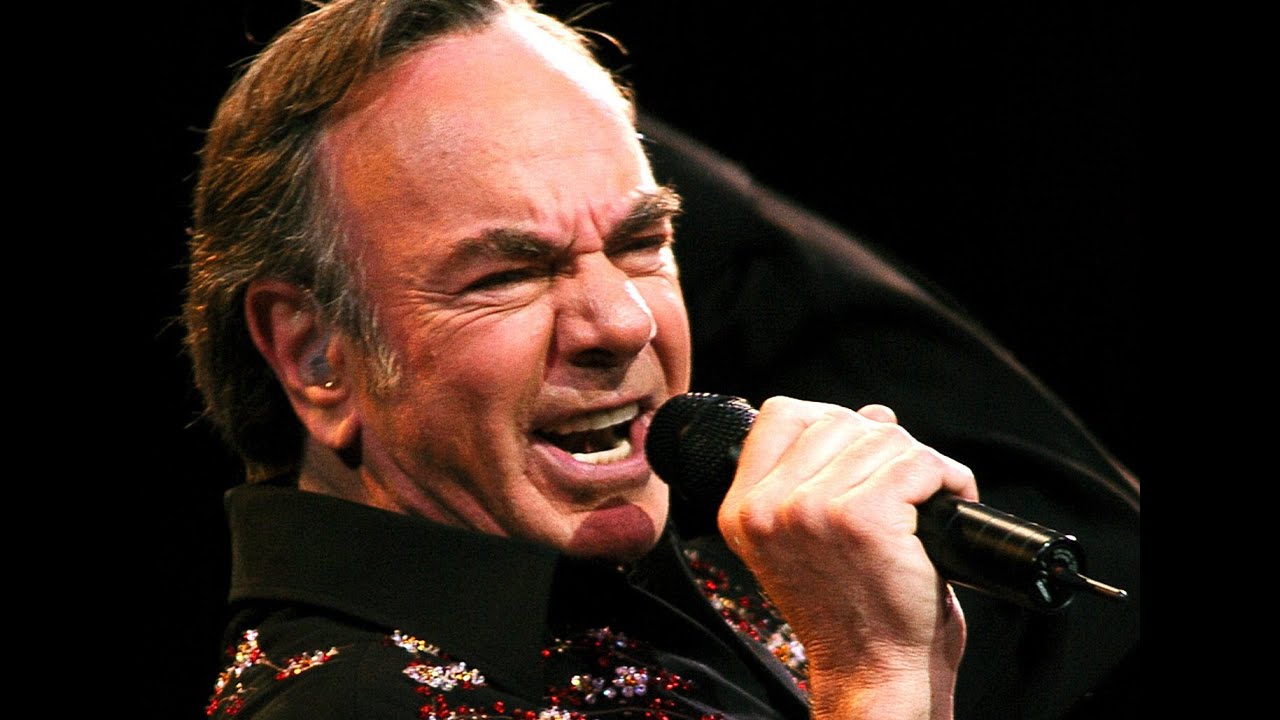
“Longfellow Serenade” is Neil Diamond’s reminder that romance can still be made from nothing but words—a gentle, swaggering hymn to the dreamer who believes poetry can open doors that money never could.
In the autumn of 1974, Neil Diamond released “Longfellow Serenade” and watched it arrive like a well-dressed letter slipped under America’s door. On the Billboard Hot 100, it debuted at No. 59 on October 5, 1974, then rose to a peak of No. 5 (visible on the November 23, 1974 chart, where it sits at #5 with “PEAK: 5”). On the more intimate side of the dial, it went all the way to No. 1 on Billboard’s Adult Contemporary chart (the December 28, 1974 chart shows it at #1, with “PEAK: 1”). And it did all of this as the signature single from Serenade—released September 27, 1974—an album that climbed to a No. 3 peak on the Billboard 200.
Those numbers explain the success. They don’t explain the feeling.
Because “Longfellow Serenade” doesn’t behave like a typical hit that’s trying to be “current.” It’s built like a little stage play: a man, a woman, and the only currency he can honestly offer—language. Diamond wrote it himself, and the record was produced by Tom Catalano, with the single issued on Columbia and backed by “Rosemary’s Wine.” Even the trade papers heard the particular Diamond magic at work: Cash Box called it a “powerful up-tempo ballad,” praising his “rich smooth vocal,” and highlighting Catalano’s production and arrangement. Record World went even bigger, framing Diamond as a modern poet invoking a 19th-century bard—calling it a “true masterpiece of thought and performance perfection.”
The title’s wink is important. “Longfellow” isn’t there for decoration; it’s the keyhole the whole song peers through. In a later compilation note, Diamond explained that he sometimes adopts “a particular lyrical style” to tell “the story of a guy who woos his woman with poetry.” That’s the soul of the record: not just love, but courtship as craft—romance as something you build, line by line, when you don’t have much else to trade.
And that’s why the song still lands with such sweetness decades later. It knows—without turning cynical—that charm is a performance. Yet it refuses to treat that performance as cheap. The narrator is a “dreamer,” yes, and Diamond lets him be grand about it, even a little theatrical: moonlit imagery, “winged flight,” the kind of language that would make a modern realist roll their eyes. But the song’s emotional trick is that it never asks you to laugh at the dreamer. It asks you to remember the moment when being a dreamer felt like a form of courage.
Musically, “Longfellow Serenade” carries that same blend of confidence and vulnerability. It moves with the easy momentum of a radio-friendly pop record—strong, forward, hospitable—yet the lyric keeps circling back to a quietly aching truth: words are all I’ve got. That tension is what gives the record its spine. It isn’t simply a declaration of love; it’s the fear underneath the declaration—what if poetry isn’t enough? What if the “lady” wants a different kind of proof?
Set within Serenade, the song also feels like a snapshot of Diamond in full command of his mid-’70s voice: big enough to fill arenas, but still able to sell an intimate narrative without losing the human details. If you listen closely, you can hear the performer and the storyteller shaking hands: the showman offering a chorus built for thousands, the writer slipping in that older, quieter hope—that someone might be moved not by spectacle, but by sincerity dressed up as art.
In the end, “Longfellow Serenade” endures because it doesn’t pretend romance is simple. It admits that love can begin as persuasion, as imagination, as a self-made spell. And then it dares to suggest something tender: that even if the poetry is a performance, the longing behind it is real. In a world that so often rewards noise, Neil Diamond wrote a hit that wins by wooing—by trusting the oldest instrument we have, the human voice, carrying words toward the dark like a lantern.