
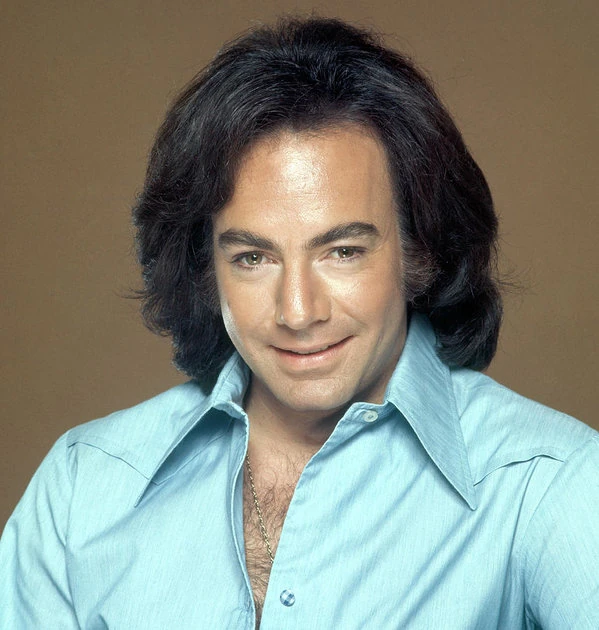
“Forgotten” is Neil Diamond staring into the mirror of time—an intimate confession about fading from someone’s mind, sung with the calm ache of a man who’s learned that silence can be louder than any argument.
Released in 2008 on Diamond’s album Home Before Dark, “Forgotten” arrives with a quiet authority that feels earned rather than performed. It sits at the emotional center of a record that made an unmistakable public statement the moment it landed: Home Before Dark released May 6, 2008, and bowed at No. 1 on the Billboard 200—the first Billboard 200 chart-topper of Diamond’s career—with a reported 146,000 first-week start. That chart debut isn’t just a statistic; it frames the song’s meaning. Here is a veteran artist, decades into his story, suddenly back at the very top—yet writing and singing about the fear of being overlooked, left behind, erased.
On the album’s official track list, “Forgotten” is track 6, running 4:22, and it’s credited as a Diamond original (no co-writer note appears beside it, consistent with the album’s “all songs written by Neil Diamond except where noted” statement). The record was produced by Rick Rubin, recorded October 2007–February 2008, and enriched with orchestral color arranged and conducted by David Campbell—a combination that explains why the album can feel both stripped to the bone and quietly cinematic at the same time.
That Rubin partnership is the “story behind” the emotional temperature of “Forgotten.” Rubin’s great gift—when it works—is that he encourages an artist to stop decorating the feeling and simply tell the truth. On Home Before Dark, you can sense Diamond writing from a later, clearer place: less interested in winning the room, more interested in confessing what happens when the room has gone quiet.
And what does “Forgotten” confess? Not merely sadness, but a specific kind of loneliness: the loneliness of being alive and still loving, while suspecting you’ve already become a faint outline in someone else’s life. The title word itself is blunt—no metaphor, no clever disguise—yet Diamond’s art has always been to take plain language and make it feel mythic. Here, “forgotten” becomes more than a relationship detail. It becomes a meditation on human impermanence: how easily the heart can be replaced, how quickly a voice once familiar can become background noise.
There is a second layer, too—one that makes the song sting in a deeper, more universal way. To be forgotten isn’t only to be unloved; it is to be unconfirmed. We live, in part, by the witness of others: the shared memories, the private jokes, the look across a room that says, I know you. When that witness disappears, the self feels less solid. “Forgotten” sings into that uncertainty—not dramatically, but steadily, as if the singer is trying to keep his dignity upright while the inside buckles.
Fittingly, Diamond later performed “Forgotten” in a studio setting for the Deluxe Edition bonus DVD of Home Before Dark, where the track appears among the filmed performances—an almost symbolic choice, because the song thrives on closeness. It’s the kind of piece that doesn’t need spectacle. It needs a voice, a room, and the courage to say what most people only admit in the dark.
In the end, “Forgotten” feels like one of the most quietly brave songs of Diamond’s later years: a man at a commercial peak—No. 1 on the Billboard 200—writing about the private terror of being emotionally misplaced. That contrast is the song’s haunting power. It reminds us that public triumph does not cancel private ache—and that sometimes the most lasting music is born when an artist stops trying to sound young, and instead chooses to sound true.