
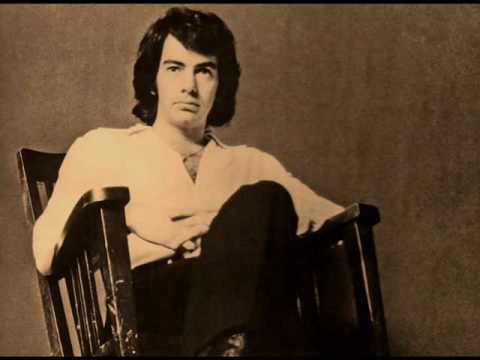
“Morning Has Broken” in Neil Diamond’s voice feels like dawn offered as mercy—an old hymn re-lit for modern ears, where gratitude arrives not as thunder, but as steady, warming light.
By the time Neil Diamond recorded “Morning Has Broken”, the song already carried the weight—and comfort—of decades. It began not as pop at all, but as a Christian hymn first published in 1931, with lyrics by Eleanor Farjeon set to the traditional Gaelic tune “Bunessan.” That origin is important, because it explains why the song can feel so instantly familiar even when you’ve never heard this particular recording: its melody has the gentle inevitability of folk memory, and its words are built to be spoken slowly, as if each line were a small breath of thanks.
Most listeners first came to know the hymn through Cat Stevens (now Yusuf / Cat Stevens), whose 1971 recording on Teaser and the Firecat turned a devotional piece into an international pop standard—reaching No. 6 on the Billboard Hot 100 and No. 1 on the U.S. Adult Contemporary chart in 1972. That version’s success “rebranded” the hymn for a wider world, proving something timeless: a song can be spiritually rooted without being locked to a single tradition or audience. It can simply be a morning song—an “ordinary miracle” put into melody.
Neil Diamond approached it later, in a different season of his career and with a different intention. His recording appears on The Christmas Album (1992), where it sits among seasonal standards yet feels quietly distinct—less about holiday spectacle than about renewal. The choice itself is revealing. Diamond didn’t need a hymn to display vocal power; he chose it because it let him do something subtler: sound grateful without sounding sentimental. In his hands, “Morning Has Broken” becomes less a church-piece and more a personal reflection—like someone drawing back the curtains after a long night and deciding, almost with surprise, to believe in the day again.
In terms of “ranking at launch,” Diamond’s version has a clear, verifiable chart footprint in the UK. “Morning Has Broken” (Neil Diamond) entered the Official Singles Chart with a first chart date of 21 November 1992 and reached a peak position of No. 36, staying on the chart for two weeks. It’s a modest peak compared to Diamond’s biggest pop triumphs, but it suits the song: this is not a record that kicks the door down. It arrives. Quietly. Patiently. Like morning itself.
The deeper story, though, isn’t in the numbers—it’s in why this hymn keeps calling singers back to it. “Morning Has Broken” is not about conquest or romance or even triumph. It is about attention: noticing the “new” in what we’ve seen a thousand times, and allowing that noticing to soften us. The lyric’s perspective is almost childlike, yet not childish—wonder without naïveté. That’s why it can hit hardest for those who have lived long enough to know how quickly days can darken. When you’ve known disappointment, a simple sunrise feels less like routine and more like grace.
Diamond’s gift here is his ability to make sincerity feel earned. His voice has always carried a certain lived-in grain—part storyteller, part believer, part weary optimist—and “Morning Has Broken” gives him room to lean into that humanity. He doesn’t “reinterpret” the hymn with flashy reinvention. He lets it stand upright, then simply stands beside it, as if to say: I’m here too. I’ve made it to another morning.
In the end, “Morning Has Broken” is one of those songs that reminds us why music lasts longer than fashion. Whether you meet it as a 1931 hymn, as Cat Stevens’ luminous pop prayer, or as Neil Diamond’s 1992 wintertime offering, it keeps returning to the same gentle truth: the day begins again—and that, in itself, is reason enough to sing.