
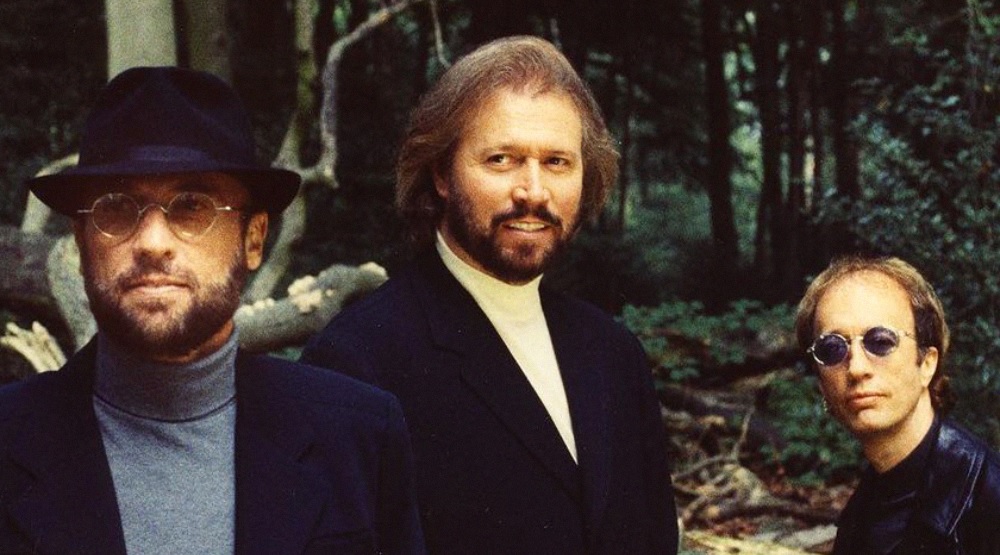
“The Greatest Man in the World” is the Bee Gees’ soft-lit declaration that admiration can be its own kind of devotion—love spoken not as possession, but as reverence.
When Bee Gees fans talk about the early ’70s, they often go straight to the obvious monuments—the aching pop craftsmanship, the harmonies that seem to hover in the air like incense, the sudden return to commercial gravity after a turbulent few years. “The Greatest Man in the World” belongs to that moment of regained poise. It wasn’t released as a standalone hit single, so its “chart life” is inseparable from the album that carried it: Trafalgar. Released in September 1971 in the U.S. (and November 1971 in the U.K.), Trafalgar climbed to a No. 34 peak on the Billboard 200—a respectable showing for a band in the middle of reinvention, and one buoyed by the era-defining success of the album’s lead single “How Can You Mend a Broken Heart,” which became their first U.S. No. 1.
Inside that record, “The Greatest Man in the World” arrives early—track 3, running 4:18, written by Barry Gibb and sung with Barry on lead. That placement matters. Before an album has fully revealed its emotional map, this song steps forward and sets a tone: intimate, almost ceremonial, like a toast made with steady hands.
The making of Trafalgar helps explain the song’s particular mood. The album was recorded at IBC Studios in London between late January and April 1971, produced by Robert Stigwood and the Bee Gees themselves, with Bill Shepherd providing orchestral arrangement and Geoff Bridgford handling drums as the group’s official drummer for this period. Rhino’s retrospective notes that the album was completed in April but held until September, while the Bee Gees sensibly released “How Can You Mend a Broken Heart” earlier in May—a strategic act of faith that paid off in a chart-topping way. In other words: “The Greatest Man in the World” was born in a season when the band was steadying itself—relearning how to move together, how to sound tender without sounding fragile.
And that’s exactly what the song feels like: tenderness with backbone.
What makes “The Greatest Man in the World” so quietly striking is its point of view. Here is Barry Gibb, a male voice, singing a line that—on paper—reads like adoration traditionally reserved for a female narrator in classic pop: praising a “man” as the emotional center of the universe. Instead of sanding that down into something safer, the performance leans into the sincerity. It’s not coy. It’s not ironic. It’s direct. In the world the song creates, love is not a competitive sport; it’s a kind of recognition—seeing someone so clearly that you’re willing to name them as your measure of greatness.
Musically, the piece carries that early-’70s Bee Gees signature: a patient tempo, a melody that rises with careful dignity, and a sense that the arrangement is holding the singer the way a room holds candlelight. With Shepherd’s orchestral touch hovering over the album’s sound, the emotion is allowed to bloom without becoming melodrama. You don’t hear a man trying to “sell” the line; you hear a voice living inside it, as if admiration has been practiced for a long time, and only now found the courage to speak.
The deeper meaning, then, isn’t merely “this person is wonderful.” It’s that love—real love—often arrives as gratitude. The song feels like it’s written by someone who has watched the world complicate everything, and has decided to keep one thing uncomplicated: the act of honoring another person. That’s why it endures as a fan favorite deep cut, and why it sits so naturally beside Trafalgar’s bigger emotional statements. It’s part of the album’s larger atmosphere—songs that don’t chase youth’s heat so much as they pursue something calmer and more lasting: the dignity of feeling.
And perhaps that is the most nostalgic gift “The Greatest Man in the World” offers. It reminds you of a time when a pop ballad could be unabashedly earnest—when a voice could say something extravagant and mean it, without hiding behind cleverness. Not every great Bee Gees song had to be a single. Some were simply meant to be found—like a letter tucked into the sleeve of an old record, still saying what it said the first day it was written: you mattered, and I want you to know it.