
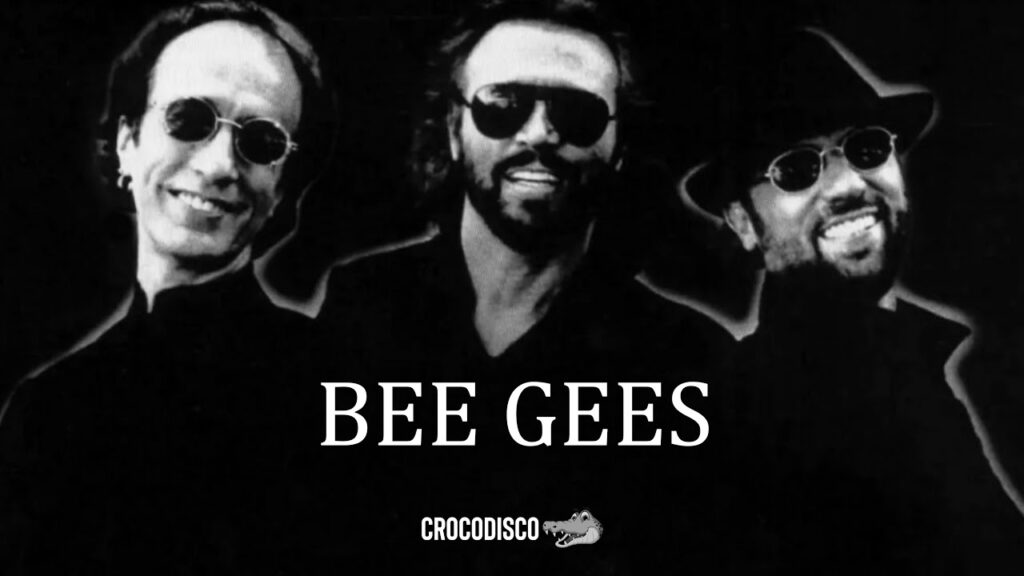
“Giving Up the Ghost” is the Bee Gees’ 1987 vow against despair—two brothers singing into the dark, insisting they won’t disappear from love, life, or each other.
Bee Gees’ “Giving Up the Ghost” lives in a fascinating, slightly shadowed corner of their late-career story: not the disco coronation, not the early baroque-pop elegance, but the comeback season—the moment they returned as a band after a long stretch of fractured public attention. The song appears on E.S.P. (released 1987), the Bee Gees’ first studio album in six years, and it sits as track 4, running 4:26, with lead vocals shared by Robin and Maurice—a touching detail in itself, because it gives the track a brother-to-brother intimacy rather than a frontman’s grand address.
If you’re looking for “ranking at launch,” the truthful answer is that “Giving Up the Ghost” was not a primary charting single in the way “You Win Again” (the album’s big hit) was promoted and tracked; its life is that of a deep cut—a song discovered by listeners who lived with the album, not one announced by a countdown. You can see this reflected in discography-style summaries that list it as an album track without single chart positions.
And yet, its context is anything but minor. E.S.P. mattered: it reunited the brothers with producer Arif Mardin (and, according to album notes and retrospectives, it was recorded digitally), signaling a deliberate step into modern 1987 pop textures without abandoning that unmistakable Gibb gift for melody and emotional architecture.
So what is “Giving Up the Ghost” actually about?
The title phrase sounds like surrender—like the soul finally leaving the body of hope. But the lyric flips the meaning: the chorus is a promise not to do it. It’s a pledge against collapse: never you and I. Even the words that surface in widely circulated lyric metadata tell you the emotional shape—there’s a “young girl lost,” there’s the ache of being “alone,” and then that repeated insistence that they won’t be the ones to let go. The “ghost” becomes more than a spooky image; it becomes the part of you that wants to vanish when life gets too heavy, the part of you that would rather disappear than keep trying.
What makes the song quietly powerful is how adult its encouragement is. It doesn’t sell you a fantasy of instant rescue. It acknowledges tears. It acknowledges isolation. Then it offers something sturdier than optimism: companionship as survival. That’s where Robin and Maurice leading the track becomes emotionally meaningful—two voices, neither trying to dominate, blending into a kind of mutual support. On E.S.P., a record often remembered for sleek late-’80s polish, “Giving Up the Ghost” feels like a human handprint left on the glass.
There’s also a subtle autobiographical echo that’s hard to ignore even when you don’t “read” the song as biography. By 1987, the Bee Gees were navigating the aftershocks of early-’80s commercial turbulence and shifting public taste, and E.S.P. functioned as a renewed statement of presence: we’re still here, and we still sound like ourselves—even in a new decade. In that light, “Giving Up the Ghost” becomes almost meta: not only a lyric about refusing to disappear emotionally, but a band refusing to disappear artistically.
And then there’s the writing credit—Barry, Robin, and Maurice Gibb—the classic tri-brother signature that signals how unified their core songwriting identity remained, even as lead vocals shift around the album. Streaming metadata and reference listings consistently credit all three as composers/songwriters for this track.
In the end, “Giving Up the Ghost” is one of those Bee Gees songs that doesn’t need to be famous to be essential. It’s not about glamour. It’s about stamina. It’s about the quiet heroism of staying—staying in the relationship, staying in the day, staying in your own skin—when the easier option would be to fade out. And if it hits a little harder than you expect, that’s because the Bee Gees understood something timeless: the most romantic promise isn’t always “forever.” Sometimes it’s simply, “not tonight—keep going.”