
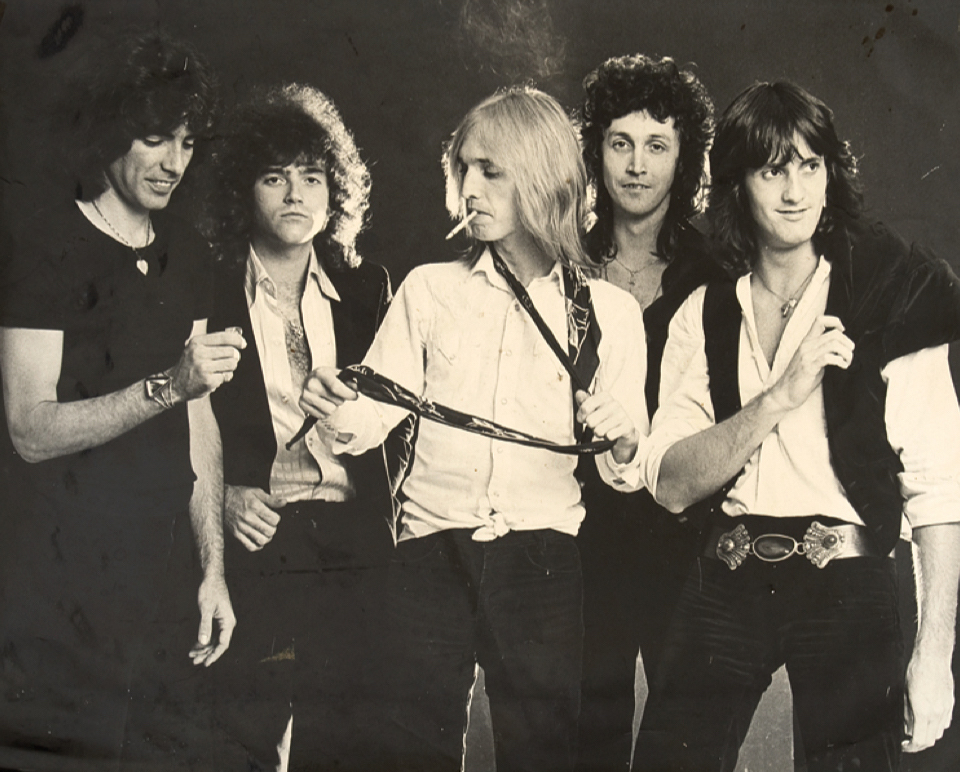
A Haunted Farewell to Youth, Desire, and the Illusion of Escape
When Tom Petty & The Heartbreakers released “Mary Jane’s Last Dance” in 1993, it emerged not just as another hit from a veteran band, but as a summation of an era’s longing and loss. Issued as one of two new tracks on the compilation album Greatest Hits, the song quickly became a chart success—reaching No. 14 on the Billboard Hot 100 and securing Petty’s place in the early ’90s rock landscape, even as grunge and alternative sounds dominated the airwaves. It was both familiar and hauntingly new: a shimmering, mid-tempo blues-rock elegy that reaffirmed Petty’s gift for storytelling while hinting at darker, more introspective territory than much of his earlier work.
At first glance, “Mary Jane’s Last Dance” feels like one of Petty’s archetypal road songs—a woman leaving town, a man left behind to ponder what she meant. Yet beneath its jangling guitar lines and harmonica sighs lies something more spectral: a meditation on transience, temptation, and the elusive nature of freedom itself. The title has long invited speculation—“Mary Jane” as slang for marijuana—but Petty himself often sidestepped such narrow readings. Instead, he suggested that it was about “a girl who couldn’t stay in one place,” a statement that opens the door to deeper interpretations: the ache of growing older, the fading thrill of rebellion, or perhaps the last spark of passion before surrendering to time’s quiet erosion.
Musically, the song encapsulates everything that made The Heartbreakers such an enduring force. Mike Campbell’s guitar riff is deceptively simple yet hypnotic—a looping figure that feels like a heartbeat echoing through twilight. Benmont Tench’s organ swells beneath it like memory surfacing from beneath consciousness, while Petty’s voice carries that unmistakable drawl: weary but defiant, tender yet edged with irony. The production is unhurried, allowing every note to breathe; it feels like dusk captured in sound.
The accompanying music video only deepened its mythic aura. Featuring Kim Basinger as a corpse revived and tenderly danced with by Petty’s mortician character, it startled audiences with its macabre romanticism—an unsettling metaphor for obsession, nostalgia, and the futility of trying to resurrect what’s already gone. In retrospect, it stands as one of Petty’s most cinematic statements: a vision of love intertwined with death, memory entangled with decay.
“Mary Jane’s Last Dance” endures because it speaks to something universally human—the moment when desire meets resignation, when we recognize that some chapters must close no matter how fiercely we cling to them. It is a farewell disguised as a groove, a sunset masquerading as a song; the last dance before night fully descends on youthful dreams.