
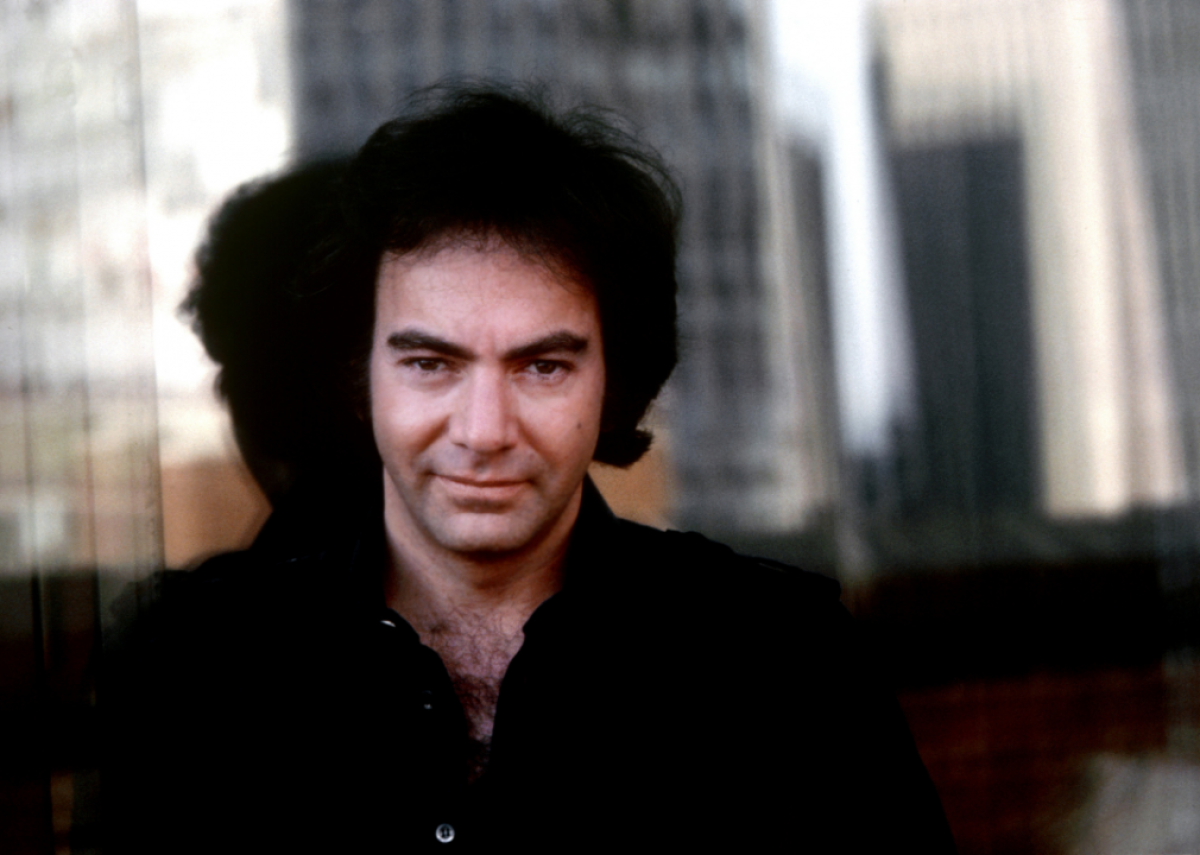
“All I Really Need Is You” is Diamond’s late-career love statement—quietly radiant, written like a letter sealed after years of weather, when what remains is devotion without argument.
“All I Really Need Is You” sits in an unusual place in Neil Diamond’s catalog: beloved by listeners, warmly pushed to radio, yet never a conventional chart single in the way his classic hits were. The studio version appears on Lovescape (released August 27, 1991, Columbia), where it arrives near the end of the album like a calm conclusion—less about conquest than companionship. When the song was later serviced to stations in July 1992, it was issued as a promo-only Columbia CD single (fan discographies even list it under Columbia promo CD cataloging), meaning it was not a standard commercial single aimed at the Hot 100 battlefield. That reality shows up plainly in mainstream discography tables, where its U.S. chart fields are left blank.
So if we’re speaking in “ranking at launch” terms, the honest headline is the album’s: Lovescape peaked at No. 44 on the Billboard 200. And if you want the song’s second life—its concert-burnished glow—there’s the 1992 live version included on The Greatest Hits: 1966–1992 (released May 19, 1992), a set that went on to become a major seller and, in the UK, a genuine event: it peaked at No. 1 and spent three weeks at the summit, first charting 04/07/1992. In the U.S., the same compilation reached No. 90 on the Billboard 200.
Now—facts on the table—the song’s real power is emotional, not statistical.
“All I Really Need Is You” was co-written by Neil Diamond with Tom Hensley and Alan Lindgren, names that recur across Lovescape like steady hands at the edge of Diamond’s melodies. It’s a mature-love song, and you can hear that maturity in the very premise: it doesn’t pretend the past was spotless. It begins by acknowledging distance and damage—years, tears, the slow accumulation of misunderstandings—and then it makes its choice anyway. That choice is the heart of the piece: not the thrill of first love, but the decision to stay when staying costs something.
The sound of Lovescape also matters here. The album was recorded 1990–1991 across major studios in Los Angeles and even Abbey Road in London, with production credits shared among a striking list—Diamond himself, Val Garay, Albert Hammond, Don Was, Peter Asher, and Humberto Gatica. That kind of production “village” can sometimes dilute an artist’s voice; instead, on this track, it frames Diamond the way good lighting frames a familiar face—softening the hard edges without erasing the lines that tell the story.
And what story is he telling?
Not “I can’t live without you” in the fevered sense. More like: I’ve lived long enough to know what’s real. There’s a humility in that, a quiet narrowing of the world until it fits into one essential truth. If earlier Diamond love songs could feel cinematic—big choruses, big gestures—“All I Really Need Is You” feels domestic in the best way: the emotional equivalent of coming home, turning the key, and recognizing that the loudest happiness is sometimes the simplest.
Even the song’s release history reinforces its meaning. Being sent to radio in July 1992 as a promo-only single—at the same moment Diamond was touring and when a live version was circulating through The Greatest Hits: 1966–1992—made it feel less like a “product launch” and more like a message carried by performance. A song about lasting love found its most natural habitat: the stage, the long arc, the voice proving—night after night—that the sentiment wasn’t just written. It was lived.
In the end, Neil Diamond doesn’t sell this song as romance with fireworks. He offers something rarer: romance with endurance. “All I Really Need Is You” is what you sing when you’ve stopped confusing intensity with truth—and you’re finally brave enough to call the essential thing by its name.