
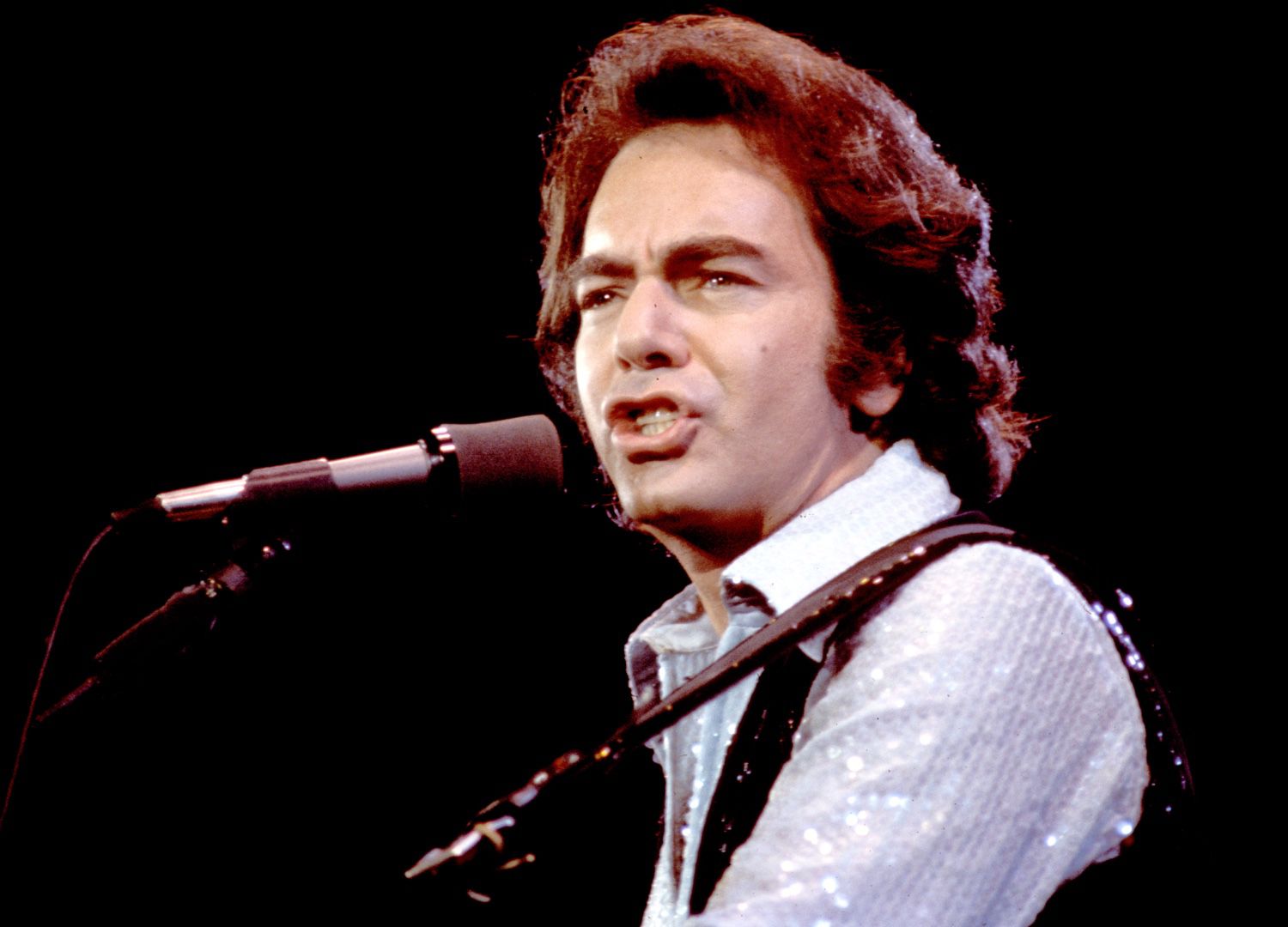
“Acapulco” is Neil Diamond letting the soul slip its leash—an imagined shoreline where desire feels simple, and the heart pretends (for 2 minutes and change) that it can start over.
To place “Acapulco” properly, you have to see it in the glow of a very specific moment. This isn’t an early Brill Building relic, and it isn’t part of his ’70s arena run. “Acapulco” arrives in 1980 on The Jazz Singer (Original Songs From the Motion Picture), the soundtrack to Diamond’s film The Jazz Singer—and it’s positioned boldly as track 2, right after “Hello Again.” The song is credited to Neil Diamond and Doug Rhone (with Diamond as lyricist), and it runs 2:48, a compact little burst of sun and motion. The soundtrack itself was produced by Bob Gaudio and released in November 1980 (often listed specifically as November 10, 1980 in catalog listings).
And here’s the chart truth, stated cleanly: “Acapulco” wasn’t the A-side that radio climbed with. It became the B-side to “Love on the Rocks,” a single released in October 1980. That A-side soared to No. 2 on the Billboard Hot 100 (and No. 3 on Adult Contemporary), so “Acapulco” traveled everywhere the 45 traveled—like a secret track for the people who bothered to flip the record over. In other words, its “ranking at debut” isn’t a separate chart position; its life is bound to the era’s larger success and to the soundtrack’s reach. (That soundtrack became a major seller and peaked high on the album charts, even as the film itself drew mixed reactions.)
Now, the story behind “Acapulco” is less about a headline anecdote and more about purpose. On The Jazz Singer soundtrack, Diamond is juggling identities—public and private, sacred and secular, duty and desire. The film narrative centers on that tug-of-war, and the soundtrack mirrors it: prayerful pieces sit beside pop confessionals; tradition stands next to temptation. Within that landscape, “Acapulco” feels like the moment the mind runs away to somewhere bright. Not “escape” as cowardice—escape as breath. A man under pressure daydreams himself into warmth and rhythm, into a place name that sounds like a promise.
That’s why the song’s meaning lands the way it does. “Acapulco” isn’t trying to be profound; it’s trying to be felt. It’s a postcard made of sound—sunlight on skin, nightlife, movement, the romance of being far from whatever is weighing you down. When Diamond sings songs like this, there’s often a double emotion beneath the shine: pleasure on the surface, yearning underneath. The very act of naming a destination suggests absence. You don’t fantasize about leaving unless something in you wants to go.
It also matters that Doug Rhone—a guitarist and key member of Diamond’s touring/recording world—shares the writing credit. There’s a “bandroom” feel to the track: less solitary poet, more groove-minded craftsmanship. And that fits the soundtrack era, shaped by Bob Gaudio’s pop discipline—songs built to move, to hook, to live comfortably on vinyl and radio, even when the subject matter is complicated.
What I love most about “Acapulco”—and why it still works decades later—is its honesty about the smallest human wish: to feel unburdened. Not forever. Just long enough to remember who you are when you’re not performing for anyone, explaining yourself to anyone, or trying to be “good.” In the soundtrack’s emotional architecture, “Acapulco” is the open window: the warm air that rushes in, the brief, bright lie that somehow tells the truth. Because the truth is this—every life, no matter how successful, still hungers for one private place where the heart can loosen its tie and simply breathe.