
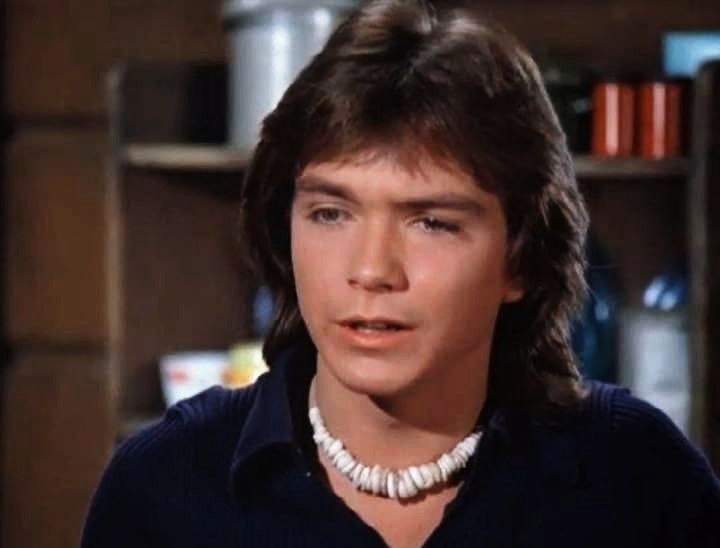
“Prisoner” is David Cassidy singing about love as a beautiful captivity—when the heart keeps surrendering, not because it must, but because it still believes.
In 1990, the world met a different David Cassidy—older, steadier, no longer singing from inside the bright bubble of teen-idol myth, but from the quieter, harder place where real life leaves its fingerprints. “Prisoner” comes from that exact crossroads. It appears on his self-titled comeback album David Cassidy (released August 1990 on Enigma Records), his first U.S. studio album in 14 years. The album reached No. 136 on the Billboard 200, a modest peak on paper—but a meaningful return for an artist whose public image had once been so loud it nearly drowned out the musician underneath.
“Prisoner” itself sits late in the running order—track 9—as if it’s meant to be discovered after you’ve already decided to stay with the album’s mood. It was written by David Cassidy, Sue Shifrin, and John Wetton. That trio of names tells its own quiet story: Shifrin was Cassidy’s closest creative partner in this era, and Wetton—best known in rock history as a bassist/vocalist and songwriter with King Crimson and co-founding Asia—brought a certain adult gravitas to the writing room. You can feel it in the song’s emotional posture: it isn’t young love boasting about forever; it’s grown love admitting weakness.
Because “Prisoner” is a confession that doesn’t bother with excuses. The lyric turns on one of pop’s most quietly devastating ideas: that you can know you’re caught and still step closer. “So I can be your prisoner of love,” Cassidy sings—an image that frames romance not as rescue, but as voluntary surrender. The “prison” here isn’t bars and punishment. It’s memory. It’s desire. It’s the strange way certain people still hold the key to you even after you’ve promised yourself you’ll never hand it over again.
And it matters that this song arrived on an album built around comeback pressure. David Cassidy was released with a featured single, “Lyin’ to Myself,” which became his first Hot 100 hit in many years—peaking at No. 27 on the Billboard Hot 100, according to Billboard’s retrospective chart notes. That success should have been the start of a new, stable chapter, but the business around him wobbled; the album’s Wikipedia history notes that Enigma Records soon went bust, forcing yet another label change. Against that instability, “Prisoner” sounds even more intimate—less like a product, more like a private truth he managed to get onto tape before the door swung again.
There’s also an intriguing “behind the scenes” thread that adds a touch of folklore to the song. A later note on the Katalyst/Aurora Project site—written in the context of John Wetton tributes—claims an unreleased Wetton/Shifrin demo titled “Forever” was later reworked by Shifrin’s partner at the time, David Cassidy, into “Prisoner” for the 1990 album. It’s not an official label statement, but it does fit the song’s atmosphere: “Prisoner” feels like something that has lived a few lives before reaching the listener, a melody carrying history in its pockets.
What makes Cassidy’s performance linger is how he sings this kind of vulnerability without dramatics. There’s no grand courtroom speech, no self-pitying spotlight—just a voice accepting what the heart does when it’s outvoted by longing. In the early ’70s, Cassidy often had to sound like certainty. By 1990, he could afford something rarer: ambiguity. “Prisoner” doesn’t insist love is healthy. It simply admits love is powerful—and that power can feel like home even when it looks, from the outside, like a cage.
So “Prisoner” becomes more than an album track. It becomes a quiet emblem of Cassidy’s grown-up era: a man reclaiming his artistry, writing his own material, and letting imperfect emotions stand in plain light. It’s the sound of someone who has seen how easily freedom can turn lonely—how, sometimes, we choose the cell with a familiar name on the door because it’s warmer than the wide-open dark.