
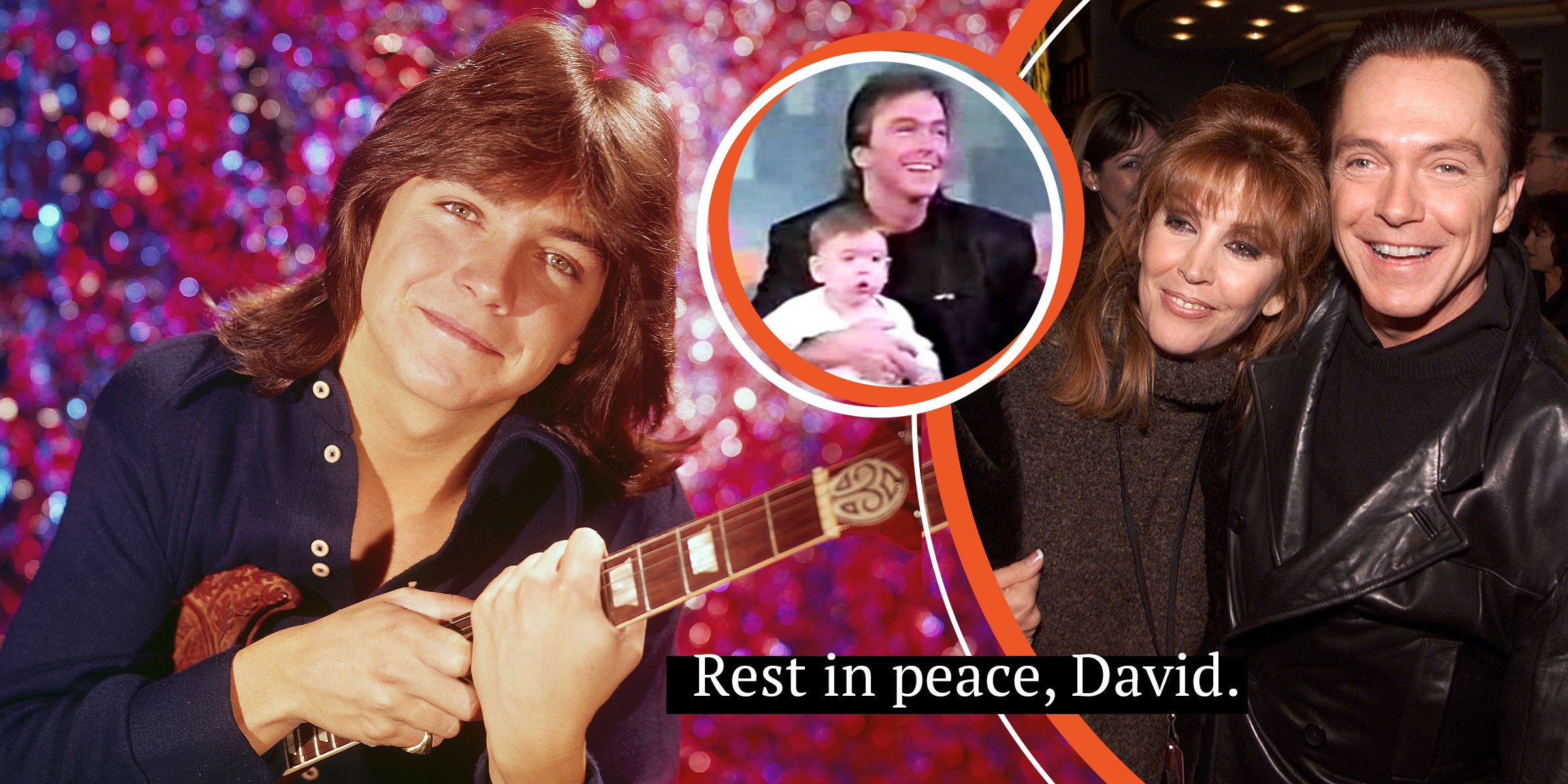
“Love, Love the Lady” is David Cassidy slipping off the spotlight’s costume and choosing something quieter: a grown man’s hymn to steadiness, when simple affection becomes the only shelter that feels real.
By the time David Cassidy recorded “Love, Love the Lady”, he was no longer chasing the noise that once chased him. This song belongs to the strange, half-hidden chapter of his 1970s catalog—the kind that fans discover the way you discover an old letter in a drawer: not because it was loudly promoted, but because it was kept. “Love, Love the Lady” is the closing track (track 9) on Cassidy’s RCA album Gettin’ It in the Street, credited to David Cassidy and Gerry Beckley (of America) and running about 4:09. The album itself was released in Germany and Japan in November 1976, but it was not officially released in the United States at the time; U.S. copies appeared later—famously as cut-outs—in July 1979. That unusual release story is crucial, because it explains why “Love, Love the Lady” has no neat “debut” chart number of its own: it wasn’t launched like a mainstream single, and the album did not reach the album charts in its initial release markets.
And yet, there’s something fitting about that. The song itself doesn’t behave like a “single.” It behaves like a final scene after the credits—when the room empties out and only the honest feeling remains. Cassidy and Beckley co-produced the album together, and this collaboration carries the fingerprints of two artists trying to make something adult and durable, even while the industry machinery around Cassidy was starting to slip. If you’ve followed his RCA era, you can feel the intention: he was reaching for craft, for songwriting partnerships, for a sound that could stand on its own legs rather than on reputation.
What makes “Love, Love the Lady” quietly affecting is its attitude toward love. It doesn’t present romance as conquest. It doesn’t dramatize heartbreak into spectacle. It leans toward something subtler: the idea that “good conversation gets me through the hardest times”—a line that turns intimacy into a practice, not a performance. That’s a very grown-up kind of romance, the kind that doesn’t need to prove itself to anyone watching. It suggests a relationship built less on fireworks than on the small daily mercies: talking, listening, staying present when the easy thing would be to disappear.
Placed at the end of Gettin’ It in the Street, the song also feels like a choice—almost a declaration of values. This album is Cassidy edging toward rougher textures and more personal material, and “Love, Love the Lady” arrives as the final word: after the restless motion, after the self-questioning, after the road and its temptations, he ends by praising the one thing that actually holds a life together. That closing-track placement matters. Artists don’t end an album by accident. Ending with this song suggests Cassidy wanted the listener to walk away not with swagger, but with warmth.
There’s also a bittersweet aura around the album’s whole existence. Gettin’ It in the Street was the third and final Cassidy release on RCA, and Wikipedia notes it became his last album released in the U.S. until 1990, with long stretches between “new” studio statements afterward. In that light, “Love, Love the Lady” can feel like a snapshot of an artist trying to choose substance over noise—trying, in his own way, to be heard as a musician rather than as a memory.
So the meaning of “Love, Love the Lady” isn’t complicated—and that’s its strength. It’s about the quiet power of devotion: not devotion as possession, but devotion as shelter. It’s about the kind of love that doesn’t save you from hardship, but helps you endure it without losing your gentleness. And for anyone who has watched time rearrange the cast of their life—friends fading, chapters closing, the world moving on too quickly—this song lands like a hand on the shoulder, reminding you that what lasts is rarely what shouts the loudest.
In the end, David Cassidy doesn’t ask you to remember the poster on the wall. He asks you to listen to the man in the room—one who has learned, perhaps the hard way, that the brightest stage lights don’t warm you the way a faithful presence can. And that’s why “Love, Love the Lady” still glows: it isn’t chasing the crowd. It’s speaking to the part of us that’s tired of chasing, too.