
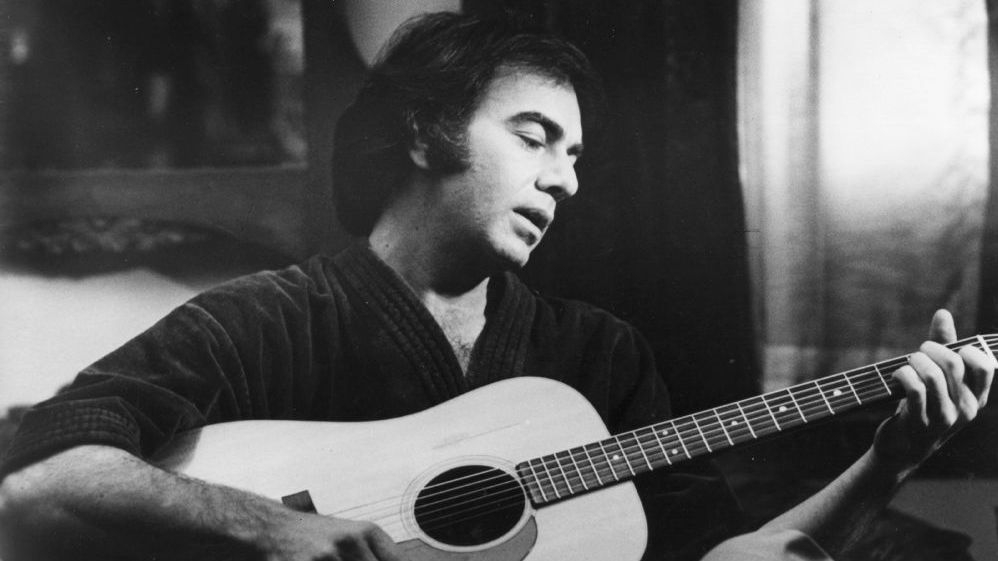
“Silver Bells” in Neil Diamond’s hands becomes a winter postcard from the city—bright shop windows, tired feet, and a heart that still believes the season can soften the world.
Some Christmas songs arrive like glitter—pretty, loud, and gone by New Year’s Day. “Silver Bells” is different. It has always carried a quieter kind of magic: the sound of ordinary streets briefly turning tender, as if the whole city pauses to listen to itself. That’s why Neil Diamond’s recording matters. He doesn’t treat the song as tinsel. He treats it as memory—something you hold carefully, because you know how easily time misplaces the things that once felt permanent.
Diamond recorded “Silver Bells” for his first holiday set, The Christmas Album, released September 22, 1992 on Columbia, produced by Peter Asher. On the album, “Silver Bells” appears as track 12 and runs 3:06, credited to the song’s writers Ray Evans and Jay Livingston. This is also the album built on lush, respectful craftsmanship: Wikipedia’s album notes highlight orchestral and choir arrangements by David Campbell, and the record reached No. 8 on the Billboard 200—a rare feat for a Christmas album, and a sign that Diamond’s audience wanted seasonal warmth delivered with dignity, not novelty.
If you listen closely, the supporting details feel like part of the story. On Diamond’s “Silver Bells,” the credits include Dan Dugmore on pedal steel guitar—a choice that adds a faint country ache to a song usually dressed in big-city lights. That pedal steel doesn’t “Nashville-ize” the tune; it humanizes it, like a sigh behind the smile. It’s Diamond taking a familiar standard and letting a little road-dust mingle with the snow.
Of course, the song itself predates Diamond by decades, and its origin is one of those classic mid-century Hollywood tales. “Silver Bells” was composed by Jay Livingston and Ray Evans and first recorded in 1950 (famously by Bing Crosby and Carol Richards, recorded on September 8, 1950, and released that October). It was written for the film The Lemon Drop Kid (released in 1951), where it appeared onscreen with William Frawley, and then in a more widely remembered sequence with Bob Hope and Marilyn Maxwell. Even the title has a charming almost-mistake behind it: the song originally began as “Tinkle Bells,” until Evans realized the phrase carried the wrong kind of meaning.
That little anecdote is more than trivia—it’s a clue to what makes “Silver Bells” endure. It isn’t about grand religious imagery or childhood fantasy alone. It’s about the street: sidewalks, shoppers, storefronts, the Salvation Army bell on a corner, and the shared hush that can fall over a busy place when the season reminds people—briefly—how to be gentle.
So what does Neil Diamond bring to it?
He brings the voice of someone who understands the city not as a postcard, but as a life. Diamond’s greatest performances often balance grit and tenderness: that sense that joy is real, but it’s hard-won. On “Silver Bells,” he leans into the song’s urban intimacy—the feeling of walking home after the lights have started to blur, carrying bags, carrying memories, carrying a year’s worth of private burdens… and then hearing bells cut through the cold air like a soft insistence that warmth still exists.
And there’s something beautifully mature about that. Many Christmas records chase the sound of childhood. Diamond’s version quietly respects adulthood—the kind that still wants wonder, but doesn’t need to pretend the world is simple. The meaning, then, becomes almost philosophical: “Silver Bells” is not only a seasonal tune; it’s a reminder that community can be felt in small shared signals. A bell. A lighted window. A familiar melody floating out of a shop door. Tiny things, yet somehow powerful enough to make a tired heart straighten its shoulders and keep walking.
In the end, “Silver Bells” isn’t asking you to believe in perfection. It’s asking you to believe in moments—those brief, shining pauses when the world seems a little kinder than usual. And when Neil Diamond sings it, you don’t just hear Christmas. You hear the comfort of returning—year after year—to the same old song, and finding it still waiting there, like a streetlamp in winter: steady, faithful, quietly lit.