
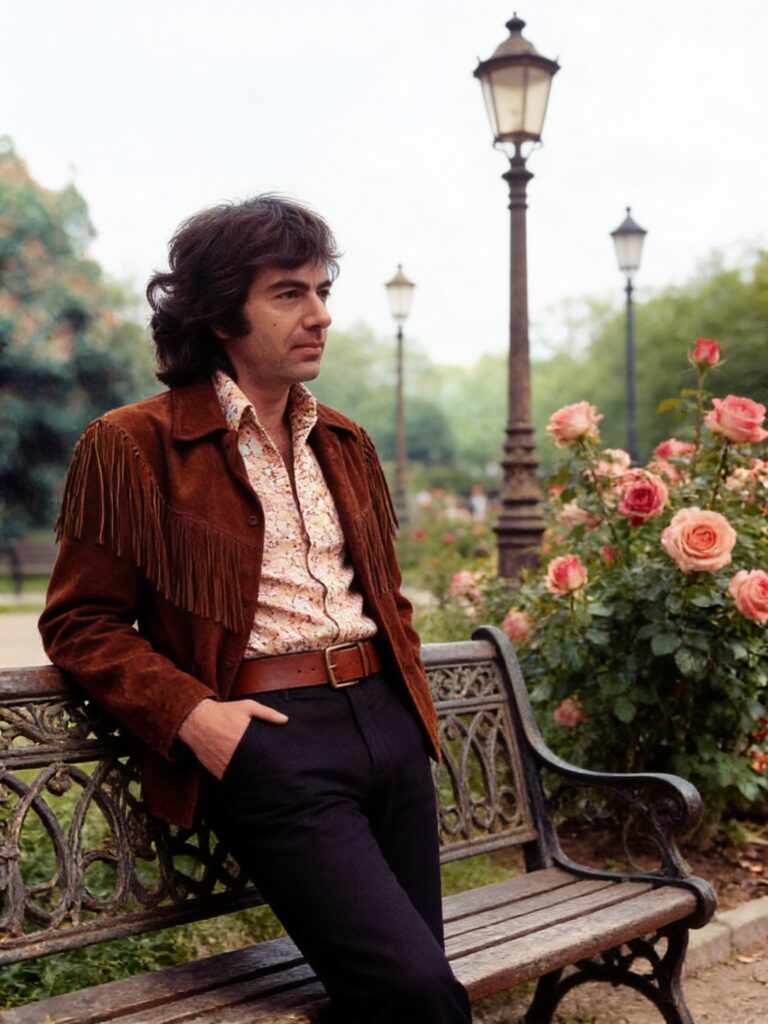
Memphis Streets turns a city of music into a private landscape of memory, longing, and quiet reflection in true Neil Diamond fashion.
There are songs in Neil Diamond’s catalog that arrived with fanfare, chart momentum, and the instant recognition of classics. Then there are songs like Memphis Streets, which feel as though they were made for the deeper listener—the one who stays after the obvious hits have passed and begins to hear the fuller shape of the artist. If you look for a major standalone chart peak attached to Memphis Streets, you will not find the kind of Billboard history that follows Diamond’s biggest singles. It is generally remembered as a deep-catalog song rather than a defining chart smash, and in some ways that only adds to its character. It was never about noise. It was about atmosphere.
That matters, because Memphis Streets is the kind of song that asks to be felt before it is measured. The title alone opens a whole emotional geography. Memphis is not just any American city. It is one of the great crossroads of American music, a place forever linked with blues, gospel, soul, early rock and roll, and the rough beauty of songs that carry both ache and grace. When Neil Diamond places that city in the frame, he is doing more than naming a location. He is summoning a tradition, a mood, and a certain kind of American loneliness that can still glow with warmth.
One of the most fascinating things about the song is the contrast between Diamond’s own artistic roots and the world suggested by the title. He was, of course, a songwriter shaped by New York craftsmanship, by the discipline of melody, structure, and emotional clarity. But throughout his career, there was always something larger in his work than simple pop architecture. He reached toward spiritual weight, toward drama, toward the open-road feeling of America itself. Memphis Streets fits beautifully into that side of his writing. It sounds like a meeting point between the polish of a master songwriter and the emotional pull of Southern musical memory.
The story behind the song, then, is not best told as a tale of chart conquest. It is better understood as part of Diamond’s lifelong attraction to songs that live in places as much as in melodies. He often wrote and sang as if roads, cities, and distances could hold human feeling. In Memphis Streets, the city becomes almost cinematic. You can sense neon, pavement, old echo, and the hush that comes after the music fades from the club doors. Even without grand theatrical gestures, the song carries a lived-in emotional world. It feels like someone walking through a place that is crowded with history and somehow still alone with his own thoughts.
That is where the meaning of Memphis Streets becomes especially powerful. On the surface, it evokes travel, place, and movement. Beneath that, it speaks to something more intimate: the way certain cities become mirrors for the soul. Sometimes we remember a town not for what it looked like, but for who we were when we passed through it, who we loved there, what music we heard there, or what part of ourselves we left behind. Neil Diamond had a rare gift for taking large emotional ideas and delivering them in language that felt immediate and familiar. This song belongs to that tradition. It suggests that memory is never silent; it keeps playing in the background, like music from another block drifting into the night air.
There is also a quiet dignity in the way the song sits within Diamond’s body of work. The biggest hits often become public property. Everyone knows them, everyone sings them, everyone carries a version of them. But deep cuts remain more personal. They wait for the listener who is willing to sit still long enough to hear the smaller shades. Memphis Streets has that quality. It does not demand attention with sheer spectacle. It earns affection slowly, through mood, storytelling, and the unmistakable emotional grain of Diamond’s voice.
And that voice matters here as much as ever. By the time listeners come to a song like Memphis Streets, they are not just listening for melody. They are listening for character. Neil Diamond always sang with a sense of experience in the sound itself. Even when the arrangement was restrained, his voice carried weather, distance, tenderness, and resolve. In a song built around a place as mythic as Memphis, that quality becomes essential. He does not merely describe the streets; he seems to walk them, absorbing their ghosts and their glow.
That is why Memphis Streets continues to matter, even without the chart profile of Diamond’s best-known records. Some songs survive because they were everywhere. Others survive because they become necessary to the people who truly hear them. This is one of those songs. It reminds us that Neil Diamond was never only a hitmaker. He was an interpreter of American feeling, a writer who knew that a city name could carry an entire life inside it. In Memphis Streets, he gave that feeling a melody, a shadow, and a lasting sense of place.