
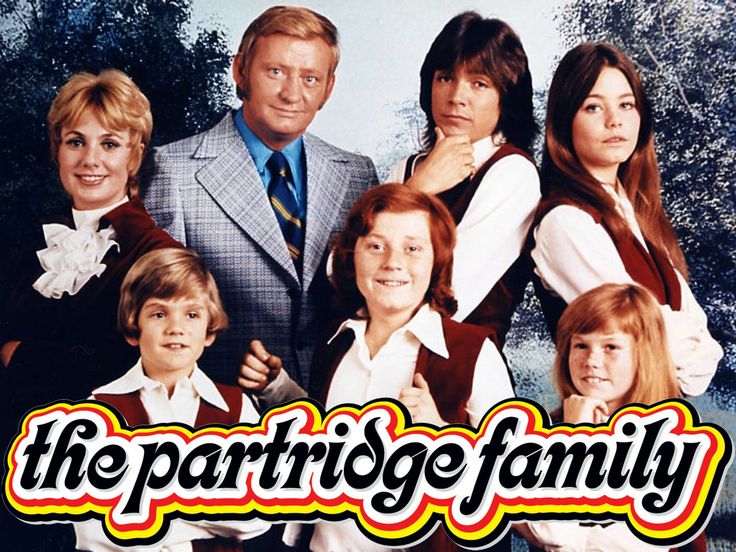
The Partridge Family turned “Last Night” into more than a pop tune—it feels like the quiet after an emotional storm, where memory and melody hold on to each other.
Some songs arrive with fanfare, chart headlines, and a place already reserved in pop history. Others slip in more gently, staying with listeners not because the whole world talked about them, but because they understood something intimate and true. “Last Night” by The Partridge Family belongs to that second kind of song. It carries the bright sheen of early-1970s television pop, yes, but beneath that polished surface is a wistful ache that gives the record a life beyond its era.
Unlike the group’s biggest signature hits, “Last Night” was not one of the major standalone singles that stormed the Billboard Hot 100, so it did not claim an individual chart position there on its own. That detail matters, because it helps explain why the song can feel like a private discovery even for longtime admirers of The Partridge Family. In a catalog often remembered through blockbusters like “I Think I Love You”, “Doesn’t Somebody Want to Be Wanted”, and “I’ll Meet You Halfway”, this song lives a little farther from the spotlight. And yet that very distance may be part of its charm.
What makes “Last Night” so affecting is its emotional setting. The title alone suggests an instant of reflection—something that happened, something already slipping into memory, something too close to forget and too far away to reclaim. That is where the song draws its strength. Like many of the finest recordings associated with The Partridge Family, it was created within a highly professional studio system shaped by producer Wes Farrell, where top session musicians and polished arrangements helped transform television songs into genuine pop records. But craftsmanship alone does not explain why a song lasts. Mood does.
And the mood here is unmistakable. There is longing in “Last Night”, but not the grand, theatrical kind. It is the softer kind—the kind that lingers at the edge of morning, when people replay conversations in their minds and wonder whether a turning point has already passed. That emotional shading gave many Partridge Family records their unusual durability. The project may have begun as a television phenomenon, but its best songs often carried a sweetness touched by uncertainty. They sounded cheerful enough for radio, yet somehow they understood disappointment, hesitation, and hope all at once.
Much of that feeling comes through the lead vocal presence associated with David Cassidy, whose voice helped define the group’s sound. Cassidy had a rare gift: he could sing polished pop melodies while still suggesting vulnerability. That balance mattered enormously. In a song like “Last Night”, too much innocence would have made it slight, and too much drama would have broken the gentle spell. Instead, the performance rests in that delicate middle ground where memory becomes melody. It is one of the reasons the song still rewards a careful listen.
There is also a wider cultural story behind records like this. In the early 1970s, The Partridge Family stood at a fascinating intersection of television fantasy and real commercial pop success. They were sold as a family band, wrapped in color and optimism, but the music was often made by some of the sharpest professionals in Los Angeles. That tension—between make-believe and sincerity, between packaged entertainment and honest feeling—is part of what makes the catalog so interesting today. “Last Night” reminds us that even within a carefully managed pop machine, a song could still find an emotional truth.
Listening now, the arrangement feels beautifully of its time: melodic, measured, and built with a kind of soft-focus elegance that so many early-’70s pop productions understood well. There is no need for excess. The song does not push too hard. It lets the sentiment unfold. That restraint is one of its great virtues. Where many records announce themselves immediately, “Last Night” seems to sit beside the listener and speak in a more personal tone. It is not trying to overwhelm you. It is trying to stay with you.
That may be why songs like this deepen with age. In youth, a listener may hear a pleasant melody. Years later, the same record can sound like a diary page set to music. The emotional texture becomes clearer. The pauses mean more. The sadness inside the sweetness is easier to recognize. This is where The Partridge Family can surprise people who remember them only as a pop-cultural emblem of their time. Beneath the bright branding was a body of work that often knew how fragile feelings really are.
So while “Last Night” may not be the first title named when people talk about The Partridge Family, that hardly diminishes its value. If anything, it enhances it. This is the kind of song that waits patiently for listeners to come back and hear what was there all along: tenderness, regret, and the unmistakable glow of a melody that still knows how to stir the heart. Not every memorable song becomes a towering hit. Some simply endure in a quieter way. “Last Night” is one of those songs.
And that is the deeper pleasure of returning to it now. You do not hear only a television-era pop group. You hear a moment when carefully made popular music reached for something more delicate—something reflective, romantic, and a little bittersweet. In that sense, “Last Night” remains exactly what its title promises: a song suspended between what just happened and what can never be fully relived, glowing softly in memory long after the music fades.