
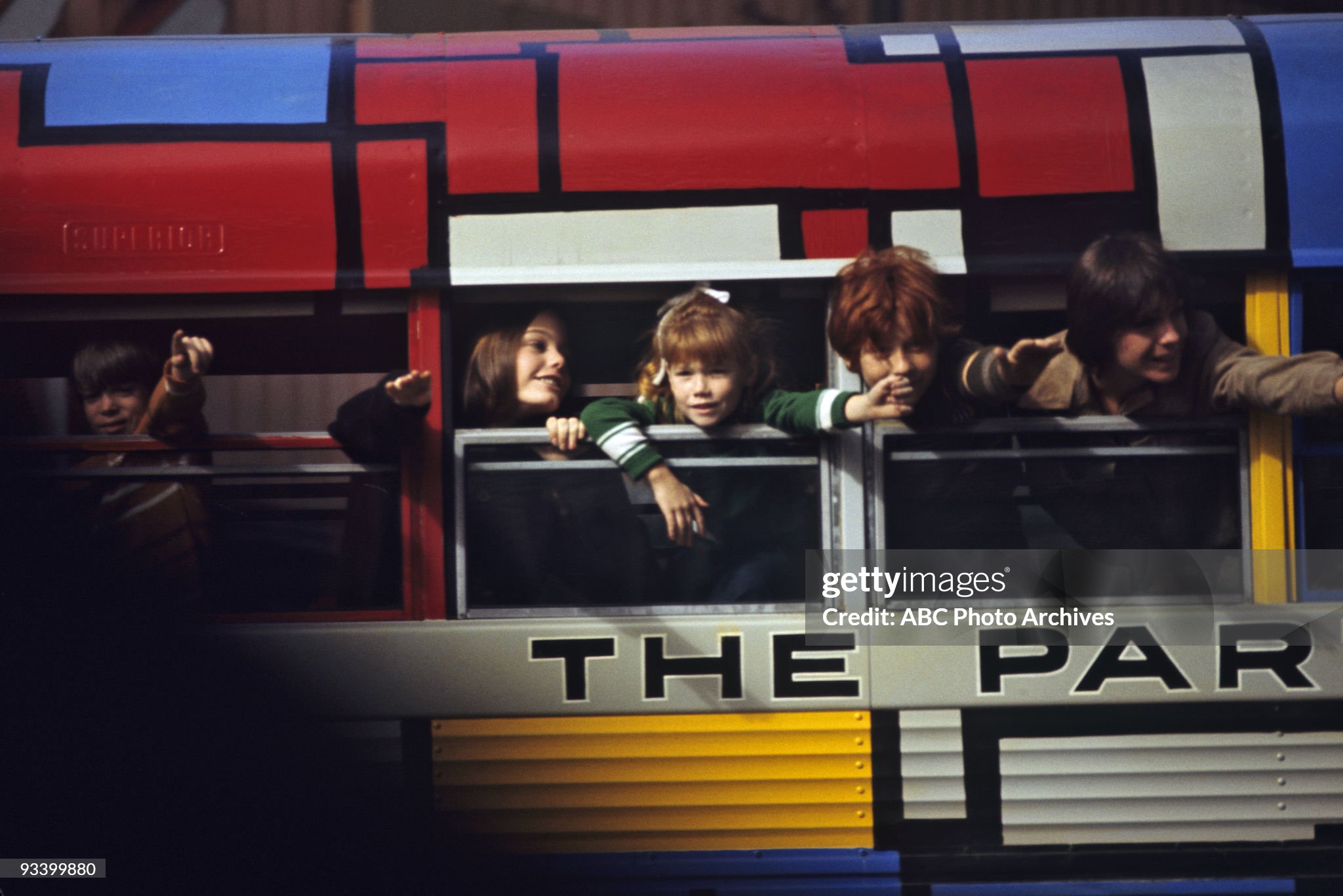
“Friend and a Lover” is the Partridge Family’s bittersweet middle ground—when devotion wants to be grown-up, but pop still asks it to smile.
“Friend and a Lover” arrived at a quietly revealing moment for The Partridge Family: not at the blast-off of their early fame, but in the gentle downturn when even a beloved pop phenomenon begins to thin at the edges. The song appears as the opening track on The Partridge Family Notebook (released November 1972), and it was later issued as a U.S. single in March 1973. At launch, it barely managed to catch the Hot 100’s hem—stalling at No. 99 on Billboard’s Hot 100—a small chart fact that somehow makes the song feel even more poignant, like a warm voice calling out as the crowd starts drifting toward the next bright thing.
The context around it is just as important as the song itself. The Partridge Family Notebook peaked at No. 41 on the Billboard 200, and it was noted as the first Partridge Family album not to reach the Top 40—still successful enough to matter, but no longer effortlessly riding the first wave. In other words: “Friend and a Lover” isn’t the sound of a brand-new teen-pop miracle. It’s the sound of that miracle trying to mature—trying to keep its sweetness while admitting a little doubt.
Behind the scenes, the songwriting credits tell you a lot about how professionally this world was built. “Friend and a Lover” was written by Wes Farrell, Danny Janssen, and Bobby Hart—names associated with that era’s pop machinery, where craft was king and every chorus was expected to land clean. The recording date is also preserved: it was cut on September 22, 1972, during the album sessions at United Western in Hollywood, with Wes Farrell producing. The track runs a compact 2:29, the length of a perfectly folded note—short enough for radio, but emotionally complete in its small space.
And that’s the secret of “Friend and a Lover”: it’s a pop song about boundaries, which is not an easy thing for pop to say. The title itself holds the tension. A “friend” suggests safety, steadiness, the daily texture of being known. A “lover” suggests risk, appetite, the kind of closeness that can change the air in a room. Put them together and you get a wish that’s almost too human: don’t make me choose between comfort and passion—be both, stay both. The lyric’s emotional posture is gentle rather than demanding, as if it understands that asking someone to be everything is dangerous… and yet the heart asks anyway.
That nuance plays beautifully against the Partridge Family’s larger mythology. On television, everything was tidy: conflicts resolved, smiles restored, songs delivered like emotional punctuation marks. But “Friend and a Lover” hints at something slightly older than the sitcom glow—a relationship dynamic that can’t be fixed with a laugh track. The album notes even point out that most tracks from Notebook were featured on the TV show, mainly in Season 3, which helps explain the song’s “episode-ready” clarity: a hook you remember, a mood you understand instantly. Yet within that clarity, there’s a soft shadow: the feeling that wanting “more” doesn’t always come with a map.
What makes the song linger isn’t its chart performance (or lack of it). It’s the way it captures a specific kind of 1972–73 pop atmosphere: bright on the surface, slightly wistful underneath, as if the culture itself could sense the end of an era approaching. Glam rock was roaring in Britain, singer-songwriters were turning inward, and teen-idol pop was beginning to share oxygen with something rougher and more cynical. “Friend and a Lover” sits right at that seam. It still believes in sweetness. It still believes in harmony. But it also feels—just faintly—like someone looking over their shoulder at time.
So if you listen now, “Friend and a Lover” doesn’t sound like a “minor hit.” It sounds like a small, sincere document from the middle chapters of fame: a song that tries to keep love simple, even while admitting love rarely is. And maybe that’s why it’s worth returning to. Not because it conquered the charts, but because it preserves a tender idea—quietly brave, quietly nostalgic—that the best kind of closeness is the kind that doesn’t make you choose who you are allowed to be.