
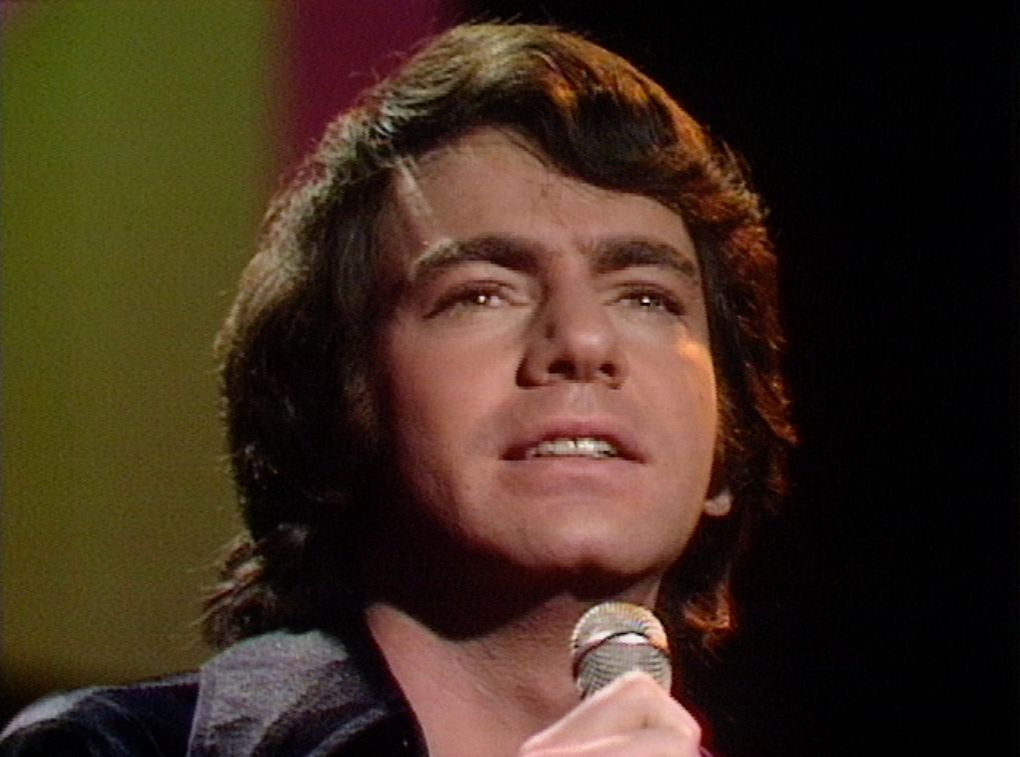
“Done Too Soon” is Neil Diamond staring straight at mortality—turning history into a roll call, and turning a pop record into a quietly haunting reminder that time never negotiates.
When people think of early-’70s Neil Diamond, they often picture the big, open-armed anthems and the radio staples. But “Done Too Soon” is different: it’s not built to flatter the listener. It’s built to wake the listener. Diamond first released it on his ambitious 1970 album Tap Root Manuscript (released October 15, 1970), where it sits as track 4 on side one, right among the album’s more accessible pop-rock songs—before the record plunges into its experimental “African Trilogy” suite.
Its chart life arrived in a very 45-rpm kind of way. “Done Too Soon” was issued on March 15, 1971 as the B-side to “I Am… I Said” on Uni Records. As the flip side gained its own momentum, it registered a modest but real footprint: it reached No. 65 on the Billboard Hot 100, No. 30 on Billboard Adult Contemporary, No. 55 in Canada (RPM Top Singles), and No. 69 on the Cash Box Top 100. It wasn’t the headline—“I Am… I Said” was the heavy hitter—but the fact that a B-side meditation on death charted at all says something about Diamond’s pull in that era, and about the song’s strange magnetism.
Part of that magnetism is purely structural. “Done Too Soon” is famously split into two contrasting sections: an up-tempo opening that fires names and images with near-breathless urgency, and a slower, more reflective second half that lands like a late-night realization. Cash Box captured that shape neatly in its 1971 review, noting how the “up-tempo thrust” gives way to a more “commentary” close—exactly the feeling of a mind racing, then suddenly going still.
And then there’s the song’s calling card: the roll call itself. Diamond threads in a sweeping list of historical and cultural figures—artists, leaders, thinkers, legends—many of them marked by early death, violence, or mythic endings. It can sound, at first, almost playful in its speed, like a clever lyrical trick. But the longer you sit with it, the more you sense the unease underneath: the point isn’t trivia. The point is how quickly a name becomes a memory, how swiftly life becomes “was.”
Diamond understood that he was taking a risk. On the song’s background, he later described it as “kind of esoteric,” explaining that he wanted to “jog something in a person’s memory” and “elicit a reaction”—to do something “a little bit different” while still sounding like himself. That’s exactly what “Done Too Soon” does. It doesn’t beg you to sing along; it dares you to think along.
The craft details matter, too, because they show how carefully this was built: the track is credited as being arranged by Marty Paich and Lee Holdridge, and produced by Tom Catalano (with Diamond co-producing the album’s material in this era). Even the runtime—about 2:45—feels intentional: short enough to sting, too quick to escape, like a thought you can’t quite outrun.
What’s especially moving, with the benefit of distance, is how “Done Too Soon” kept following Diamond onto the stage. It appears in the track list of his landmark live album Hot August Night (1972), placed early in the show—almost as if he wanted that jolt of perspective right up front, before nostalgia could soften the room.
In the end, “Done Too Soon” isn’t morbid for its own sake. It’s a song about how the world keeps spinning even as individual lives blink out—famous lives, ordinary lives, all lives. The first half rushes like history in fast-forward; the second half feels like a hand on your shoulder, gently insisting that you’re here now, and that “now” doesn’t last. That’s why it still lands with such a peculiar power: it’s a pop song that behaves like a memento—small, sharp, and impossible to ignore—leaving you with the same quiet question long after the record ends: what would you do, if you truly believed time was always running out?