
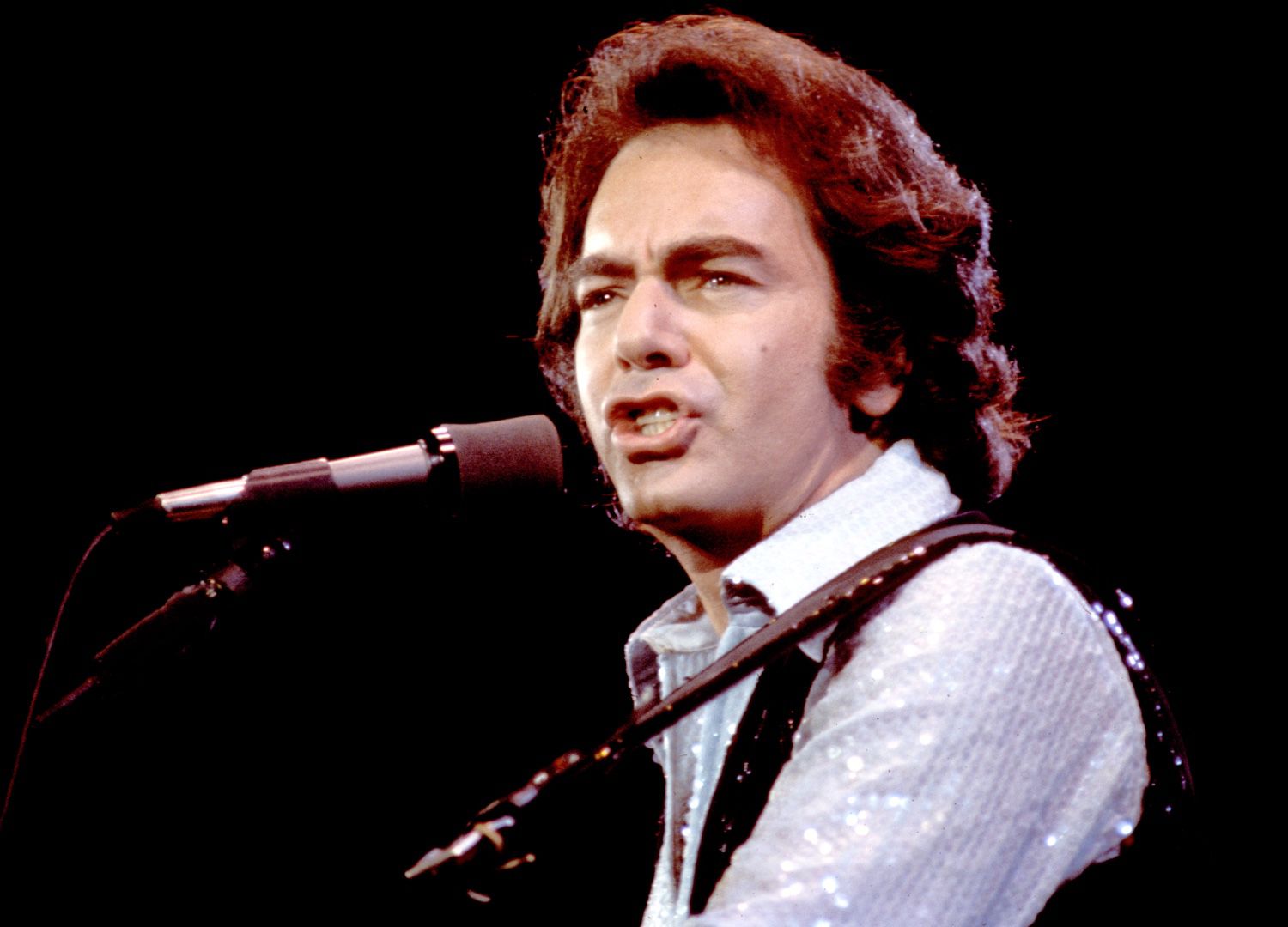
Neil Diamond did not simply sing “Joy to the World”—he wrapped a centuries-old Christmas hymn in warmth, gratitude, and the unmistakable feeling of coming home for the season.
There are holiday songs we hear every year, and then there are holiday songs that seem to meet us where memory lives. “Joy to the World”, in the hands of Neil Diamond, belongs to the second kind. His version does not rely on novelty or spectacle. It leans instead on something far more durable: conviction, warmth, and that deeply human tone that made Diamond one of the most recognizable voices in popular music. When he recorded the song for The Christmas Album in 1992, he was not trying to reinvent a sacred classic beyond recognition. He was doing something more thoughtful than that. He was inviting listeners back into it.
One important point deserves to come early. “Joy to the World” was not one of Diamond’s big standalone chart singles in the way “Cracklin’ Rosie”, “Song Sung Blue”, or “America” were. It is better understood as part of the enduring appeal of The Christmas Album, rather than as a separate pop-chart event with a famous Billboard Hot 100 peak. In other words, its success has always been more seasonal, emotional, and lasting than headline-driven. That actually suits the song. Holiday music often works this way: it becomes part of people’s lives first, and only later part of the larger conversation about an artist’s legacy.
The song itself, of course, is much older than any modern recording. The lyrics to “Joy to the World” were written by Isaac Watts and published in 1719, and the melody most people know today is commonly linked to Lowell Mason‘s 1839 setting, with phrases often said to echo Handel. By the time Neil Diamond approached it, the carol already carried centuries of spiritual and musical history. That matters, because Diamond’s gift was never merely technical singing. His gift was emotional translation. He could take something familiar and make it feel personally addressed, as though it were being sung not at a crowd, but across a room.
That is exactly what gives his version its staying power. There is grandeur in the arrangement, certainly, but there is also restraint. The production on The Christmas Album favors richness over flash: clean orchestration, supportive choral textures, and enough lift to make the song feel celebratory without burying the singer. At the center stands Diamond’s voice—textured, lived-in, unmistakably sincere. He does not deliver the lyric like a formal recital. He sings it with the grounding of someone who understands that joy is not only triumphal. Sometimes joy is relief. Sometimes it is reunion. Sometimes it is the brief, glowing peace of hearing a beloved voice at exactly the right time of year.
That is why his reading of “Joy to the World” feels so different from brighter, more decorative holiday recordings. Neil Diamond had always known how to project outward, but he also knew how to bend a phrase inward, to make a line feel reflective even in a song of praise. The result is that his version carries both public celebration and private feeling. It sounds at home beside lights, family photographs, old ornaments, and the gentle hush that comes over a room when the season briefly asks people to remember what matters most.
There is also something fitting about Diamond recording a song like this in the early 1990s. By then, he was long past proving himself as a hitmaker. He had already written and recorded songs that became woven into American popular memory. That gave him a certain freedom. On The Christmas Album, he could lean into tradition without sounding cautious or tired. Instead, he sounded settled in his craft. He knew who he was as a vocalist, and he understood what listeners came to him for: not perfection in the polished sense, but presence. A Neil Diamond performance often feels like company, and that quality is especially powerful in holiday music.
The deeper meaning of “Joy to the World” has always gone beyond seasonal decoration. At its heart, the song is about welcome—making room for wonder, gratitude, and renewal. In Diamond’s version, that message becomes especially human-scaled. He brings the song down from the stained-glass height at which some performances leave it and places it closer to the listener’s own life. That does not reduce its spiritual force. If anything, it strengthens it. His reading suggests that joy is not an abstraction. It arrives in voices, rituals, gatherings, and in songs that return year after year until they become part of the architecture of memory.
And memory is the key to why this recording still resonates. So much of Neil Diamond‘s finest work has carried a sense of longing mixed with gratitude. Even when he sang upbeat material, there was usually a trace of yearning underneath it, a sense that emotion mattered more than style. On “Joy to the World”, that instinct serves him beautifully. He honors the carol’s grandeur, but he also gives it a human pulse. You hear not only celebration, but recognition—the recognition of home, of tradition, of familiar words becoming newly comforting in a familiar voice.
In the end, that may be the most beautiful thing about Neil Diamond’s version. It reminds us that a great holiday performance does not have to surprise us to move us. Sometimes it simply has to be true. “Joy to the World” has survived for generations because its message is larger than any era. Neil Diamond endures in it because he understood how to sing that message with warmth instead of distance, with soul instead of ceremony. And that is why, every time the season comes around again, this recording still feels less like background music and more like a light returning to the window.