
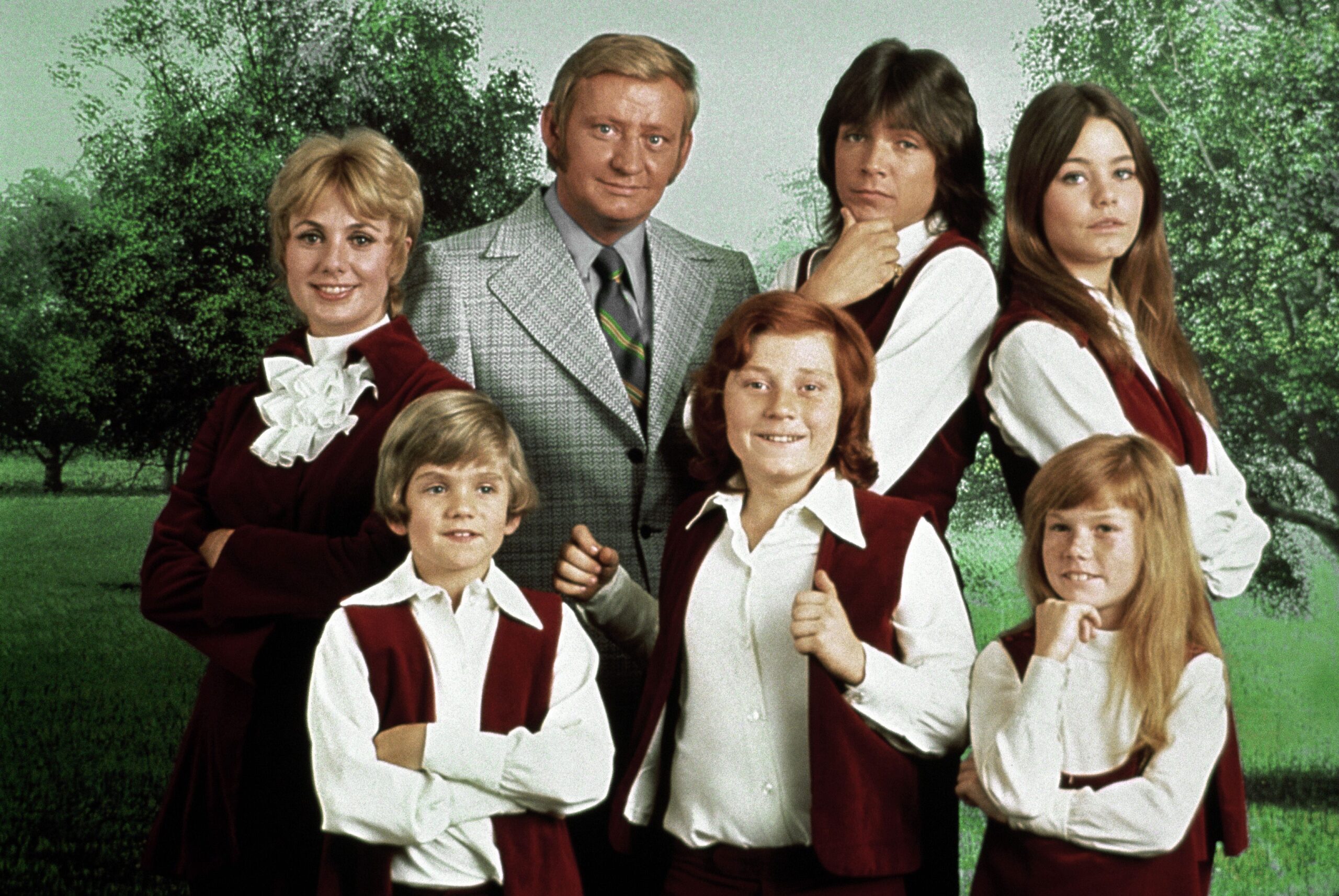
A gentle pop ballad about learning to live through uncertainty, “One Day at a Time” shows how The Partridge Family could sound tender, human, and quietly wise beneath the television brightness.
When people remember The Partridge Family, they usually remember the bright side first: the painted bus, the television charm, the polished pop hooks, and of course the unstoppable pull of “I Think I Love You”. But tucked a little deeper into their catalog is “One Day at a Time”, a song that reveals another side of the group’s appeal—calmer, more reflective, and in many ways more lasting. It is one of those recordings that does not demand attention with noise. Instead, it stays with you because of its patience.
“One Day at a Time” appeared on the 1972 album Shopping Bag, one of the later studio releases credited to The Partridge Family. By that point, the project had already become a major pop-culture fixture. The television series had premiered in 1970, and its soundtrack success had quickly crossed from the screen into real-world radio. Yet this song stands apart from the more instantly commercial side of that success. It was not released as one of the group’s major chart-defining singles, so it does not carry the same Billboard story as their biggest hits. Instead, its reputation has grown in a quieter way, through listeners who returned to the albums and discovered that the emotional heart of The Partridge Family often lived beyond the obvious singles.
That matters, because the song itself is built on a simple but enduring truth: sometimes the only honest way forward is exactly as the title says—one day at a time. In an era when pop often aimed for romantic rush, dramatic declarations, or youthful certainty, this song offers something gentler. It speaks to endurance rather than excitement. It understands that life can feel unsettled, that emotions do not always arrive neatly arranged, and that hope is sometimes less a grand gesture than a daily decision.
Musically, the recording carries the warm, carefully produced sound associated with the best Partridge Family records. Like many of the group’s studio releases, it was shaped within the highly professional pop environment built around producer Wes Farrell, whose touch helped define their radio-friendly sound. The television cast gave the project its identity, but the records were also supported by elite Los Angeles session players, and that studio craftsmanship is part of why songs like this still sound so graceful. There is polish here, certainly, but not emptiness. The arrangement lets the melody breathe. The rhythm moves gently, the instrumentation never crowds the vocal, and the entire performance seems designed to let the lyric land with clarity.
At the center, naturally, is David Cassidy. His voice was one of the great engines of The Partridge Family phenomenon, but what made him special was not only teen-idol magnetism. On a song like “One Day at a Time”, you hear the softer gift: restraint. He does not oversing the message. He leans into it with just enough ache, just enough warmth, and just enough sincerity to make the song feel lived-in rather than performed. That balance was one of his real strengths. He could sell exuberance, but he could also make vulnerability sound natural.
The emotional meaning of the song may be simple, but simple is not the same as slight. The phrase “one day at a time” has deep roots in ordinary life, in recovery language, in spiritual endurance, in private self-talk during difficult seasons. That may be one reason the song still lands so gently but so firmly. It does not pretend that everything is solved. It offers a way of carrying what cannot be solved all at once. In that sense, the song is less about romantic fantasy than emotional survival. It speaks to anyone who has ever felt overwhelmed and needed to shrink the future into something manageable.
There is also something especially moving about hearing that message inside the world of The Partridge Family. The group was marketed around sunshine, family energy, and accessible pop optimism. So when a song like this appears, it adds depth to the image. It reminds us that even the most cheerful pop institutions of the early 1970s sometimes made room for uncertainty, tenderness, and introspection. That contrast is part of the song’s power. It arrives from a familiar, brightly packaged world, yet it speaks in a softer emotional register.
Historically, The Partridge Family occupied a fascinating place in early-1970s American pop. They were at once a television creation and a legitimate chart force, a carefully managed brand and a source of genuinely memorable recordings. Because of that dual identity, some listeners have underestimated the catalog. But songs like “One Day at a Time” make the case for listening again, with less prejudice and more attention. Beneath the pop machinery were melodies crafted with care, vocals delivered with feeling, and songs capable of meeting listeners in very human places.
That is why “One Day at a Time” endures. Not because it was the loudest statement in their catalog, and not because it dominated the charts in the way the signature hits did, but because it understands something timeless. We rarely live our lives in dramatic climaxes. Most of us move forward in smaller increments—in patience, in memory, in worry, in faith, in effort. This song knows that. And because it knows that, it still feels intimate all these years later.
In the end, “One Day at a Time” is one of those songs that rewards a second look at The Partridge Family. It asks us to hear them not only as a phenomenon, but as interpreters of feeling. Past the bright colors and pop mythology, there was often a real softness in these records. This song captures that softness beautifully. It does not shout for its place in memory. It simply stays there.